


Best Professional Studio Gear Brands for 2026
Posted by Editorial Team on 18th Oct 2026
Table of Contents
- What Makes a Professional Studio Gear Brand Stand Out
- Best Professional Audio Brands for Recording Equipment
- Professional Audio Interface Brands That Define the Standard
- Best Studio Headphone Brands for Accurate Monitoring
- Home Studio Setup Equipment: Building Your Professional Foundation
- Studio Monitors, Microphones, and Signal Processing Essentials
- Choosing the Right Professional Studio Gear for Your Workflow
- Frequently Asked Questions
Last Updated: October 17, 2026
What Makes a Professional Studio Gear Brand Stand Out
When you're building a recording studio, the difference between amateur and professional-grade equipment comes down to three things: reliability, sound quality, and workflow integration. Professional studio gear brands have earned their reputation by delivering consistent performance across thousands of sessions, not just marketing hype.
The best professional audio brands prioritise accuracy over colour. A professional studio monitor shouldn't flatter your mix, it should tell you the truth about what you've recorded. The same applies to microphones, interfaces, and every piece in the chain. Brands that have been refining their craft for decades understand this principle deeply.
At Muzic Man, we help musicians and producers find the right professional studio gear brands for their specific needs. Whether you're setting up your first serious home studio or upgrading an established facility, knowing which brands deliver professional-grade performance is essential.
Best Professional Audio Brands for Recording Equipment
The audio industry has several dominant players that consistently deliver professional-grade results. These brands have built their reputation through decades of studio use, not just consumer marketing. The shortlist below is organised by the role each brand plays in a professional signal chain, with the trade-offs that matter when you are buying in Australia.
Neumann stands out for microphone engineering. Their condenser microphones are industry standard in professional recording studios worldwide. The U87 and U47 models appear on countless platinum records. What makes Neumann special is their obsessive attention to capsule design and manufacturing tolerances, every microphone is individually tested. The trade-off is price and the need for a treated room; a Neumann in an untreated Robina bedroom will expose every reflection. Australian distribution is handled through Sennheiser Australia, so warranty and service are local rather than imported.
Shure brings professional reliability to every price point. Their SM7B microphone is standard in broadcast and hip-hop production. Shure's strength lies in understanding real-world studio workflows. They build gear that sounds great and survives years of heavy use. The SM7B rewards a strong preamp, it is a low-output dynamic, so pair it with an interface that has clean gain rather than a budget unit that hisses when pushed.
Behringer offers professional-quality equipment at accessible price points. Their interfaces and mixing solutions deliver performance that rivals much more expensive alternatives. For home studio builders in Robina and across Queensland, Behringer provides a practical entry point into professional-grade gear. The trade-off is driver longevity and resale value; Behringer gear is best treated as a stepping stone rather than a lifetime purchase.
RME specialises in audio interfaces and converters. Their Fireface series offers exceptional audio conversion with rock-solid drivers. Professional studios rely on RME for dependable, low-latency performance. RME's Australian distributor provides local warranty support, which matters when a driver issue at 3am cannot wait for an overseas RMA.
Universal Audio combines software and hardware to create integrated production solutions. Their Apollo interfaces include built-in DSP processing and emulations of classic hardware. This approach appeals to producers who want professional-grade results without a room full of outboard gear. The trade-off is that the DSP ecosystem locks you into UA's plugin store, so factor that into the total cost of ownership.
Focusrite and Audient round out the mid-tier for recording. Focusrite's Clarett range and Audient's iD interfaces both offer clean preamps and solid conversion.
Professional Audio Interface Brands That Define the Standard
An audio interface is the bridge between your instruments and your computer. Professional audio interface brands focus on clean conversion, low latency, and reliable drivers.
Antares Audio produces interfaces designed specifically for professional production. Their focus on audio quality and workflow integration makes them popular in serious home studios. The conversion quality directly affects how your mixes translate to other speakers.
Focusrite delivers professional performance with user-friendly design. Their Scarlett and Clarett series offer excellent preamps and conversion at multiple price points. Focusrite has built trust through consistent quality across their product range.
Motu creates interfaces that handle complex routing and high channel counts. Their interfaces appeal to composers and producers working with orchestral samples and virtual instruments. The build quality and driver stability are exceptional.
MIDAS brings mixing console heritage to interface design. Their products combine professional audio conversion with intuitive control surfaces. Studios in Robina and beyond appreciate MIDAS for their transparent sound and strong construction.
Professional audio interface brands prioritise three things: clean preamps, accurate conversion, and stable drivers. When you're recording at 3am and need to nail a vocal take, the last thing you want is driver crashes or audio dropouts.
Best Studio Headphone Brands for Accurate Monitoring
Headphones are critical for accurate monitoring during recording and mixing. Professional studio headphone brands prioritise flat response and comfort during long sessions.
Sennheiser has been setting standards in professional audio for decades. Their HD 650 and HD 800S models deliver accuracy and comfort that justify their investment. Sennheiser headphones reveal problems in your mix that cheaper monitors might hide.
Beyerdynamic produces headphones favoured by mixing engineers worldwide. Their DT 770 and DT 990 models offer detailed sound and exceptional build quality. The replaceable parts and long service life make them practical for professional use.
Audio-Technica combines Japanese precision engineering with practical studio design. Their ATH-M50x headphones are trusted in professional studios and broadcast facilities. The closed-back design isolates external noise effectively.
Sony professional headphones serve broadcast and production facilities. Their MDR-7506 model has been industry standard for decades. Sony's focus on accurate reproduction and durability appeals to professionals who demand reliability.
When choosing studio headphones, look for models specifically designed for monitoring, not consumer listening. Professional headphones should reveal every detail in your recording without adding artificial bass or treble.
Home Studio Setup Equipment: Building Your Professional Foundation
Building a professional home studio requires more than just buying individual pieces of gear. The equipment needs to work together as a system that supports your creative workflow.
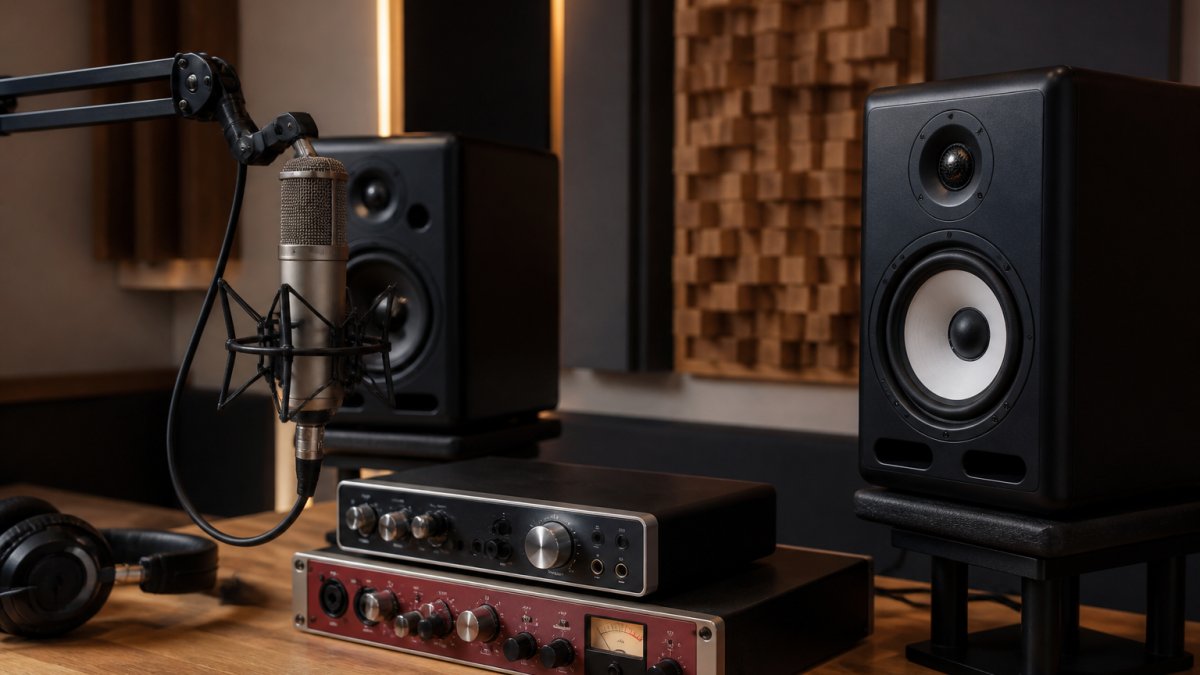
Start with the essentials: a quality microphone, audio interface, and monitoring solution. These three components form the foundation of any professional recording setup. Everything else builds from this core.
Acoustic treatment is often overlooked but essential. Untreated rooms create reflections that colour your recordings and make mixing decisions unreliable.
Cables and connectors matter more than many producers realise. Professional-grade cables maintain signal integrity across your entire chain. Poor cables introduce noise and signal degradation that no amount of expensive gear can fix.
Monitoring stands and isolation keep your speakers properly positioned. Stands decouple monitors from your desk, preventing vibration transfer that colours the sound.
For musicians in Robina setting up a home studio, the key is building systematically. Don't buy everything at once. Add professional-grade equipment piece by piece, ensuring each component works properly before adding the next.
Studio Monitors, Microphones, and Signal Processing Essentials
These three elements form the core of any professional recording environment. Each requires careful selection to match your specific needs.
Studio monitors should provide accurate, uncoloured sound. Brands like Yamaha HS series deliver flat response that lets you hear exactly what you've recorded. Near-field monitors work best in smaller spaces, while larger studios benefit from larger drivers and higher output.
Condenser microphones capture detail and nuance. Brands like Rode produce professional microphones at various price points. Dynamic microphones like Shure's SM7B excel for vocals and drums, offering durability and presence.
Signal processing shapes your sound during recording and mixing. Professional preamps add character and clarity. Compressors from Universal Audio provide dynamic control that defines professional productions.
The relationship between these elements matters. A great microphone through a poor preamp loses its potential. A professional signal chain from microphone to interface to monitors ensures that every decision you make during recording and mixing is based on accurate information.
Choosing the Right Professional Studio Gear for Your Workflow
Selecting professional studio gear brands requires understanding your specific needs. A mastering studio has completely different requirements than a home vocal recording setup. The framework below separates recommendations by workflow, with the Australian buying considerations that generic international guides skip.
For vocal recording, prioritise a quality large-diaphragm condenser microphone and a transparent preamp. Brands like Neumann excel here. The goal is capturing the singer's voice with minimal coloration. Pair a Neumann TLM 103 or U87 with a clean preamp such as an Audient or Focusrite Clarett, and budget for a reflection filter or portable vocal booth if the room is untreated.
For mixing and mastering, accurate monitoring is paramount. Studio monitors provide the frequency response accuracy that mixing demands. Your room acoustics matter as much as the monitors themselves. Near-field monitors suit smaller Gold Coast rooms; larger treated spaces benefit from mid-fields. Add acoustic treatment before upgrading monitors, the room is the weakest link in most home setups.
For music production, flexibility matters. An audio interface that handles multiple instruments and virtual instruments supports your creative process. Brands like RME and Universal Audio provide the routing options and processing power that producers need.
For podcast and voice recording, durability and ease of use matter. Rode and Audio-Technica produce microphones that sound professional without requiring extensive technical knowledge. Rode is an Australian company, so warranty and service are straightforward domestically, a practical advantage for anyone in Queensland who wants local support.
Australian warranty and service considerations are often overlooked. Brands with local distributors, Sennheiser Australia for Neumann, Rode for its own products, and established importers for RME and Focusrite, offer faster repair turnaround than grey imports. Check that the retailer is an authorised dealer, because warranty claims on parallel imports can be refused.
Room size and compatibility shape brand choice as much as budget. A small Robina home studio benefits from near-field monitors and a compact interface with two to four inputs; a larger facility can justify a console-style workflow and more outboard processing.
The professionals in Robina's music community understand that investing in quality gear pays dividends over years of use. Professional studio gear brands maintain their value because they deliver consistent performance and reliability, and buying through authorised Australian dealers protects that investment.
Frequently Asked Questions
What are the key features to look for in professional studio gear brands?
Professional studio gear brands prioritise frequency response accuracy, low noise floors, robust build quality, and reliable connectivity. Look for brands with established reputations in recording, mixing, and mastering environments. Audio interfaces should offer low-latency monitoring, quality preamps, and multiple I/O options. Studio monitors need accurate nearfield response, and microphones should deliver consistent sound across vocal and instrument recording applications.
Which professional audio interface brands are most reliable for home studios?
Brands like Focusrite, Universal Audio, RME, and Audient dominate the professional audio interface market with proven reliability and excellent driver support across operating systems. These brands offer interfaces ranging from compact 2-in/2-out units to larger formats with multiple preamps and signal processing capabilities. Professional audio interface brands typically include quality preamps, low-noise conversion, and software bundles that support serious music production workflows.
What should I prioritise when selecting best studio headphone brands?
Best studio headphone brands deliver flat frequency response, accurate stereo imaging, and comfortable extended-wear design. Brands like Sennheiser, Audio-Technica, Beyerdynamic, and Sony Professional are industry standards. Studio headphones should isolate external noise, provide detailed midrange clarity, and maintain consistent sound across different listening environments. Closed-back designs suit mixing, while some professionals prefer open-back options for certain monitoring tasks.
How do I build a professional home studio setup with quality equipment?
Start with essential home studio setup equipment: a professional-grade audio interface, quality condenser microphone, nearfield studio monitors, and monitoring headphones. Add acoustic treatment to control room reflections. A digital audio workstation with professional software completes the foundation. Invest in connectivity solutions like balanced XLR cables.