


Music Gear Return Policy Explained: Your Guide
Posted by Editorial Team on 11th Oct 2026
Table of Contents
- What a Music Gear Return Policy Actually Covers
- Check Return Policy Before Buying Instruments Online
- Change of Mind Returns Australia: What You Need to Know
- Australian Consumer Law Faulty Goods: Your Protection
- Return Shipping for Musical Instruments: Who Pays
- Step-by-Step: How to Process a Return
- Common Return Scenarios and How They're Handled
- Frequently Asked Questions
Last Updated: October 10, 2026
What a Music Gear Return Policy Actually Covers
A music gear return policy sets out the terms for sending instruments and equipment back to a retailer, including what items qualify, timeframes, and condition requirements.
A clear return policy protects you if something arrives damaged, doesn't match the description, or isn't what you expected. At Muzic Man, we make our return terms straightforward so you know exactly where you stand before checkout.
Most policies address three main scenarios: faulty goods, change of mind returns, and damaged-in-transit items. Each has different rules, timeframes, and conditions. Some retailers allow returns on opened gear; others don't. Some cover return shipping; others don't.
Check Return Policy Before Buying Instruments Online
The biggest mistake musicians make is skipping the return policy section. You're excited about a new instrument and checkout without reading the fine print. Then something goes wrong and you discover the policy doesn't cover your situation.
Look for these key details:
- Return window: How many days do you have to initiate a return? Is it 14 days, 30 days, or longer?
- Condition requirements: Can you return opened gear? Used gear? Items with minor cosmetic damage?
- Restocking fees: Do they charge a percentage of the purchase price for returns?
- Return shipping: Who pays for postage back to the retailer, you or them?
- Refund timeline: How long after they receive your return will you get your money back?
- Exclusions: Are certain items (clearance stock, custom orders, or discontinued lines) non-returnable?
Different retailers have vastly different standards. One store might accept returns on used gear within 30 days; another might have a 14-day window and only accept unopened items.
When comparing retailers, the return policy is as important as the price. A slightly higher price with a generous return window and free return shipping may be better value than a cheaper price with strict no-return policies.
Change of Mind Returns Australia: What You Need to Know
Australian Consumer Law gives you specific rights when you buy goods online or at a distance. These rights include a cooling-off period, often called a "change of mind" return.
The 14-day cooling-off period
Under Australian Consumer Law, you have 14 days from the date of purchase to cancel an online order and return the item for a refund. This applies to distance sales and is a statutory right most retailers must honour.
However, the item must be in resaleable condition: unused, unopened, and in original packaging. If you've opened the box or used it, the retailer can refuse the return or charge a restocking fee.
The cooling-off period doesn't apply to custom-made instruments or items ordered to your specifications, or if you collected the item from a physical store.
When change of mind returns don't apply
Change of mind returns don't apply to:
- Items you've used or tested: If you've plugged in a keyboard, played a few notes on a guitar, or opened the packaging, it's no longer in resaleable condition.
- Custom or made-to-order instruments: If the retailer built or configured the item to your specifications, you can't return it just because you changed your mind.
- Clearance or discontinued stock: Some retailers exclude final-sale or clearance items from returns.
- Items purchased in-store: If you bought the gear at a physical location and had the chance to inspect it, the cooling-off period doesn't apply.
- Digital products or downloads: Software, backing tracks, or digital sheet music usually can't be returned once downloaded.
The key distinction is between "change of mind" and "faulty goods." If the item is defective or doesn't match the description, you have stronger rights under Australian Consumer Law that aren't limited by the same conditions.
Australian Consumer Law Faulty Goods: Your Protection
Australian Consumer Law faulty goods protections are separate from change-of-mind returns and provide stronger legal rights if the instrument arrives damaged, has a defect, or doesn't match the description.
What counts as faulty under the law
An item is faulty if it:
- Arrives damaged or broken
- Has a manufacturing defect (e.g., loose fret, unresponsive keys, amp won't power on)
- Doesn't match the product description (e.g., listed as "new" but used, or colour doesn't match the photo)
- Isn't fit for purpose or acceptable quality for the price paid
Unlike change-of-mind returns, the item doesn't need to be unopened. You can unpack a faulty guitar, test it, and still have the right to a remedy.
Faulty goods claims aren't limited by the 14-day cooling-off period.
Your remedies for defective instruments
When an instrument is faulty, you have three options:
- Repair: The retailer arranges and pays for repairs to fix the defect.
- Replacement: The retailer sends you a replacement item in good condition.
- Refund: The retailer refunds the full purchase price.
You choose which remedy you want. If repair or replacement would be unreasonably expensive or time-consuming, you can demand a refund instead.
The retailer must act within a reasonable timeframe. If they refuse to acknowledge the fault, escalate to the ACCC.
Return Shipping for Musical Instruments: Who Pays
Return shipping costs can be substantial when sending instruments back. Understanding who covers these costs before you buy saves money and frustration.
The retailer pays for return shipping if the item is faulty or doesn't match the description. For change-of-mind returns, you typically pay postage unless the retailer's policy states otherwise.
Some retailers offer free return shipping for all returns; others charge a flat fee or deduct it from your refund.
When comparing retailers, factor in return shipping costs. A lower price with no free returns might cost more overall if you need to send something back.
For faulty goods, always ask the retailer to arrange and pay for a prepaid return label.
Step-by-Step: How to Process a Return
Processing a return involves several steps. Following them carefully protects you and speeds up the refund.
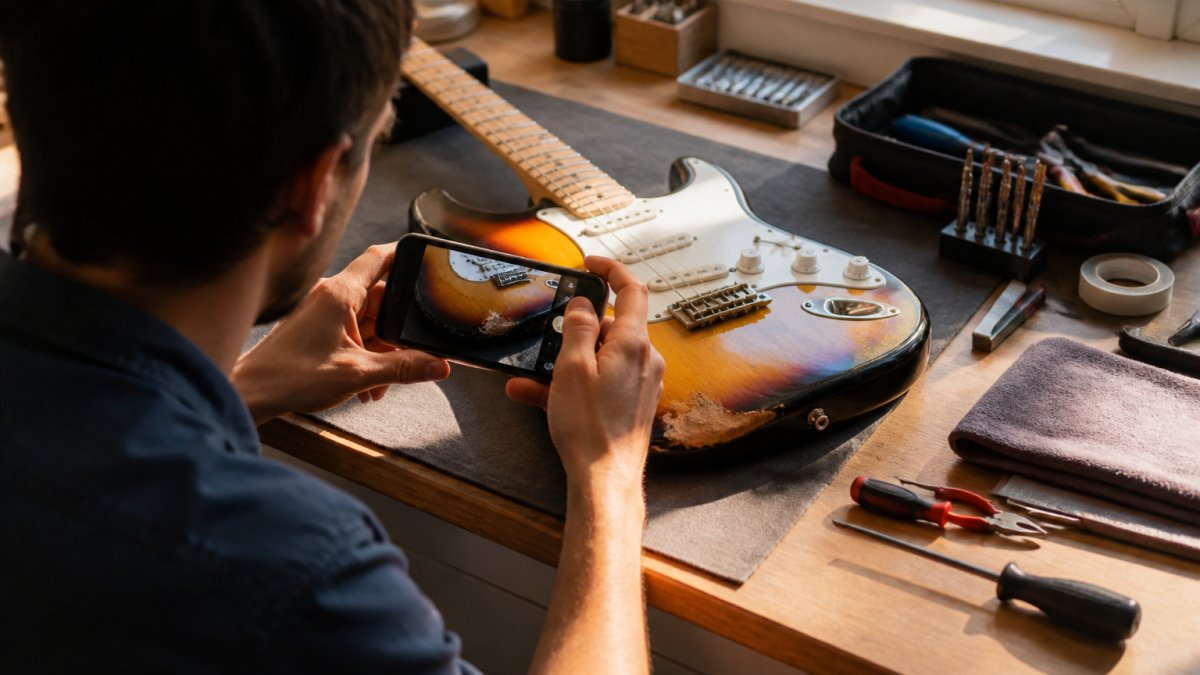
Document the issue with photos or video
If the item is damaged or faulty, take clear photos or video from multiple angles in good lighting. Document the specific defect: a non-responsive key, a cracked headstock, or damage to the packaging.
These images are your evidence. If the retailer disputes your claim, you'll have proof of the condition when the item arrived. Store the photos on your phone or cloud storage so you can access them later.
Contact the retailer with key details
Email the retailer's returns team with the following information:
- Your order number
- The item name and SKU (if available)
- The date you received the item
- A clear description of the issue (e.g., "The amplifier won't power on" or "The package arrived with a crushed corner and the drum pedal is bent")
- Photos or video showing the problem
- Your preferred remedy (repair, replacement, or refund)
Be polite but direct. Keep your email brief and factual. Avoid emotional language or accusations. The goal is to get the retailer's returns team to process your claim quickly.
Most retailers respond within 2-3 business days. They'll either approve your return and send a prepaid shipping label, or they'll ask for more information. If you don't hear back within a week, follow up with another email or call their customer service line.
Arrange packing and shipping safely
Pack the item carefully so it doesn't get damaged during transit back to the retailer. Use the original packaging if you still have it. If not, use a sturdy box with padding, bubble wrap, foam, or crumpled paper all work.
Include a copy of your return authorization or shipping label inside the box. Label the outside clearly with the retailer's return address. Use a tracked shipping service so you can confirm delivery.
Keep your tracking number and receipt. You'll need them if the retailer claims they never received the item.
Common Return Scenarios and How They're Handled
Different situations trigger different return rules. Knowing which applies to your situation helps you understand your rights.
Gear arrives damaged
If your guitar, keyboard, or amplifier arrives with visible damage, you have a faulty goods claim. The retailer is responsible, they chose the packaging and the shipping method.
Contact the retailer immediately with photos. Most will arrange a replacement or repair without much fuss. If the damage is severe, request a refund. You shouldn't have to accept a damaged instrument just because the retailer's insurance might not cover it, that's their problem, not yours.
Some retailers ask you to refuse delivery or open the package in front of the courier so they can document the damage. If that's possible, do it. It creates an official record that makes claims easier.
Item doesn't match the description
If the listing said "new" but you received a used item, or the colour doesn't match the photo, you have a faulty goods claim. The item doesn't match what the retailer promised.
Take photos showing the discrepancy. If the listing said "black" and you received "dark grey," photograph both the item and the product page side-by-side. If it said "new" and you can see signs of previous use, document those signs.
Contact the retailer and explain the mismatch. Most will offer a replacement or refund without argument. If they resist, remind them that Australian Consumer Law requires goods to match their description.
Opened or used gear
If you've opened the package and used the item, you lose the change-of-mind return right, but you don't lose faulty goods protection. If the instrument is defective, you can still return it even though you've used it.
The difference matters. A guitar you've played for a week and decided you don't like can't be returned for change of mind.
Retailers sometimes try to blur this line, claiming that any used item can't be returned. That's not correct under Australian Consumer Law. Document the defect clearly and stand firm on your rights.
When you buy music gear online, a clear return policy gives you peace of mind. If you have questions about our return policy or need support with an order, reach out to our team and we'll help you get it sorted.
Frequently Asked Questions
Can I return music gear if I change my mind?
Yes, many retailers offer a change of mind return policy. While Australian Consumer Law provides certain rights for distance sales, the specific terms for change of mind returns, including timeframes and condition requirements, are typically set by the retailer. This right often doesn't apply to custom-made instruments or items specifically ordered for you. Always check the retailer's change of mind policy before buying, as some may have stricter conditions or shorter timeframes.
What are my rights if an instrument bought online is faulty in Australia?
Australian Consumer Law protects you against faulty goods. If an instrument is defective, not of acceptable quality, or doesn't match the description, you can request repair, replacement, or refund. You don't need to pay return postage for faulty items, the retailer must cover those costs. You must report the fault within a reasonable time of discovering it.
How should I check a music retailer's return policy before ordering?
Look for the return policy link on the retailer's website, usually in the footer or 'Help' section. Check the timeframe allowed, what condition items must be in, whether return shipping is free or paid, and any exclusions (such as custom orders or opened electronics). Contact customer service directly if the policy isn't clear, ask about their specific process for damaged items and whether they accept returns on used gear.
Who pays for return shipping when I need to send music gear back?
For faulty or damaged items, the retailer must cover return postage under Australian Consumer Law. For change of mind returns, the retailer's policy determines who pays, some offer free returns, others deduct shipping costs from your refund, and some require you to pay. Always confirm the return shipping cost before submitting a return request, as this significantly affects your final refund amount.