


Buy Digital Pianos Online Australia: 2026 Guide
Posted by Editorial Team on 12th Oct 2026
Table of Contents
- Why Buy Digital Pianos Online in Australia
- Best Digital Piano Models Available to Australian Buyers
- Digital Piano for Beginners Australia: What to Look For
- 88-Key Digital Piano: Full Keyboard Range Explained
- Digital Piano Delivery Australia: Shipping and Setup
- How to Choose Your Digital Piano Online
- Frequently Asked Questions
Last Updated: October 12, 2026
Why Buy Digital Pianos Online in Australia
When you buy digital pianos online in Australia, you gain access to the most practical way for Australian musicians to find quality instruments.
The biggest advantage is choice: browse everything from beginner-friendly weighted keyboards to professional-grade instruments in one place, with detailed specifications and honest comparisons.
Delivery across Australia is reliable and fast, with proper packaging so your digital piano arrives safely.
Best Digital Piano Models Available to Australian Buyers
Finding the right digital piano depends on your skill level, budget and space. Below are five models Australian buyers consistently choose, compared on key action, sound engine, connectivity and cabinet style.
Yamaha P-145BT: Trusted for Beginners
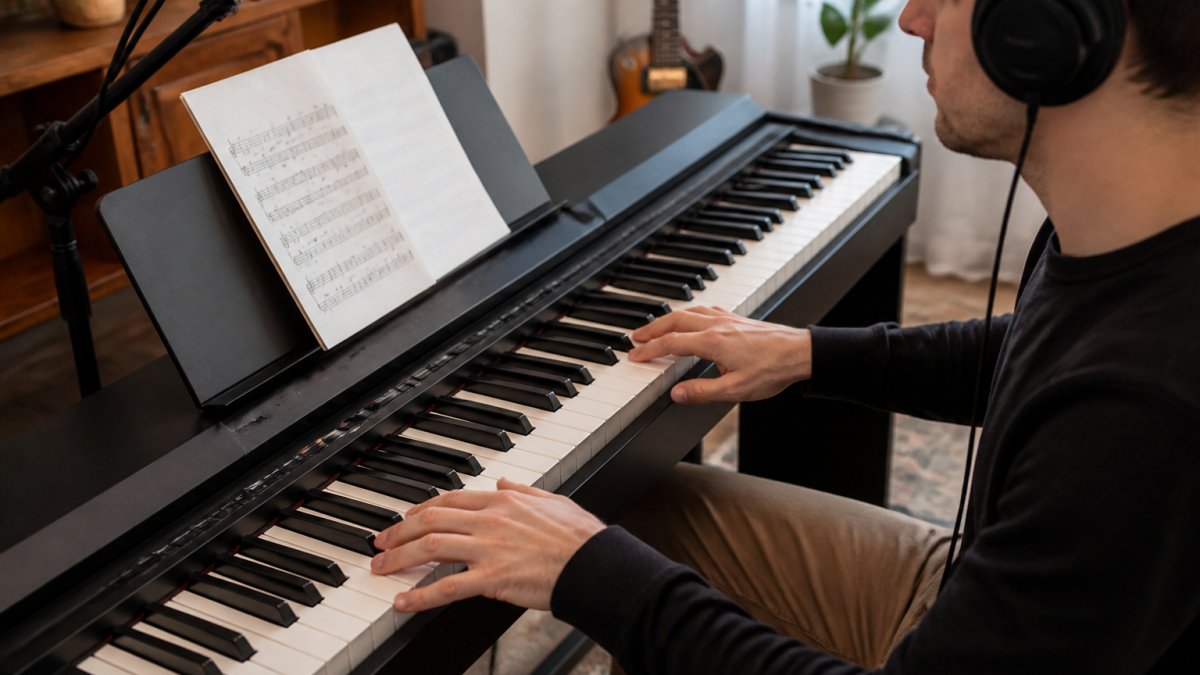
The Yamaha P-145BT remains the most recommended entry-level digital piano for Australian beginners. Its weighted keys feel like an acoustic piano, helping new players develop proper technique, and Bluetooth connectivity links to learning apps.
The 88 full-sized keys give a genuine piano feel without the cost or space demands of an acoustic instrument.
Roland FP-30X: Portable and Professional
The Roland FP-30X suits musicians who need portability without sacrificing sound quality. It weighs far less than console-style pianos, ideal for gigging musicians or anyone with limited space.
It bridges the gap between budget and premium: compact enough for a small apartment, yet powerful enough for live performance, with built-in speakers that produce surprising volume and clarity.
Its SuperNATURAL sound engine varies tone as you play harder or softer, helping intermediate players develop expressive playing.
Casio PX-870: Console-Style Home Option
The Casio PX-870 offers a traditional piano look with modern features. Its full-length cabinet and console-style stand suit living rooms and dedicated music spaces.
The larger footprint needs dedicated space, but the weighted keys and pedal system feel authentic.
Console pianos take up more floor space than portable models, so measure your room before ordering.
Kawai CX202: Mid-Range Home Piano
The Kawai CX202 delivers professional-quality sound at a mid-range investment level, positioned between budget beginner models and premium concert instruments. Its smooth, responsive action suits intermediate players working toward advanced technique.
The sound is noticeably richer than entry-level models.
Korg B2: Value-Focused Weighted Keys
The Korg B2 delivers weighted-key action at a lower investment than many competitors, maintaining genuine weighted keys crucial for developing proper technique.
It suits budget-conscious beginners who refuse to compromise on key action: a full 88-key keyboard with realistic resistance, and a smart choice for a child's first serious instrument.
The trade-off is fewer built-in sounds and effects, which barely matters for beginners focused on fundamentals.
Side-by-Side Comparison
Use this table to shortlist before you read individual reviews.
| Model | Key Action | Sound Engine | Cabinet Style | Connectivity | Best For |
|---|---|---|---|---|---|
| Yamaha P-145BT | Weighted, graded hammer action | Yamaha CFX-derived piano sample | Portable slab | Bluetooth audio/MIDI, USB | Beginners aged 10+ |
| Roland FP-30X | Weighted, PHA-4 Standard action | SuperNATURAL piano engine | Portable slab | Bluetooth, USB, dual headphone jacks | Gigging and apartment players |
| Casio PX-870 | Weighted, scaled hammer action | AiR multi-dimensional sound | Console with stand | USB, headphone out | Home pianists wanting furniture look |
| Kawai CX202 | Weighted, Responsive Hammer action | Harmonic Imaging sample | Console with stand | USB, headphone out | Intermediate players, music schools |
| Korg B2 | Weighted, natural touch action | Stereo PCM piano sample | Portable slab | USB, headphone out | Budget-conscious beginners |
How to Read the Comparison
Key action is the single most important row. All five models use weighted, graded action, meaning lower keys feel heavier than upper keys just like an acoustic piano.
Sound engine names are marketing labels but signal real differences.
Cabinet style determines where the piano can live.
Connectivity is the row beginners overlook.
Finally, match the model to your realistic practice habits, not aspirational ones.
Digital Piano for Beginners Australia: What to Look For
Beginners often focus on price first, but keyboard action matters far more. A cheap piano with poor key response frustrates you and slows progress; weighted keys are essential because they train your fingers to develop proper strength and control.
Look for these core features when comparing beginner models:
- Weighted 88-key keyboard: Full-sized keys with resistance that mimics acoustic pianos
- Quality sound samples: At least 30-50 authentic piano tones, with multiple acoustic piano samples
- Sustain pedal: A proper pedal (not just a footswitch) that responds like an acoustic piano pedal
- Headphone output: So you can practise without disturbing others
- Connectivity options: USB or Bluetooth to connect learning apps or recording software
- Adjustable stand: A sturdy stand that positions the keyboard at comfortable playing height
Avoid unweighted keys, even if cheaper. They feel like electronic organs, not pianos, and don't teach proper technique.
Many beginners benefit from a complete package including stand, bench and headphones, which saves money versus buying separately. Check whether your chosen model includes these accessories.
88-Key Digital Piano: Full Keyboard Range Explained
An 88-key keyboard matches the range of a full acoustic piano and is the standard for any serious learner.
The 88 keys span A0 to C8, covering virtually all piano music ever written, from classical pieces to jazz standards.
Learning on a full-range keyboard means you won't outgrow your instrument. A 61-key keyboard may seem adequate initially, but within months you'll hit pieces requiring keys you don't have.
| Keyboard Size | Key Count | Best For | Limitation |
|---|---|---|---|
| Compact | 61 keys | Casual hobbyists, space constraints | Cannot play full classical repertoire |
| Standard Portable | 76 keys | Intermediate players, gigging musicians | Missing lowest and highest octaves |
| Full Piano | 88 keys | Serious learners, professionals | Requires more space, heavier to transport |
Digital Piano Delivery Australia: Shipping and Setup
Delivery logistics are straightforward when you order from Australian retailers, but details vary by model size and destination. Here's what happens between checkout and your first practice session.
Shipping Timeframes Across Australia
Most digital pianos ship Australia-wide within 7-10 business days. Slab models (Yamaha P-145BT, Korg B2) are lighter and arrive at the faster end; console models (Casio PX-870, Kawai CX202) ship in larger cartons and may take longer, particularly to regional and remote areas.
East coast metro areas including Brisbane, Sydney and Melbourne usually see delivery within the standard window, while regional and remote postcodes can add several business days.
Robina and Gold Coast Delivery and Collection
For buyers in Robina, Mudgeeraba, Varsity Lakes, Burleigh Heads and the broader Gold Coast, delivery is typically faster than the national average because locally held stock dispatches quickly.
If collecting, bring a vehicle that fits the carton. A slab model usually fits in a large SUV or wagon with rear seats folded; a console model generally needs a ute, trailer or van.
For Gold Coast delivery, confirm whether the carrier offers a two-person lift into your chosen room, especially for console models.
Inspecting Your Piano on Arrival
When your piano arrives, inspect it immediately for shipping damage. Check the carton for crushing, punctures or water marks before signing; if visibly damaged, note it with the carrier and photograph it before opening.
Once unpacked, test all keys, pedals and connections before the driver leaves if possible. Play every key low to high for sticking or dead notes, press the sustain pedal, and confirm the power adapter and accessories are present.
Setup: What to Expect
Setup is simple for most models: assemble the stand, position the keyboard, connect the power adapter, attach the pedal assembly, and test audio through speakers or headphones. Most slab pianos are ready within 30 minutes; console models take longer because stand, pedals and keyboard assemble as a unit, but no special tools are required. If uncertain, many retailers offer setup assistance or can recommend local technicians.
Warranty, Returns and After-Sales Support
Warranty terms vary by brand, so compare them before you buy.
Under Australian Consumer Law, products must be of acceptable quality and fit for purpose, and remedies apply regardless of any manufacturer's warranty.
Change-of-mind returns are different. Many retailers accept returns within a short window if the piano is unused and in original packaging, but policies vary and some exclude console models once assembled. Confirm the return policy before ordering.
For ongoing support, ask your retailer:
- Who handles warranty claims, the retailer or the brand's Australian distributor
- Whether repairs are done locally on the Gold Coast or require shipping interstate
- Whether loan instruments are available during repairs
- Whether setup help or a technician referral is included
How to Choose Your Digital Piano Online
Start by identifying your skill level. Beginners need weighted keys and authentic sound above all else.
Next, consider your space. Portable models work for apartments and small rooms; console-style pianos suit dedicated music rooms or living spaces where the piano is permanent.
Budget matters, but don't let it override keyboard quality.
Test models in person if possible.
Read Australian customer reviews specifically. International reviews don't account for local delivery, warranty support or how models perform in Australian humidity.
Consider future needs.
Frequently Asked Questions
What should I check before buying a digital piano online?
Before purchasing, verify the model's key action (weighted or unweighted), number of keys (88-key pianos offer the full range), and built-in sounds that match your needs. Check the retailer's return policy in case the instrument doesn't feel right when it arrives. Confirm delivery timeframes and whether assembly or setup is included. Read customer feedback about the specific retailer's shipping experience and after-sales support responsiveness.
Is a digital piano suitable for learning piano at home?
Yes, digital pianos are excellent for home learning. They offer weighted-key models that simulate acoustic piano touch, built-in learning features, and the ability to use headphones for quiet practice. Beginner-friendly models like the Yamaha P-145BT are specifically designed to support learning without the cost and space demands of an acoustic piano. Many include connectivity for learning apps and recording features to track progress.
How is a digital piano delivered in Australia?
Digital pianos are typically shipped via courier services across Australia, with delivery timeframes ranging from several days to a few weeks depending on your location and the retailer's stock. Most reputable online retailers offer Australia-wide shipping and provide tracking information. Some retailers include professional delivery and setup, whilst others require you to arrange unboxing and assembly. Always confirm delivery costs, estimated arrival dates, and whether the retailer delivers to your specific area before completing your purchase.
What makes an 88-key digital piano different from smaller models?
An 88-key digital piano covers the full range of a traditional acoustic piano, allowing you to play any piece written for piano without limitations. Smaller keyboards (61 or 76 keys) restrict the lower and upper registers, making them unsuitable for classical training or advanced repertoire. If you're serious about learning or performing, an 88-key model is the standard choice. The trade-off is size and weight, but most modern 88-key digital pianos remain portable enough for home use.
Can I try a digital piano before buying it online?
Many online retailers, including those with physical locations, allow you to visit in person to test instruments before ordering. If you're unable to visit a showroom, check the retailer's return policy to understand your options if the piano doesn't meet your expectations once delivered. Some retailers offer trial periods or satisfaction guarantees. Reading detailed customer reviews about feel, sound, and build quality can also help you make an informed decision without hands-on testing.
Finding the right digital piano online in Australia requires balancing your budget, space, and playing goals. At Muzic Man, we stock all the models mentioned here and can help you compare them side-by-side. Whether you visit our Gold Coast store or browse our online range, we're committed to helping you find an instrument that supports your musical journey. Contact us today to discuss which digital piano suits your needs best, and we'll arrange delivery across Australia.