



How to Choose Your First Electric Guitar
28th Aug 2026
Table of Contents
- Understanding Guitar Construction: Solid-Body vs Hollow-Body
- Pickup Types and Their Impact on Your Sound
- Electric Guitar vs Acoustic for Beginners
- How Much Should You Spend on Your First Electric Guitar
- Checking Playability: Neck Profile, Action, and Fret Condition
- Essential Electric Guitar Accessories for Beginners
- How to Choose Your First Electric Guitar: A Step-by-Step Framework
- Conclusion
Last Updated: August 28, 2026
Understanding Guitar Construction: Solid-Body vs Hollow-Body
Solid-body guitars are built from a single piece of wood, offering durability, feedback resistance, and focused tone. Hollow-body guitars have an internal cavity, producing warmer, more resonant sound favoured for jazz and blues.
For beginners, solid-body construction is typically better. They're more forgiving, less prone to feedback, and generally more affordable. Hollow-body guitars demand careful handling and struggle in high-gain situations.
A bolt-on neck (attached with bolts) is easier to replace if damaged, making repairs less costly. A set-neck (glued permanently) offers slightly better sustain but becomes expensive to repair. For your first instrument, bolt-on construction provides practical advantages.
At Muzic Man, we stock solid-body electric guitars suited to different playing styles and budgets. Whether you prefer a Stratocaster-style body or Les Paul shape, understanding how construction affects playability and sound guides your selection.
Pickup Types and Their Impact on Your Sound
Single-coil pickups produce bright, articulate tone ideal for clean tones and vintage-style rock. Humbuckers deliver warm, thick tone that excels at high-gain distortion and blues. This distinction matters more than most beginners realise.
Single-coil pickups are sensitive to electrical interference, creating 60-cycle hum in certain environments (peer-reviewed research). They're excellent for country, pop, and classic rock. Humbuckers eliminate that hum and provide natural sustain, making them standard for heavy music and metal.
Many beginners prioritise pickup brand names over understanding what the pickup actually does. A quality single-coil from a lesser-known manufacturer outperforms a mediocre humbucker from a famous brand. What matters is how the pickup responds to your playing dynamics and suits the genres you want to explore.
High-output pickups push your amplifier harder, creating natural overdrive at lower volumes. Lower-output pickups require more amplifier gain to achieve saturation. If playing heavy music in a small bedroom, high-output pickups give you more tonal flexibility without maxing out your amp's volume.
Electric Guitar vs Acoustic for Beginners
Electric guitars have narrower necks, lower string action, and thinner bodies that are easier to hold for extended periods. Acoustic guitars demand stronger finger strength and can be uncomfortable initially.
Acoustic guitars build finger strength faster, but most beginners find electric guitars more enjoyable to play, which drives practice consistency. An electric guitar plugged into an amplifier lets you explore tone shaping immediately through distortion, effects, and amp settings. Acoustic guitars offer no such variation.
Cost considerations favour electric guitars. A decent entry-level electric costs less than a comparable acoustic, and affordable amplifiers work perfectly for home practice. Acoustic guitars in the beginner price range often have poor playability.
If drawn to folk, singer-songwriter, or fingerstyle playing, acoustic makes sense. For rock, metal, blues, pop, and funk, electric is the more practical starting point. The decision aligns with your musical goals and what keeps you practising consistently.
How Much Should You Spend on Your First Electric Guitar
Setting a realistic budget is crucial. The beginner guitar market spans a vast range, and price doesn't always correlate with quality. A $200 guitar from a reputable manufacturer often outperforms a $500 instrument from an unknown brand with poor quality control.
Most experienced players recommend spending enough to get a solid, playable instrument without overcommitting before knowing if guitar is a long-term passion. The sweet spot balances playability, durability, and affordability.
Your budget should account for total cost of ownership: guitar, amplifier, cable, strap, tuner, and picks. Some retailers bundle these items, offering genuine savings. At Muzic Man, we help beginners allocate their budget effectively across the entire setup.
Avoid the false economy of buying the cheapest option. A guitar with poor fret work, warped neck, or cheap hardware will frustrate you. Equally, avoid overspending on premium brands or excessive features you won't use yet.
Consider whether purchasing new or used. The used market offers savings, but requires careful inspection for damage, fret wear, and neck integrity. Buying from a retailer like Muzic Man ensures instruments arrive properly set up with warranty protection.
Checking Playability: Neck Profile, Action, and Fret Condition
Playability determines whether you'll enjoy playing. Neck profile, the shape viewed from the side, dramatically affects comfort. Some prefer thin, fast necks for lead playing; others want thicker profiles that feel substantial.
Action refers to string height above the fretboard. Lower action makes playing easier but risks buzzing. Higher action requires more finger strength but eliminates buzz. Most beginners benefit from moderately low action.
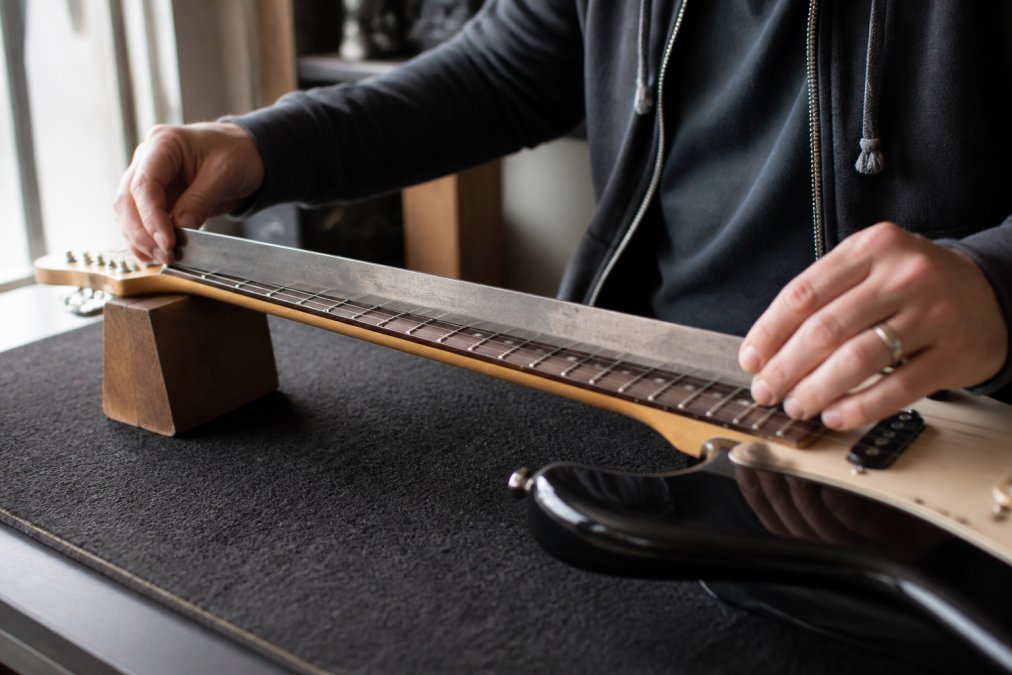
Fret condition determines whether the guitar buzzes or sustains cleanly. A warped neck or uneven frets create dead spots where notes don't ring clearly. Run your eye along the fretboard under bright light to spot visible warping. Press down on the first and last fret simultaneously; the neck should be straight without gaps.
Intonation stability matters too. Tune the open string, then check the same note at the 12th fret. If the 12th-fret note is sharp or flat, the bridge saddle may need adjustment. Quality instruments arrive with proper intonation; cheaper guitars sometimes require setup work.
Essential Electric Guitar Accessories for Beginners
A guitar without an amplifier is just decoration. Your first amplifier doesn't need to be powerful; a 15-20 watt solid-state amp provides enough volume for bedroom practice. Tube amplifiers sound warmer but are more expensive and require maintenance. For learning, solid-state amps let you focus on playing.
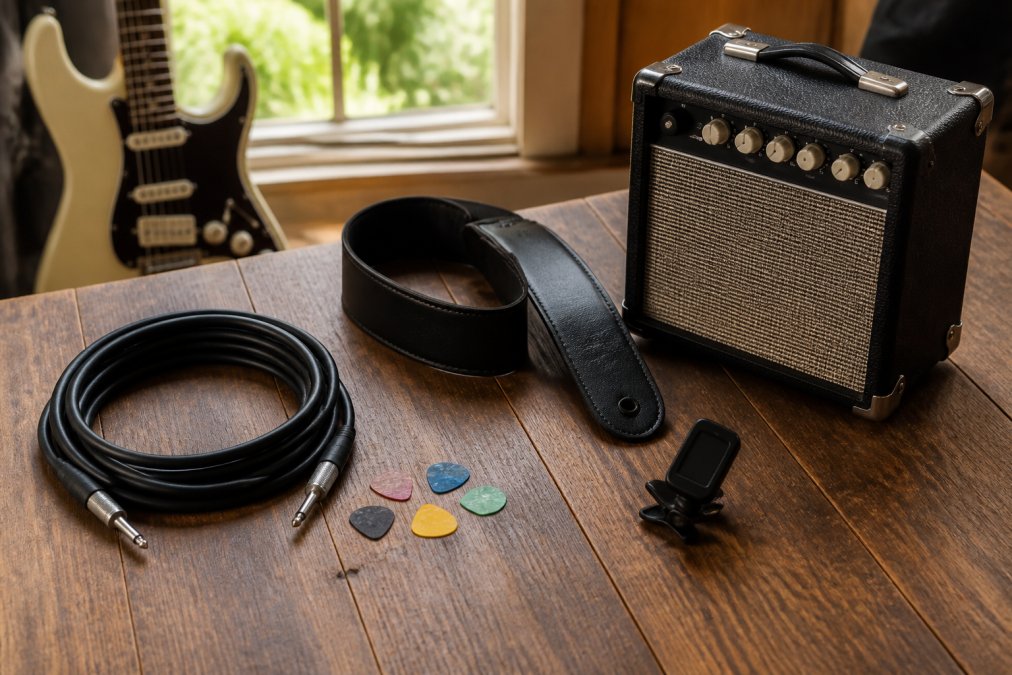
A quality instrument cable connects your guitar to the amplifier. Cheap cables introduce noise and intermittent connection problems. A reliable cable costs little and saves frustration. A guitar strap keeps your instrument secure while standing; comfort matters during long practice sessions.
A digital tuner is essential and affordable, eliminating guesswork when learning. Picks come in various gauges; thinner picks (0.60-0.73mm) are easier to control, while thicker picks (0.88-1.0mm) produce punchier tone. Most beginners benefit from medium-gauge picks.
A stand keeps your guitar safely stored and accessible. A capo clamps across the fretboard to change pitch and opens new chord shapes. At Muzic Man, we bundle these essentials with beginner packages, ensuring you have everything needed to start playing immediately.
| Accessory | Purpose | Priority |
|---|---|---|
| Amplifier | Produces sound from your guitar | Essential |
| Cable | Connects guitar to amplifier | Essential |
| Tuner | Keeps guitar in tune | Essential |
| Strap | Supports guitar while playing | Essential |
| Picks | Strike the strings | Essential |
| Stand | Stores guitar safely | Recommended |
| Capo | Changes open string pitch | Recommended |
| Gig bag | Protects guitar during transport | Recommended |
How to Choose Your First Electric Guitar: A Step-by-Step Framework
Start by identifying the musical genres that inspire you. This determines whether you need single-coil or humbucker pickups and influences body style preferences. A rock player and jazz player have different needs.
Establish your budget realistically, factoring in guitar, amplifier, cable, tuner, and strap. Spreading your budget across essentials matters more than splurging on an expensive guitar with a poor amplifier.
Visit a physical location if possible. The Robina shop at Muzic Man allows you to hold different guitars, feel neck profiles, and hear instruments through amplifiers. If buying online, request videos and detailed photos, and confirm the return policy.
Inspect the instrument for construction quality. Check neck straightness, examine fret condition, test tuning stability, and listen for buzzing. Ask about setup, does the guitar arrive properly adjusted, or will you need professional setup work?
Consider new versus used. New guitars come with warranty protection and arrive ready to play. Used guitars offer savings but require careful inspection. Buying new from a reputable retailer eliminates inspection uncertainty.
Finally, trust your instinct. If a guitar feels uncomfortable or uninspiring, it's wrong regardless of specifications. Your first guitar should excite you enough to pick it up daily.
Conclusion
Choosing your first electric guitar shapes your entire learning experience. Construction type, pickup configuration, playability characteristics, and accessories all influence whether you'll enjoy playing enough to stick with it. At Muzic Man, we've guided musicians through this process, from our Robina location to customers across Queensland and beyond.
Our team understands that beginners need instruments that inspire consistent practice, combined with reliable support and quality accessories. We stock electric guitars from established brands, offer competitive pricing, and provide Australia-wide shipping. Whether buying in person or online, we're committed to ensuring your first guitar experience is positive and sets you on the right path to becoming the musician you want to be.
Frequently Asked Questions
Q: What should I look for when choosing my first electric guitar?
A: Focus on playability first: check that the neck feels comfortable, the action is not too high, and frets are in good condition. Examine the body construction (solid vs hollow), pickup type (single-coil or humbucker), and tuning stability. Match the guitar style to the music you want to play. Test the output jack and bridge quality. If possible, play it before buying or check the return policy if ordering online.
Q: How much should I spend on my first electric guitar?
A: Budget depends on your commitment level. Entry-level guitars offer decent quality for learning fundamentals without significant investment. Mid-range options provide better build quality, improved pickups, and superior tuning stability, worth considering if you're serious about progressing. Avoid the cheapest options, as poor playability can discourage learning. Factor in the total cost of ownership: amplifier, cable, strap, tuner, and setup services. Pricing varies widely, so check current options at your preferred retailer.
Q: Should I choose an electric guitar or acoustic guitar as a beginner?
A: Electric guitars are often easier for beginners because they have thinner strings, lower action, and require less finger strength initially. They're ideal if you enjoy rock, pop, or metal. Acoustic guitars suit folk, country, or singer-songwriter styles but demand more hand strength and can cause finger soreness early on. Consider the music you want to play and whether you have access to an amplifier. Electric guitars also benefit from professional setup, which can significantly improve playability.
Q: What accessories do I absolutely need for my first electric guitar?
A: Essential items include a cable (connects guitar to amplifier), an amplifier, a strap, picks, and a tuner. A stand or wall mount protects the guitar when not in use. A capo expands your playing options. A gig bag or hard case provides protection during transport. Consider a setup tool kit for minor adjustments. Many beginners overlook professional setup services, which address neck warping, action height, and intonation, this makes a huge difference in playability and should not be skipped.
Q: What are common mistakes to avoid when buying a first electric guitar?
A: Avoid choosing based on appearance alone; playability matters far more. Don't ignore neck condition, check for warping and dead frets. Underestimating total cost is common; budget for an amplifier, cable, and setup. Buying purely online without trying the guitar risks poor ergonomics or hidden defects. Skipping professional setup is a major mistake; even budget guitars play better after proper adjustment. Don't assume cheaper always means poor quality, but be wary of extremely low prices. Consider return policies and warranty coverage.
Q: How do I know if an electric guitar is the right size for me?
A: Most adults play standard full-size guitars comfortably. Younger players or those with smaller frames may prefer shorter scales. Hold the guitar and check that your arm reaches the frets without excessive stretching. The nut width (typically 42-43mm) should feel comfortable under your fingers. Neck profile varies; some are thicker, others thinner. Ergonomics are personal, so test multiple options if possible. Weight matters too, heavier guitars cause fatigue during long practice sessions.
Q: Are cheap electric guitars worth buying for beginners?
A: Entry-level guitars at reasonable prices can be decent for learning basics, but extremely cheap options often have poor playability, tuning stability issues, and cheap components that frustrate beginners. A guitar that's hard to play or stays out of tune discourages practice. Mid-range options offer much better value and longevity. Quality setup services can improve even budget guitars significantly. Avoid the temptation to save money on the instrument itself; invest in playability and tuning stability to stay motivated.
This article was written using GrandRanker