

Is Buying Used Music Equipment Worth It? A 2026 Guide
9th Oct 2026
Table of Contents
- Is Buying Used Music Equipment Worth It? The Honest Answer
- Used vs New Music Equipment: Where the Real Trade-Off Sits
- The Used Guitar Buying Checklist Every Buyer Needs
- How to Inspect a Used Guitar Before You Hand Over Money
- Buying Used Music Gear Online in Australia: What Changes
- Which Used Gear Is Safe to Buy and Which to Avoid
- Conclusion: When Used Music Equipment Is Worth It
- Frequently Asked Questions
Last Updated: October 9, 2026
Is Buying Used Music Equipment Worth It? The Honest Answer
Is buying used music equipment worth it? For most players, yes, with one condition: you inspect before you pay. A well-checked second-hand instrument often delivers the same playability as a new one for a fraction of the outlay. At Muzic Man, we sell new gear from our Robina base, so we have no reason to push you one way.
Here is the honest version. Used gear rewards patience and punishes haste. The players who win are the ones who know what to check, what to walk away from, and which categories are safe bets.
Below, we break down where the real trade-off sits, the checklist we use in-store, and which items we would never buy second-hand.
Used vs New Music Equipment: Where the Real Trade-Off Sits
Used vs new music equipment comes down to one question: are you paying for condition or for certainty? New gear gives you warranty cover, factory setup and a returns window. Used gear gives you the same instrument for less, provided nothing is hiding underneath.
What You Actually Save
The saving is real but uneven. Mass-produced models lose value fastest, so a two-year-old mid-range electric guitar or digital piano often sells for well under its original retail figure. Limited runs and discontinued finishes hold value better, which cuts both ways: you pay more, but you lose less if you resell.
What You Give Up
You give up the warranty, the unboxing, and the right to a no-questions return. You also inherit whatever the previous owner did to it. A guitar that lived in a car boot through a Queensland summer has had its neck and electronics tested in ways a shop instrument never is. That is the trade, and it is usually worth taking.
| Factor | New Gear | Used Gear |
|---|---|---|
| Warranty | Full manufacturer cover | Usually none |
| Setup | Factory or shop adjusted | Unknown history |
| Upfront cost | Highest | Lower, varies by model |
| Resale loss | Steepest in year one | Already absorbed |
| Risk | Low | Depends on inspection |
The Used Guitar Buying Checklist Every Buyer Needs
A used guitar buying checklist should cover five things: neck straightness, fret wear, electronics, hardware condition, and the honesty of the seller. Run it every time, even when the price feels too good to argue with.
- Sight down the neck from the headstock. Look for a consistent curve, not a twist or hump.
- Check fret wear under the top three strings. Shallow divots are normal; deep grooves mean a refret.
- Test every pickup position and each control knob. Crackle means dirty pots or worse.
- Inspect the bridge, tuners and nut for cracks, stripped screws or replacement parts.
- Ask why it is being sold, and how it has been stored.
- Confirm the serial number matches the model being advertised.
How to Inspect a Used Guitar Before You Hand Over Money
Knowing how to inspect a used guitar properly means playing it, not just looking at it. Plug in if you can, play every fret, and listen for buzz, dead notes or a weak pickup. Cosmetic scratches are bargaining points, not dealbreakers. Structural problems are walk-away territory.
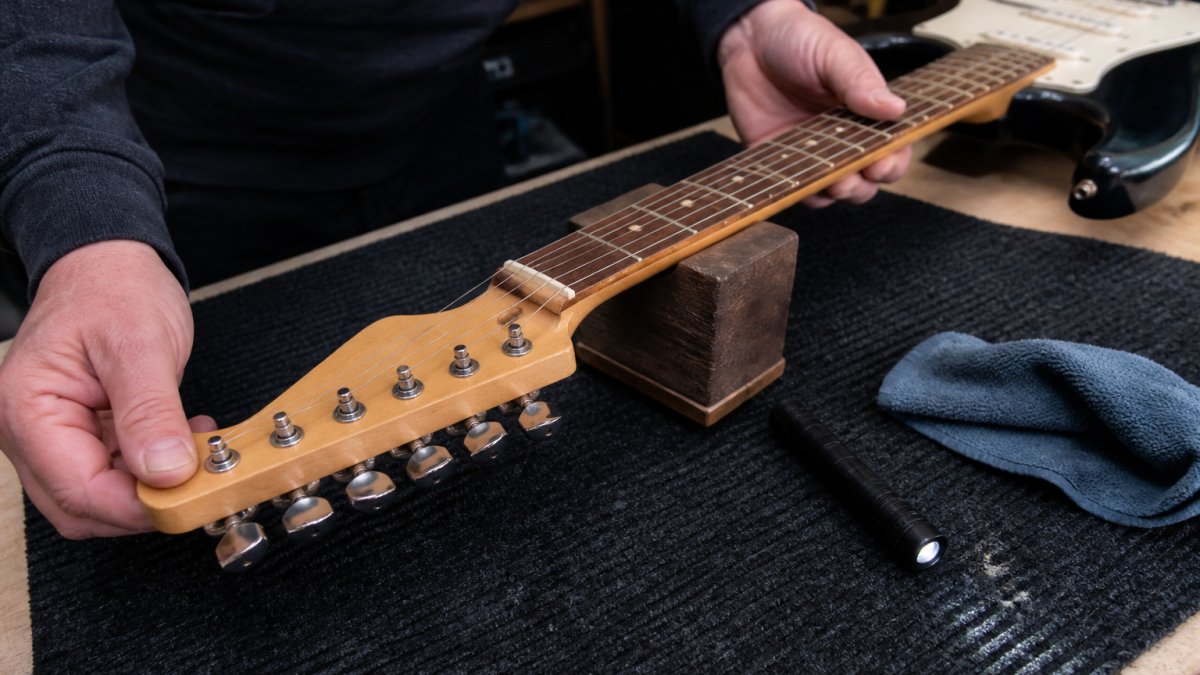
Bring a small torch and a cloth. Shine the light along the fretboard at a low angle to catch lifting frets and hairline cracks near the headstock. Wipe the back of the neck: sticky residue often hides a repaired break. Check the output jack for looseness and the strap buttons for stripped threads.
Acoustic buyers should look inside the soundhole with a mirror or phone camera. Loose braces and lifting bridges are expensive repairs, and both are easy to miss from the outside.
Buying Used Music Gear Online in Australia: What Changes
Buying used music gear online in Australia removes the handshake and adds distance, so the inspection shifts to questions and photos before you commit. Ask for dated photos of the neck, frets, serial number and any damage. A seller who will not send them is telling you something.
Pay through a method with buyer protection where possible, and keep the listing description. If the item arrives materially different from what was advertised, that record is your evidence under Australian Consumer Law, which covers second-hand goods sold by businesses. The ACCC guide to consumer guarantees sets out what you are entitled to when a product is not as described.
Shipping matters too. Guitars travel badly in soft cases, so confirm how the seller packs it and whether insurance is included. For anyone searching for used music equipment near me on the Gold Coast, a physical store visit removes most of this risk entirely.
Which Used Gear Is Safe to Buy and Which to Avoid
Some categories are near-riskless second-hand; others are a gamble.
Safe to buy used:
- Electric guitars and basses from established brands
- Acoustic guitars, after a proper inspection
- Valve and solid-state amplifiers with a recent service history
- Effects pedals, which are simple and easy to test
Buy with caution:
- Digital pianos and keyboards, where key action and internal components wear
- Audio interfaces and studio monitors, which can hide electrical faults
- Anything with a rechargeable battery that may no longer hold charge
Avoid unless heavily discounted:
- Instruments with visible structural repairs
- Gear sold without a serial number or with an unclear history
- Items where the seller refuses an in-person inspection
Conclusion: When Used Music Equipment Is Worth It
The challenge is not finding used gear; it is knowing which listings to trust. That is where a retailer with a physical presence and a reputation to protect changes the maths. Muzic Man stocks many branded instruments and supplies, ships Australia-wide, and backs every sale from our Gold Coast shop.
Get started with Muzic Man and find the right instrument at the right price.
Frequently Asked Questions
Is buying used music equipment worth it for a beginner?
For most beginners, yes. A used instrument at the same budget usually gets you a higher-tier brand with better build quality, which matters more than a factory-fresh finish. The catch is that you need to budget for a professional setup, since a poorly adjusted used guitar or keyboard can make learning harder. If the price plus a setup still beats the new equivalent, used music equipment is the smarter entry point.
What should I check before buying a used guitar?
Work through a used guitar buying checklist: fret wear and buzzing, neck straightness, action height, tuner function, electronics crackle, bridge and saddle condition, and any repaired cracks around the headstock or body. Test every pickup position and the truss rod if you can. Ask about the instrument's history and whether it has been refretted or rewired. A quick inspection catches most expensive problems before money changes hands.
Is it safe to buy used music gear online in Australia?
It can be, provided you use Australian Consumer Law protections and buy from a retailer or seller with a clear returns policy. Look for detailed photos, a written condition description, and confirmation the item is in stock before paying. When buying used music gear online in Australia, prefer sellers who accept returns and ship with tracking, so you have recourse if the item arrives not as described.
What are the disadvantages of buying second-hand instruments?
The main drawbacks are no manufacturer warranty, hidden wear in frets, electronics or hardware, and limited colour or model choice. Some gear, like heavily gigged valve amps or vintage synths, may need servicing soon after purchase. You also lose the option to return easily with private sellers. Weigh these against the savings and buy only from sellers who let you inspect or return the item.