




How to Get Expert Music Advice: A 2026 Guide
9th Sep 2026
Table of Contents
- Why Most Music Advice Fails (And How to Fix It)
- Step 1: Define What Expert Music Advice You Need
- Step 2: How to Approach Industry Professionals for Feedback
- Step 3: Use Professional Music Feedback Services for Unbiased Review
- Step 4: Find Music Industry Mentorship in Australia That Works
- Step 5: Build Your Own Feedback Loop for Continuous Growth
- The Local Edge: Why Your Community Matters in Robina
- Conclusion: Turn Advice into Action
- Frequently Asked Questions
Last Updated: September 9, 2026
Why Most Music Advice Fails (And How to Fix It)
Most musicians seek expert music advice from friends, YouTube comments, or forum threads, and the result is often generic, conflicting, or simply wrong for their specific situation. The problem isn't a lack of guidance; it's a lack of targeted, professional input that understands your genre, your skill level, and your goals. This guide from Muzic Man breaks down a practical path to getting feedback that actually moves your music career forward.
To get expert music advice that works, you need to move past passive consumption and build an active feedback strategy. Generic tips on music production or songwriting rarely translate into actionable improvement without context. Below, we'll show you exactly how to source, vet, and apply advice from people who genuinely understand industry standards, whether you're a beginner in Robina or a touring professional.
Step 1: Define What Expert Music Advice You Need
Expert music advice only works when you know the specific question you're asking. A vague request like "how do I improve?" will get you a vague answer, but a targeted question about your audio mixing or performance anxiety will attract useful, specific guidance.
Start by auditing your current skill set. Write down the three areas where you feel most stuck, such as vocal coaching, mastering, or rehearsal techniques. Then, decide which type of input you require: technical feedback on your output, or creative feedback on your direction. Technical feedback focuses on audio engineering, pitch, and timing against industry standards. Creative feedback addresses songwriting, arrangement, and artistic expression.
Step 2: How to Approach Industry Professionals for Feedback
Once you know your gap, approaching the right person matters more than approaching many people. Industry professionals are busy, so respect their time by sending a concise, specific request that shows you have done your homework. But the real challenge in Australia, and particularly in a tight-knit scene like the Gold Coast, is finding the right professional and verifying they are who they say they are.
Vetting Local Mentors and Engineers: A Pre-Flight Checklist
Before you send a single message, run any potential advisor through a quick verification process. This protects you from both time-wasters and outright scams, which are unfortunately common in the unregulated world of music production.
- Check for Verifiable Credits: Don't just look at their Instagram follower count. Search for their name on the Australian Recording Industry Association (ARIA) charts or the AIR (Australian Independent Record Labels Association) website. A credit on a track that has charted or been released through a label is a strong signal (aria.com.au). If they claim to have worked with a major artist, verify it on a service like Discogs or the artist's official album liner notes.
- Ask for a Discography, Not a Demo Reel: A producer or engineer should be able to provide a list of projects they have completed. Ask for specific track names and release dates. A professional will have this ready. If they only offer a montage of 'behind the scenes' footage without naming the final product, treat that as a red flag.
- Look for Local Presence: In Queensland, check if they are a member of APRA AMCOS or the Queensland Music Industry (QMI) (apraamcos.com.au). These organisations often have member directories. A local presence means they are accountable to the local community and are less likely to disappear after taking your money.
- The 'Small Job' Test: Before committing to a large project, commission a small, defined task. For example, ask them to master a single track or give written feedback on a 30-second mix. This is a low-risk way to assess their communication style, turnaround time, and whether their technical feedback actually improves your work.
The Approach: Specificity is Your Currency
Once you have a vetted list of potential contacts, your first point of contact should be a clear, professional message. Introduce yourself, state your specific challenge, and attach a short clip or reference track. Avoid sending a full album or asking open-ended questions. Be realistic about what you are asking for; a quick listen to a 30-second mix is a reasonable request, while a full production critique is not.
Where to Find Vetted Professionals in Australia
Beyond cold-calling studios, use industry-specific directories to shortlist candidates:
- APRA AMCOS: Their website lists members, and they often run workshops where you can meet professionals in a structured environment.
- The Music Network's Industry Directory: A comprehensive list of labels, publishers, and service providers in Australia.
- Local Council Arts Grants: Check the City of Gold Coast's arts and culture pages. They often fund local music initiatives and can list accredited mentors.
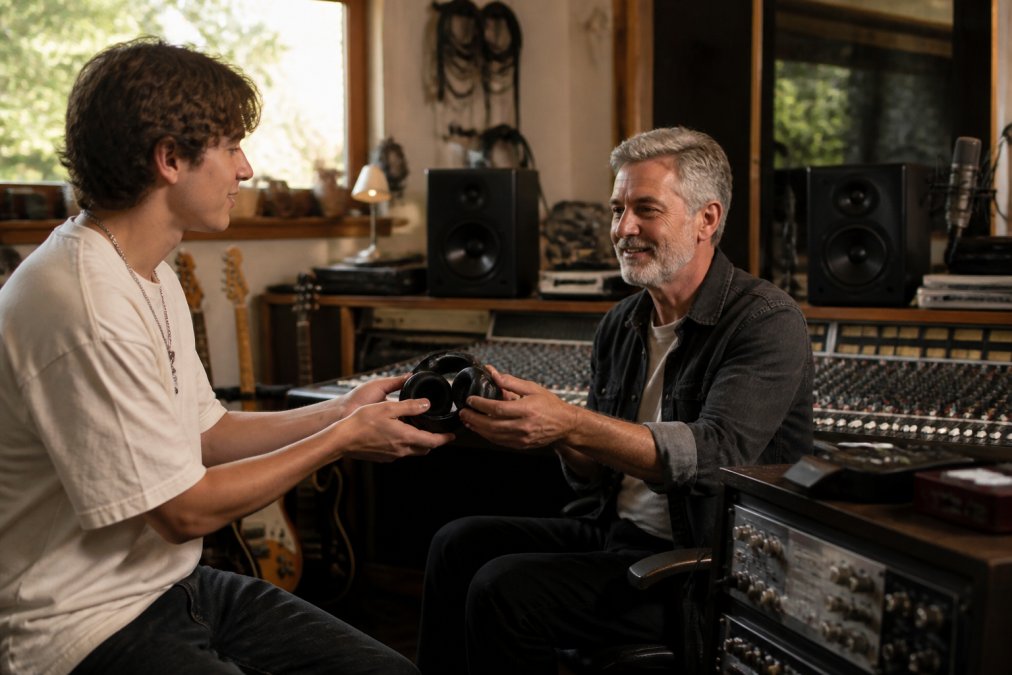
A common pattern is that emerging musicians spend hours searching for the 'best' producer in the world, when the most effective move is to find a competent, vetted local engineer who is one step ahead of you. They understand the local venues, the local sound, and the local audience. That context is often more valuable than a distant 'expert' who has never set foot in a Gold Coast rehearsal room.
Step 3: Use Professional Music Feedback Services for Unbiased Review
If you lack local connections, professional music feedback services offer a structured alternative to cold outreach. These platforms connect you with vetted producers, engineers, and session players who review your work against a clear rubric.
These services are valuable because they remove the emotional bias of friends and bandmates. A neutral expert can tell you that your low-end is muddy or your transitions feel rushed without worrying about hurting your feelings. When selecting a service, look for one that provides written, specific notes rather than just a star rating. Before you commit, check whether the reviewer has credits in your genre, as a metal producer may not be the best judge of a folk ballad.
Step 4: Find Music Industry Mentorship in Australia That Works
Music industry mentorship in Australia is accessible if you know where to look, but it rarely appears through a single job board. The most effective mentorship often grows from consistent, respectful interaction within your local scene. To build a mentorship relationship, focus on contribution rather than extraction. Attend local gigs in Queensland, offer to help with load-outs or recording sessions, and ask informed questions when the moment is right. Over time, a professional who sees your work ethic and hunger for music theory is far more likely to take you under their wing. For those in Robina, the local music community is tight-knit, so your reputation for reliability often precedes your technical proficiency.
The Localised Approach: From Robina to the Gold Coast Corridor
The Gold Coast music scene is not monolithic. It is a corridor stretching from Coolangatta in the south to Southport and Surfers Paradise in the north, with Robina sitting strategically in the middle. A mentorship strategy that ignores this geography will fail.
- Start with Venue Staff: The sound engineers and booking managers at venues like The NightQuarter in Helensvale, Vinnies Dive Bar in Southport, or the Robina Pavilion are your first line of contact. They see hundreds of acts a year and know who is professional and who is not. A respectful conversation with a sound engineer about your monitor mix is a more effective first step than a cold email to a famous producer.
- Leverage Community Organisations: The Gold Coast Music Awards and the Gold Coast Music Action Group (GCMAG) are hubs for local industry. Volunteering at their events puts you in the same room as established artists, venue owners, and council arts officers. This is where mentorship relationships often begin, not with a formal 'will you be my mentor?' request, but with a shared task.
- The 'Contribution' Model in Action: Instead of asking a local producer to listen to your tracks, offer to assist them on a session. This could be as simple as helping to set up microphones or acting as a runner. You will learn more about workflow, communication, and problem-solving in one afternoon than in a month of reading forums. This also demonstrates your work ethic in a tangible way.
Formal Mentorship Programs
While informal relationships are powerful, formal programs provide structure and accountability. Look for these specific Australian initiatives:
- APRA AMCOS's 'Artists' Services': They run workshops and masterclasses across the country. While not one-on-one mentorship, they provide direct access to industry professionals who are there to answer questions.
- QMusic's 'Qld Music Trails' and Events: QMusic, the peak body for Queensland music, often runs professional development sessions (qmusic.com.au). Their events are a direct line to the state's music ecosystem.
- The Australian Council for the Arts' 'Music Australia' Programs: While often grant-based, they fund projects that include mentorship components. Even if you don't apply, the project partners they fund are often open to conversations.
The 'Two-Question' Rule for First Meetings
When you do get time with a potential mentor, whether at a gig or a formal event, have a plan. Prepare two specific questions that show you have done your homework. For example: "I'm working on a track that mixes synthwave and indie rock. I'm struggling to get the drums to sound organic. If you were approaching this, would you start with a live take or a programmed beat?" This is a far more effective conversation starter than "What do you think of the music scene here?" It demonstrates your specific interests and invites a technical, actionable response.
Step 5: Build Your Own Feedback Loop for Continuous Growth
Relying on occasional external advice is not enough; you need a consistent feedback loop to sustain artistic growth. This means scheduling regular check-ins with your chosen advisors and tracking your progress against specific goals.
Set a monthly rhythm. One week, you record and mix a new piece. The next week, you send it to your mentor or a feedback service with a specific set of questions. The following week, you apply the changes and note what worked. This practice routine turns skill acquisition from a random event into a structured process. By building a portfolio of revised work, you also create a tangible record of your professional development that you can show to potential collaborators or venues.
The Local Edge: Why Your Community Matters in Robina
While digital feedback platforms are useful, they cannot replace the nuance of face-to-face interaction. Your local community offers a feedback loop that is immediate and context-aware, which is why finding the right music store in Robina is a strategic move, not just a shopping errand.
A local store that employs working musicians bridges the gap between retail and mentorship. When you buy a guitar or a digital piano, you are not just transacting; you are starting a conversation with someone who understands the local gig circuit and the technical demands of your genre. This is where the "near me" search pays off. Visiting a physical shop lets you test gear, ask about setup, and casually discuss your current project with staff who have likely played the same venues you are targeting.
| Feedback Source | Best For | Key Benefit |
|---|---|---|
| Local Music Store (e.g., Robina) | Immediate gear advice and local networking | Face-to-face context and community insight |
| Professional Feedback Services | Unbiased technical review | Structured, genre-specific critique |
| Industry Mentorship | Long-term career trajectory | Ongoing guidance and accountability |
| Peer Collaboration | Creative process and songwriting | Shared experimentation and support |
Conclusion: Turn Advice into Action
The challenge with expert music advice is not finding it; it is filtering the noise and applying the signal. Generic tips will keep you stagnant, while targeted feedback from trusted sources will accelerate your progress. At Muzic Man, we connect you with quality instruments and knowledgeable staff who understand the local scene in Robina and beyond. Whether you need a new interface for recording or advice on the best acoustic guitar for your level, our team offers Australia-wide shipping and a physical location to test your next purchase.
Get started with Muzic Man and turn the advice you have gathered into your next creative breakthrough.
Frequently Asked Questions
How do I find a reputable music mentor in Australia?
Start by looking at state-based organisations like Music NSW or Music Victoria, which often run mentorship programs. Attend local gigs and industry networking events in your city to meet potential mentors in person. When you find someone, ask for a short introductory meeting rather than a long-term commitment upfront. A good mentor will have verifiable experience in your specific area, whether that is songwriting, audio engineering, or performance.
What should I look for when seeking professional music feedback?
Look for feedback that is specific and actionable, not just general praise. A good critique will reference particular elements like your song structure, audio mixing, or vocal delivery. Check if the service or person has experience in your genre. For example, an orchestral score needs different expertise than a pop track. Ask what format the feedback takes, whether it is a written report, a video call, or annotated notes on your track.
Is it better to get music advice from a producer or a fellow musician?
It depends on what you need. A producer or audio engineer is best for technical feedback on sound quality, audio mixing, and mastering. A fellow musician, especially a session player, can offer practical advice on performance and rehearsal techniques. For a balanced view, seek both. Use professional music feedback services for the technical side and build a peer network for creative and performance-based advice.
How do I distinguish between constructive criticism and subjective opinion?
Constructive criticism is specific, objective, and tied to industry standards. It suggests a clear change, like 'the vocals sit too far back in the mix during the chorus.' Subjective opinion is a personal preference, like 'I don't like this song.' A good rule is to ask the person to explain the 'why' behind their comment. If they can point to a concrete technical or structural reason, it is likely constructive feedback.