


Is It Worth Buying Expensive Instruments? A 2026 Guide
6th Sep 2026
Table of Contents
- Defining High-End vs Mid-Range: Where Does the Money Go?
- Sound Quality vs Price: Are Expensive Instruments Actually Better?
- The 'Setup' Factor: Why a $500 Instrument Can Play Like a $2,000 One
- Best Budget Instruments for Serious Players: Where to Spend Smart
- When to Upgrade Your Musical Instrument: Signs You've Outgrown Your Gear
- Buying Used vs New Musical Instruments Australia: Resale and Depreciation
- Investment vs Utility: The Psychological Impact of Playing a Premium Instrument
- How to Test an Instrument Before You Commit
- Frequently Asked Questions
Last Updated: September 6, 2026
The question of whether it is worth buying expensive instruments is one every musician confronts, usually with their wallet in hand and a mix of hope and skepticism. In Australia, the gap between a budget beginner guitar and a professional-grade model can be substantial, and knowing where your money actually goes is critical. The honest answer is rarely a simple yes or no; it depends on your skill level, your goals, and how you define value.
The most valuable insight we can offer is this: the instrument itself is only half the equation. A common mistake is assuming that a higher price tag automatically translates to a better playing experience for you, right now. In reality, the true cost of an instrument includes its setup, its maintenance, and its resale value, factors that often matter more than the brand name on the headstock. Below, we break down the real differences between price points, when upgrading is genuinely worthwhile, and how to make a smart purchase in Robina or anywhere else in Queensland.
Defining High-End vs Mid-Range: Where Does the Money Go?
When you move from a mid-range instrument to a high-end one, you are paying for tangible improvements in materials, craftsmanship, and quality control. Expensive instruments typically feature higher-grade tonewoods, better hardware, and more precise fretwork, all of which contribute to a superior feel and sound.
The price difference also reflects the labour involved. A professional-grade guitar, for instance, undergoes significantly more hand-finishing and detailed setup work at the factory than an entry-level model. This results in better intonation, a more comfortable action, and components that will last for decades rather than years. A mid-range instrument is built to a budget, whereas a high-end instrument is built to a standard.
Sound Quality vs Price: Are Expensive Instruments Actually Better?
Expensive instruments generally offer superior tonal clarity, resonance, and sound projection, but the difference is not always dramatic to the untrained ear. The gap between a $300 guitar and a $1,000 guitar is often significant, while the gap between a $3,000 and a $6,000 instrument is more about nuance than a night-and-day transformation.
This is where diminishing returns become a real factor. For a beginner or a hobbyist, the tonal improvements of a top-tier instrument are often lost in a mix or at a practice volume. It is only when you have the skill to coax those subtle sounds out of the instrument that the investment truly pays off. For most players, a well-chosen mid-range instrument delivers the vast majority of the playing experience at a fraction of the cost.
The 'Setup' Factor: Why a $500 Instrument Can Play Like a $2,000 One
Here is the part most guides miss: a professional setup can transform an affordable instrument into something that plays like a much more expensive one. The term "setup" refers to adjusting the truss rod, bridge, and nut to achieve the correct string height and intonation, ensuring the instrument is comfortable and plays in tune across the entire fretboard.
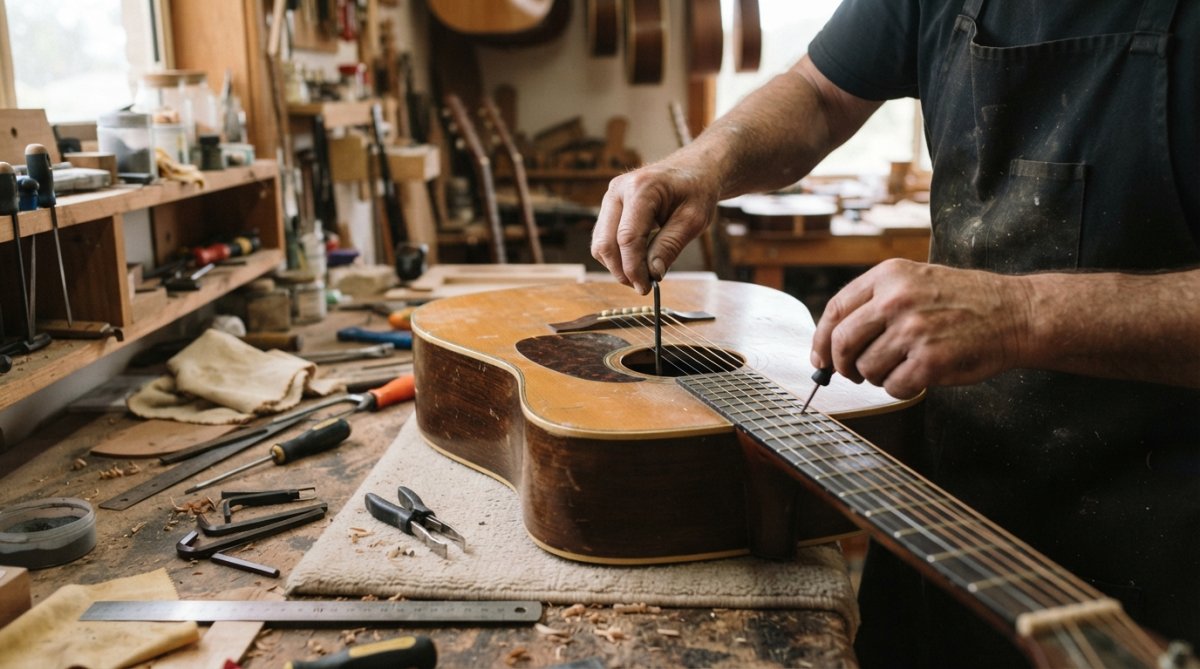
A common mistake is buying a budget guitar and playing it straight out of the box, then blaming the instrument for being hard to play. In practice, most factory instruments, regardless of price, benefit from a professional setup. If you are shopping for a new guitar, ask whether a setup is included. A well-set-up entry-level guitar will always beat a poorly adjusted premium model.
Best Budget Instruments for Serious Players: Where to Spend Smart
For serious players looking for the best budget instruments, the focus should be on finding a guitar with a solid build and good playability, rather than chasing fancy electronics or cosmetic finishes. The best budget instruments respond well to a professional setup and feature quality hardware that won't need replacing within a year.
A solid-top acoustic guitar offers better resonance and tonal development over time than a laminated one, and is a smarter long-term investment. Look for reputable brands known for consistent quality control in their entry-level ranges. Visiting a physical store allows you to feel the neck profile and check the weight and balance, something online specs can't convey. The team can help you find a model that fits your hands and your budget without compromising on the essentials.
When to Upgrade Your Musical Instrument: Signs You've Outgrown Your Gear
The clearest sign that it is time to upgrade your musical instrument is when its limitations are holding back your playing. If you find yourself fighting the instrument to get the sound you hear in your head, or if tuning stability and intonation are preventing you from recording or performing, you have likely outgrown your current gear.
Another strong indicator is physical discomfort. An action that is too high can cause hand fatigue, and poor ergonomics can hinder your technique. Upgrading is not about vanity; it is about ensuring your equipment supports your practice motivation and allows you to progress. If your current instrument is a constant source of frustration rather than joy, the investment in a higher-quality piece is justified.
Buying Used vs New Musical Instruments Australia: Resale and Depreciation
The used market in Australia is robust, but it operates differently depending on where you live. In major cities like Sydney and Melbourne, you will find a deep pool of buyers and sellers, which means higher liquidity and faster sales. In regional centres like the Gold Coast, the market is thinner, and selling a niche instrument can take months. This local context should shape your buying decision.
The Depreciation Curve in Australia
The depreciation curve is steepest for entry-level instruments. A $300 beginner guitar might only fetch $100-$150 used, a loss of 50-60% (reverb.com). However, premium instruments from brands like Maton, Cole Clark, or Fender's American series tend to hold their value better, often retaining 70-80% of their purchase price after three to five years, provided they are in excellent condition. This is because demand for high-quality used gear is consistent, and buyers are willing to pay a premium for a well-maintained instrument.
The Hidden Costs of Buying Used in a Humid Climate
Here is a critical factor specific to the Gold Coast: humidity. The coastal air can cause wooden instruments to swell, leading to cracks, lifted bridges, and warped necks (fender.com). When inspecting a used guitar in Robina, pay close attention to the following:
- Neck relief: Look down the neck from the headstock. A slight bow is normal, but a pronounced curve indicates the truss rod may need adjustment or the neck has warped permanently.
- Bridge lifting: Check the back of the acoustic guitar where the bridge meets the soundboard. If you see a gap or the bridge is pulling away, this is a costly repair.
- Fret wear: Run your finger along the edge of the fretboard. Sharp, jagged fret ends are a sign of dryness and shrinkage, which is common in instruments that have not been properly humidified.
The Warranty Advantage of Buying New
A new instrument from a reputable dealer offers a warranty that covers manufacturing defects, which is invaluable for peace of mind. In Australia, your consumer rights under the Australian Consumer Law protect you against faulty goods, but this protection is more straightforward when you are the original purchaser (accc.gov.au). Buying used from a private seller often means buying 'as is', with no recourse if a hidden issue emerges a week later. If you are considering a used instrument, ask the seller if they have the original receipt.
Resale Liquidity: A Local Perspective
Before you buy any instrument, consider how easy it will be to sell locally. On the Gold Coast, the most liquid instruments are acoustic and electric guitars from well-known brands. Niche instruments like vintage synthesisers or rare basses may take months to sell, tying up your capital. If you are buying a high-end instrument as an 'investment', remember that the market for collectible instruments is small and specialised. You are better off viewing the purchase as a utility, a tool for making music, and any resale value as a bonus, not a guarantee.
Investment vs Utility: The Psychological Impact of Playing a Premium Instrument
There is an undeniable psychological benefit to owning a premium instrument. The aesthetic appeal and craftsmanship of a high-end guitar can increase your practice motivation and inspire you to play more often. When you have an investment piece in your hands, you tend to treat your practice time with more respect, which can accelerate your progress.
This is the investment vs utility argument: a premium instrument is not just a tool for making sound, but a source of inspiration. However, this effect only works if you have the skill to appreciate the difference. For a beginner, a high-end instrument can sometimes feel intimidating or be treated too preciously to play freely. The right time to buy an expensive instrument is when you will genuinely benefit from its superior playability and sound, not just its status.
How to Test an Instrument Before You Commit
Testing an instrument is a skill in itself, and most players rely on a quick strum rather than a systematic evaluation. To truly assess whether an instrument is worth its price tag, you need a structured approach that isolates playability, intonation, and resonance.
The 15-Minute Test Protocol
A thorough test takes time. Here is a practical protocol you can use at any store to compare instruments side-by-side.
1. The Unplugged Assessment (5 Minutes)
Start without an amplifier. For an electric guitar, listen to the acoustic resonance of the body. A well-built guitar will ring out clearly, sustaining notes even when unplugged. A dull, thuddy response often indicates heavier damping from thick finishes or inferior wood. For acoustics, play open chords and listen for the fundamental note to bloom. A $1,500 acoustic should fill the room noticeably more than a $500 model.
2. The Fret-by-Fret Check (5 Minutes)
This is where many instruments fail. Play every note on every string, from the open string up to the 15th fret. You are listening for two things: fret buzz and dead spots. Fret buzz is a rattling sound caused by uneven fret heights. Dead spots are notes that sound muted or choked, often found around the 7th to 9th frets on the G and B strings. A high-quality instrument should be free of both. If buzzing persists after a truss rod adjustment, it is a manufacturing flaw.
3. The Intonation Test (2 Minutes)
Intonation is how well the instrument plays in tune up the neck. Play a harmonic at the 12th fret, then fret the note at the 12th fret. The pitch should be identical. If the fretted note is sharp or flat, the instrument will sound out of tune as you play chords higher up the neck. This is a common issue on budget instruments and can be corrected with a setup, but it is worth noting before you negotiate the price.
4. The Dynamic Range Test (3 Minutes)
This test separates tools from toys. Play a note as softly as you can, then gradually increase your picking or bowing pressure until the note is as loud as possible. A premium instrument responds to these dynamics with a smooth, even transition. A lesser instrument may sound thin at low volume and break up or distort at high volume. This is particularly important for players who need expressive control for recording or live performance.
The 'Feel' Factor: Ergonomics and Weight
Beyond sound, the instrument must feel like an extension of your body. Check the neck profile, does it feel too chunky or too thin for your hand? A deep 'C' shape is great for blues players, while a flatter 'D' shape is often preferred by lead guitarists. Also, assess the weight. A heavy guitar can cause back and shoulder strain during a two-hour set. Players in the Gold Coast's humid climate often prefer lighter woods like ash or mahogany, which are less prone to warping than heavier alternatives.
A Note on Climate and Setup in Queensland
Here is a unique angle most online guides ignore: the local environment. The Gold Coast's humidity can cause a guitar's neck to bow and the action to rise. When testing an instrument in Robina, ask the store how long it has been acclimatised to the local conditions. A guitar shipped from a dry climate like Victoria may need a few days to adjust. A reputable local dealer will have already set up the instrument to handle Queensland's humidity. If you are buying online from interstate, factor in the cost of a local setup, this is often the difference between a great guitar and a frustrating one.
Frequently Asked Questions
Do expensive instruments actually make you sound better?
An expensive instrument can improve your sound, but only after your technique is solid. A premium guitar or violin offers better tonal clarity, resonance, and playability, which makes playing easier and more expressive. For a beginner, the difference is often lost because they haven't yet developed the ear or the skill to control the instrument. A well-set-up mid-range model will sound better than a poorly maintained high-end one. Focus on your ability first, then upgrade when you can hear the limitations of your current gear.
Is it worth buying an expensive instrument as a beginner?
For most beginners, no. The main risk is a lack of practice motivation leading to the instrument collecting dust. A high-quality entry-level or mid-range instrument with a professional setup will serve you well for the first few years. The money is better spent on lessons or a good amplifier. However, if you are certain you will commit and have the budget, a better instrument holds its resale value better in Australia if you decide to stop. Start with something you are comfortable leaving out and picking up daily.
At what point does an instrument become an investment rather than an expense?
An instrument becomes an investment when its resale value either holds steady or appreciates, and when it directly enhances your income. Professional-grade instruments from top brands often depreciate slower than entry-level models. If you are a working musician, a reliable, great-sounding instrument is a tool for your trade, making it a deductible expense. For a hobbyist, it is an investment in enjoyment and practice motivation. Buying used is the best way to avoid the initial depreciation hit when buying new in Australia.
What is the main difference between student-grade and professional-grade instruments?
The main differences are build quality, materials, and hardware. Professional-grade instruments use better tonewoods, tighter craftsmanship, and higher-quality electronics and tuning machines. This results in better sound projection, sustain, and intonation stability. Student models are built for durability and low cost, often with laminated woods that lack resonance. The playability gap is significant: a professional instrument has a setup that allows for lower action and easier fretting, which reduces fatigue during long practice sessions.