




Professional Instrument Repair and Advice
2nd Sep 2026
Table of Contents
- Why Professional Instrument Repair and Advice Matters
- Common Instrument Repair Issues and When to Seek Help
- Cost of Musical Instrument Repair Australia
- DIY vs Professional Instrument Repair
- Instrument Maintenance Tips for Musicians
- How to Choose a Qualified Repair Technician
- Preventative Care and Instrument Longevity
- Booking a Professional Repair Service
- Frequently Asked Questions
Last Updated: September 2, 2026
Why Professional Instrument Repair and Advice Matters
Your instrument is an investment. Whether you're a beginner or seasoned professional, the condition of your gear directly affects how you sound and how much you enjoy playing. A qualified technician restores acoustic integrity, extends instrument longevity, and helps you understand proper care. Most damage is preventable, and professional repair saves thousands in replacement costs. Understanding when to seek help, what common problems look like, and how to maintain your equipment between services is essential knowledge for any serious musician.
Common Instrument Repair Issues and When to Seek Help
Every instrument type has its own vulnerabilities. Understanding what can go wrong helps you catch problems early.
Woodwind and Brass Instruments
Woodwind instruments like clarinets, saxophones, and flutes depend on precise mechanical adjustment and tight seals. The most common issue involves padding, the felt and cork material that seals tone holes when keys close. Over time, padding deteriorates, compresses, or becomes waterlogged, causing leaks that make the instrument impossible to play in tune (common instrument repair issues).
Brass instruments face different challenges. Valves stick, springs weaken, and dents in the bell or tubing affect airflow and acoustics. Forcing a stuck valve causes permanent damage to the delicate valve casing. Cork replacement is routine maintenance, corks dry out and crack with regular use, and ignoring this leads to bigger problems.
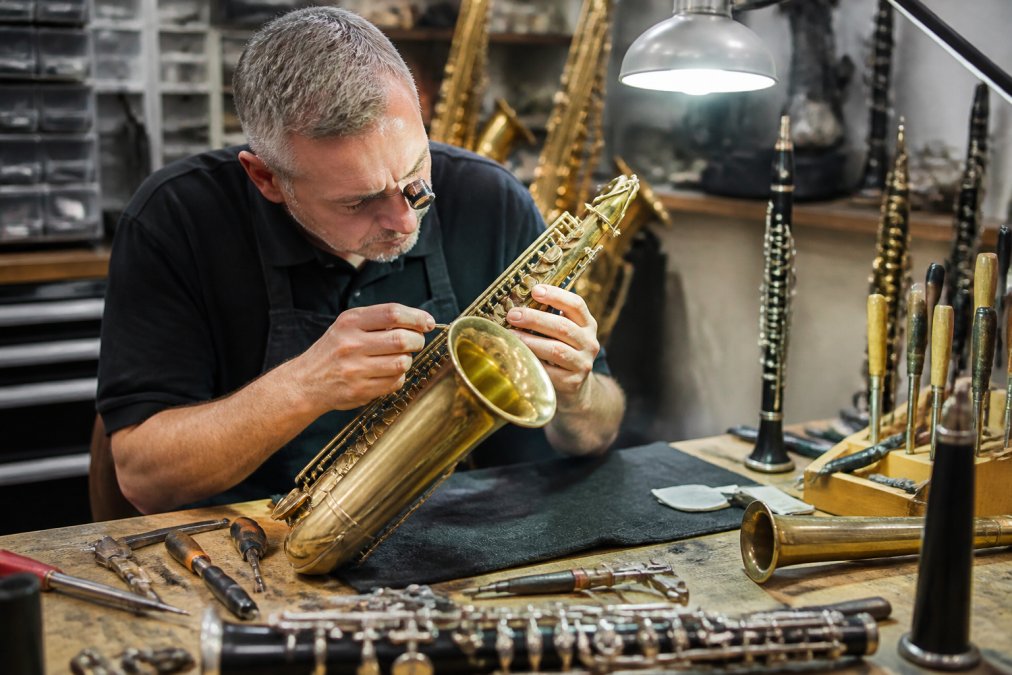
When to seek help: If your woodwind instrument has air leaks, your brass instrument won't produce certain notes, or intonation drifts, book a professional consultation immediately.
String Instruments
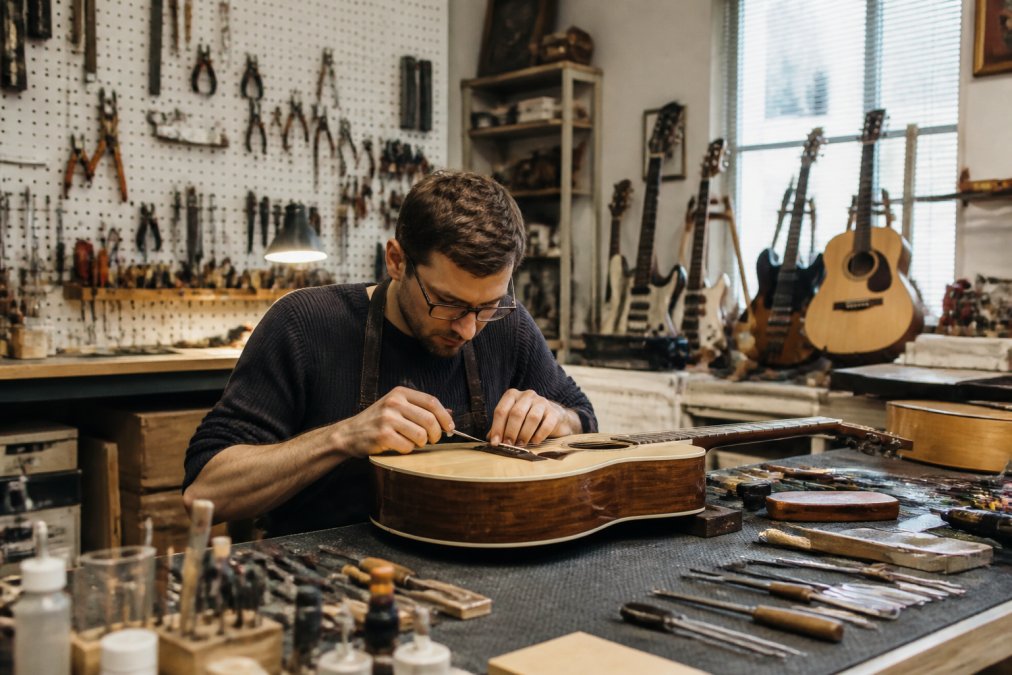
Guitars, violins, cellos, and other string instruments can develop problems in their bridge, nut, frets, and internal bracing. A high action (strings too far from the fingerboard) often indicates a neck problem requiring professional assessment. Fret wear is inevitable with regular playing; when frets become too worn, they need levelling or replacement using specialized equipment.
Acoustic guitars are vulnerable to humidity changes, which can cause the top to crack or warp (impact of humidity on wooden instruments). The internal bracing can separate, leading to buzzing and loss of sustain. Electric guitars face different issues: electronics can fail, output jacks wear out, and tuning machines need maintenance.
When to seek help: If your string instrument buzzes, won't stay in tune, or feels uncomfortable to play, a technician can diagnose the root cause quickly.
Keyboard Instruments
Digital pianos and keyboards rarely need mechanical repair, but they do require maintenance. Keys can stick and connections can fail. Acoustic pianos have thousands of moving parts, and even small misalignments affect playability and tone. Keywork adjustment is crucial, when the action falls out of regulation, the piano becomes difficult to play, particularly for fast passages (piano maintenance and regulation).
When to seek help: If your keyboard has unresponsive keys or your acoustic piano sounds dead or won't hold tuning, professional service is essential.
Cost of Musical Instrument Repair Australia
The cost of professional instrument repair varies dramatically depending on instrument type, problem severity, and technician experience. A simple cork replacement might cost little, while a complete overhaul of a brass instrument or piano regulation can be substantial. Professional repair is almost always cheaper than replacing an instrument.
For musicians in Robina and across Queensland, getting an accurate quote requires a technical assessment. Most repair technicians offer free consultations where they examine your instrument, identify issues, and provide a detailed estimate. Preventative maintenance is far less expensive than emergency repairs. We recommend having your instrument professionally assessed at least annually if you're playing regularly.
DIY vs Professional Instrument Repair
DIY maintenance includes cleaning your instrument, changing strings, replacing batteries, and basic adjustments outlined in your manual. This preventative care is valuable and saves money.
Where DIY becomes dangerous is attempting structural repairs or mechanical adjustments. Forcing a stuck valve, gluing a crack, or adjusting intonation without proper tools almost always makes problems worse. A technician can repair DIY damage, but it costs significantly more than addressing the original problem.
The rule of thumb: if the repair involves taking the instrument apart, adjusting mechanical components, or working on the acoustic structure, it needs a professional. Qualified technicians have specialized tools, spare parts, and years of experience diagnosing problems invisible to the untrained eye.
Instrument Maintenance Tips for Musicians
Proper maintenance extends your instrument's lifespan and keeps it sounding its best.
Store your instrument in a stable environment. Temperature and humidity fluctuations cause wood to expand and contract, leading to cracks and warping. Keep your instrument in a case when not in use, away from direct sunlight and heat sources. For acoustic instruments, a humidity-controlled case or room is ideal.
Clean your instrument regularly using appropriate materials. For most instruments, a soft, lint-free cloth works for the exterior. Never use harsh chemicals or abrasive materials. For woodwind instruments, use a swab to remove moisture after playing. For brass instruments, use a mouthpiece brush and maintain valve oil.
Change strings before they break. Old strings lose tone quality and are more likely to snap unexpectedly. The cost of regular string replacement is minimal compared to the cost of a broken string mid-performance.
For musicians in Robina who play regularly, scheduling a professional service appointment once or twice per year is a smart investment. A technician can perform a thorough inspection, identify wear patterns specific to your playing style, and recommend preventative work.
How to Choose a Qualified Repair Technician
Finding a reliable repair technician is one of the most important decisions you'll make as a musician.
Look for technicians who specialize in your specific instrument type. Ask about their experience, training, and certifications. Many instrument manufacturers recognize certain technicians as authorised repair centres.
Check their workshop. A professional repair workspace has organised tools, spare parts inventory, and clean work areas. Ask to see examples of their work or read reviews from other musicians.
Get multiple quotes before committing to major work. A detailed quote should itemise each repair, explain why it's necessary, and provide a timeframe. Be wary of technicians who can't explain what's wrong with your instrument or pressure you to authorise work immediately.
Ask about turnaround times. Most routine repairs take one to two weeks; major restoration work takes longer. In Robina, you have access to skilled technicians through local music shops and independent repair specialists. At Muzic Man, we can recommend qualified technicians in Queensland who've earned our trust through consistent, quality work.
Preventative Care and Instrument Longevity
The best approach to instrument repair is preventing damage before it happens. Preventative care costs far less than emergency repairs and keeps your instrument sounding optimal.
Establish a maintenance schedule based on how often you play. Casual players might need professional service once yearly; serious musicians should plan for twice-yearly check-ups. During these appointments, a technician performs a technical assessment, identifies wear patterns, and recommends preventative work.
Understanding your instrument's vulnerabilities helps you avoid common pitfalls. Woodwind players should be aware of humidity's effect on pads and cork. String players need to monitor for fret wear and bridge movement. Brass players should check valve springs and alignment regularly.
Keep your instrument in good working condition between professional appointments. If you notice something unusual, a change in tone, difficulty playing certain notes, or mechanical resistance, address it quickly rather than waiting until the next scheduled service.
Booking a Professional Repair Service
When you're ready to book professional instrument repair and advice, start with a consultation. Contact a local technician and describe your instrument and issues. Most technicians offer free initial assessments where they examine your instrument, identify problems, and provide a quote.
Provide detailed information about your instrument: brand, model, age, and playing history. Mention any previous repairs or damage. Ask about the timeline and whether they'll contact you if additional issues are discovered during repair.
Discuss payment options and guarantees. Most technicians offer a warranty on their work, typically 30 to 90 days. Understand what's covered and what happens if a problem recurs shortly after repair.
For musicians in Robina seeking professional instrument repair and advice, booking is straightforward. Contact local technicians directly, or ask at music shops for recommendations. At Muzic Man, our team can point you toward qualified specialists in Queensland who deliver reliable, professional service.
| Repair Type | Typical Turnaround | Complexity Level | When to Seek Help |
|---|---|---|---|
| Pad replacement (woodwind) | 1-2 weeks | Moderate | Air leaks, intonation drift |
| Valve repair (brass) | 1-2 weeks | High | Stuck valves, sluggish response |
| Fret work (guitar) | 2-3 weeks | High | Buzzing, uneven action |
| Bridge replacement (string) | 1 week | Moderate | Intonation issues, bridge movement |
| Piano regulation | 2-4 weeks | High | Heavy touch, unresponsive keys |
| Electronics repair (keyboard) | 1-2 weeks | Moderate | Dead keys, connection failures |
Professional instrument repair and advice isn't a luxury, it's essential maintenance that keeps your instrument playable and sounding its best. Whether you're dealing with a specific problem or planning preventative care, finding a qualified technician in Robina or across Queensland is the first step. At Muzic Man, we understand that your instrument matters to you, and we're committed to connecting musicians with the expertise and supplies they need. Visit our Gold Coast shop or browse our online store to find everything from replacement parts to complete instrument solutions, backed by our commitment to quality and reliable Australia-wide shipping.
Frequently Asked Questions
Q: What is a person who fixes instruments called?
A: A person who repairs musical instruments is called a technician, luthier (for string instruments), or repair specialist. Professional instrument repair technicians undergo training in mechanical adjustment, restoration, and maintenance of specific instrument types. They diagnose issues with keywork, valves, padding, and acoustic integrity, then perform the necessary servicing to restore the instrument to proper working condition.
Q: How often should I have my instrument professionally serviced?
A: Most musicians benefit from professional servicing every 1-2 years, depending on usage frequency and instrument type. Regular maintenance prevents major issues and extends instrument longevity. Professional consultation can assess your specific needs; heavy users may need annual overhauls, while casual players might service less frequently. Preventative care catches problems like spring replacement, cork replacement, and alignment issues early.
Q: What are the signs that my instrument needs professional repair?
A: Common signs include sticking keys or valves, difficulty maintaining intonation, unusual sounds or buzzing, visible dents or finish damage, and moisture trapped inside. String instruments may show cracks, loose bridges, or fraying strings. Brass instruments might have valve sticking or dent issues. If your instrument sounds different, feels unresponsive, or shows physical damage, seek a technical assessment from a qualified technician rather than attempting DIY repairs.
Q: Is it worth repairing a budget instrument or should I upgrade?
A: Repair is worthwhile if the instrument is structurally sound and the repair cost is reasonable relative to replacement. Budget instruments with minor issues like string replacement or simple mechanical adjustment often benefit from professional servicing. However, if repairs exceed 50-60% of a new instrument's cost, upgrading may be more economical. A technician can advise whether restoration is practical or if investment in a higher-quality reconditioned instrument makes better sense.
This article was written using GrandRanker