

Manny's Alternatives for Beginner Musicians
27th Aug 2026
Table of Contents
- Why Beginner Musicians Need the Right Retailer
- Best Online Music Stores Australia for Starters
- Local Music Shop Gold Coast: Hands-On Guidance
- Beginner Instrument Buying Guide Australia
- Rental vs. Purchase: What Works for Beginners
- Used Gear Inspection Checklist
- Essential Accessories and Support for New Musicians
- Conclusion
Last Updated: August 27, 2026
Why Beginner Musicians Need the Right Retailer
Finding your first instrument is exciting and overwhelming. You're ready to start playing, but you don't yet know what you're looking for. The retailer you choose matters far more than most beginners realise. A shop that stocks quality entry-level gear, offers genuine guidance, and stands behind what it sells can be the difference between sticking with music and abandoning it after three months.
The challenge for beginner musicians in Australia is navigating an increasingly fragmented market: massive online retailers, specialist local shops, and hybrid models. Each has genuine strengths and real limitations. What works for a semi-professional guitarist hunting a touring rig might be completely wrong for a parent buying their kid's first keyboard.
This guide from Muzic Man breaks down your realistic options as a beginner, cuts through the noise, and helps you identify which retailer and purchasing model actually fits your situation.
Best Online Music Stores Australia for Starters
Online shopping for musical instruments has matured significantly. The best Australian online retailers now understand beginner needs specifically: they stock entry-level instruments that are actually playable, bundle them sensibly, and ship them fast.
Muzic Man: Online and In-Store Hybrid Experience
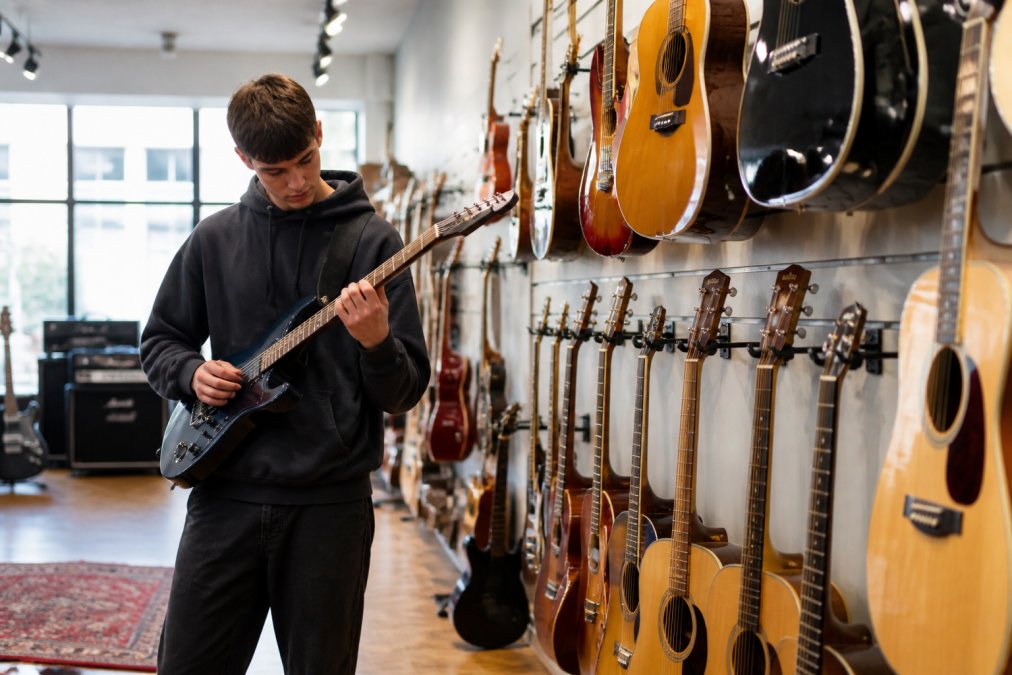
Muzic Man stands out because it refuses to choose between online convenience and hands-on guidance. As an Australian-owned retailer with a physical store in Robina on the Gold Coast, it offers something most pure-play online shops cannot: the option to walk in, play an instrument, ask questions face-to-face, and then either buy on the spot or order online with confidence.
The range is extensive. Entry-level acoustic guitars start at price points where quality actually begins. Keyboards from Yamaha and Roland sit alongside drums, bass guitars, and accessories beginners need. Muzic Man sources directly from manufacturers, keeping pricing competitive without sacrificing quality.
For beginners, Muzic Man's Australia-wide shipping is reliable and transparent. Stock availability is tracked online, and delivery timeframes are clearly communicated. The Robina location lets Gold Coast musicians try before they buy, eliminating the biggest anxiety with online orders: "What if it doesn't feel right?"
Mega Music: Extensive Beginner Packages
Mega Music has built its reputation on range and beginner-specific packages. A typical electric guitar starter pack includes the guitar, amplifier, cables, tuner, and strap, everything needed to make sound from day one. That bundling removes decision fatigue.
Pricing on these packages is competitive, with regular promotions on entry-level gear. The online interface filters easily by price and instrument type. Australia-wide shipping is available, though Perth-based physical stores limit hands-on advantage for most of Australia.
The trade-off: Mega Music's strength is breadth, not depth of local support. You won't get personalised guidance or the community feel of a shop where staff remember your name.
Local Music Shop Gold Coast: Hands-On Guidance
A good local shop owner knows the climate, local venues, and can tell you honestly whether an instrument is worth buying. This expertise applied directly to your situation is invaluable.
Music Express Robina: Piano and Keyboard Specialists
Music Express Robina specialises in pianos and keyboards. For beginners interested in learning piano or digital keyboard, this specialisation is a genuine advantage. Staff understand the difference between a beginner-friendly 61-key keyboard and why full 88-key weighted action matters if you're serious about piano technique.
Located in Robina Town Centre, the team guides you through keyboard-specific learning curves. The limitation is obvious: if you're looking for guitar, drums, or anything outside keyboards, you'll need to shop elsewhere.
Beginner Instrument Buying Guide Australia
Choosing your first instrument isn't just about picking a retailer, it's about understanding which instrument matches your goals, living situation, and realistic commitment level.
Choosing Between Acoustic and Electric Guitars
The conventional wisdom, "start with acoustic because it's cheaper," is backwards. Acoustic guitars have higher string tension and thicker strings, causing more finger pain when learning (peer-reviewed research). Budget acoustics typically have higher action, making chords harder to form. Beginners often quit because they're painful and show slow progress.
Electric guitars have lower string tension, thinner strings, and adjustable action. They're genuinely easier to play in early weeks. You need an amplifier, but a small practice amp costs far less than most think. The real advantage: you progress faster, which keeps you motivated.
If you're learning chords and basic songs, electric is objectively easier for beginners. Acoustic makes sense if you specifically want the acoustic sound and tolerate the higher difficulty curve.
Keyboards and Digital Pianos for Entry-Level Players
The entry-level sweet spot for beginners is a 61-key weighted keyboard from Yamaha or Roland. Weighted keys simulate acoustic piano feel, which matters if you ever play a real piano (peer-reviewed research). Non-weighted keys feel like a toy and teach poor technique.
A 61-key keyboard is sufficient for learning. Most beginner pieces fit comfortably within 61 keys, the price point is accessible, and the learning curve is gentler than acoustic guitar because there's no finger pain (peer-reviewed research).
If you think you might play serious classical piano eventually, invest in an 88-key weighted keyboard from the start. If you're exploring, 61 keys is realistic. Rental makes sense here.
Bass Guitar, Drums, and Harmonica Options
Bass guitar is often overlooked but genuinely easier than lead guitar. You can contribute to jam sessions faster, and entry-level bass guitars are affordable. If you want to play in a band quickly, bass is underrated.
Drums present a practical problem: they're loud. Electronic drums solve this through headphones, but entry-level experience is less satisfying than acoustic drums. Many beginners quit not from lost interest but from practice conflicts.
Harmonica is the overlooked option. It's affordable, portable, and has a lower barrier to entry than any other instrument. You can produce pleasant sounds within minutes.
Rental vs. Purchase: What Works for Beginners
Rental versus purchase isn't about saving money short-term, it's about reducing the risk of a poor instrument choice.
Renting costs less per month than buying entry-level. More importantly, it lets you try before committing. You learn whether you actually enjoy playing and which instrument fits your hands, living situation, and goals. After three or four months of renting, you know what you actually want.
The trade-off: you never own the instrument, so you're paying indefinitely. Eventually, purchasing becomes cheaper. But the first three months of rental often cost less than the difference between a poor beginner purchase and a good one.
Practical advice: rent for the first three months if you're genuinely uncertain. Most local music shops and retailers offer rental programs. After three months, you'll know whether to buy.
Used Gear Inspection Checklist
The second-hand market in Australia is substantial. You can find genuinely good instruments at half the new price, but you can also find damaged, poorly maintained, or unsuitable instruments.
Before buying used, inspect these elements:
For guitars (acoustic or electric):
- Check the neck for warping by sighting down it from the headstock
- Look for cracks in the body, especially around the sound hole on acoustics
- Test every fret by playing each one individually; dead frets indicate poor setup or damage
- Check tuning stability by tuning and retuning
- Inspect frets for excessive wear; worn frets mean expensive repair
- Play chords to listen for buzzing or dead spots
For keyboards and pianos:
- Test every key; some may be stuck or unresponsive
- Listen for consistent volume across the keyboard
- Check that weighted action moves smoothly
- Look for water damage or corrosion
- Verify all buttons and controls function
For drums:
- Inspect cymbals for cracks; cracked cymbals are unusable
- Check drum heads for tears or severe wear
- Test all hardware for looseness or damage
- Verify all lugs are intact
For bass and other strings:
- Apply the same fret inspection as guitars
- Check tuning stability carefully
- Inspect the bridge and nut for damage
If you're not confident in your inspection, bring someone experienced. A bad used instrument purchase costs more than buying new because you're stuck with it.
Essential Accessories and Support for New Musicians
Beginners consistently underestimate how many accessories they actually need. You don't need everything at once, but these items are essential for effective practice:
Universal essentials:
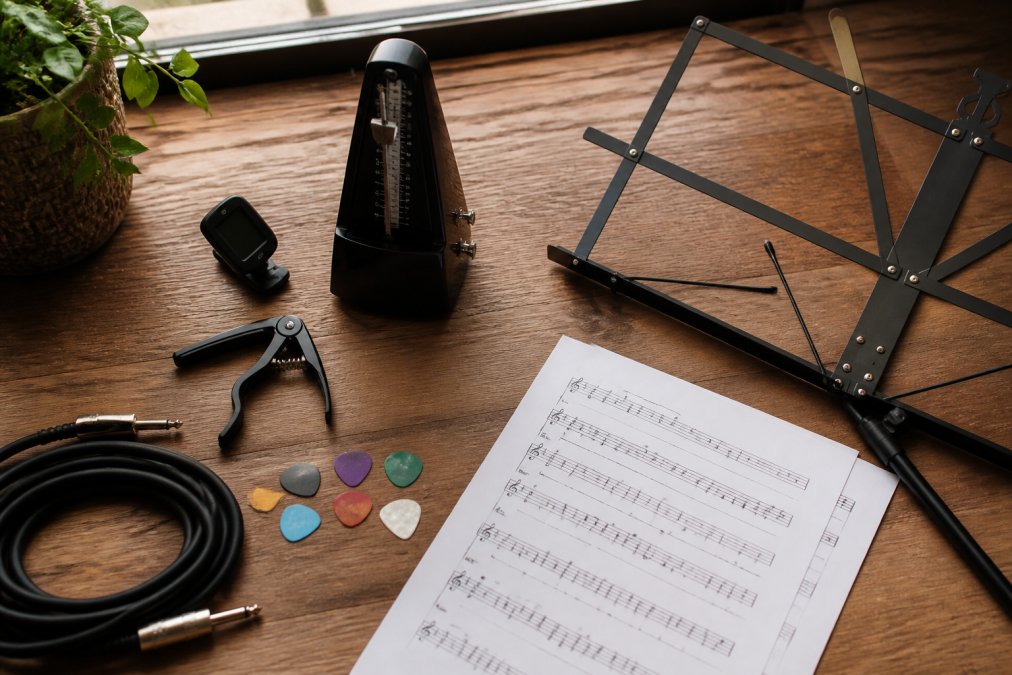
- A tuner (digital tuners are inexpensive and essential)
- A metronome (teaches timing; a free app works)
- A music stand (keeps sheet music visible while you play)
- A comfortable chair (posture matters from day one)
Instrument-specific:
- Guitars: capo, strap, cable, picks, string cleaner
- Keyboards: sustain pedal, weighted stand, headphones
- Drums: drum sticks, practice pad, kick drum pedal
- Bass: strap, cable, picks
Buy these from your main retailer so you get consistent advice and support. If your retailer offers setup services (adjusting action, intonation, and playability), use them. A poorly set-up instrument is harder to play and teaches bad habits.
Choosing where to buy your first instrument shapes your entire learning experience. If you're on the Gold Coast, Muzic Man's hybrid model combines online convenience with in-person guidance at the Robina shop, removing the biggest barrier beginners face: uncertainty about whether an instrument will feel right. For broader Australia, Mega Music's beginner packages and Muzic Man's Australia-wide shipping solve the selection problem. The rental option eliminates financial risk while you figure out what you actually want to play. Start there, inspect used gear carefully if you go that route, and invest in basic accessories from day one. The retailer you choose should feel like a partner in your learning, not just a transaction point.
=== FAQ ANSWERS (audit these too, same rules) ===
[1] Q: What should beginner musicians look for when buying their first instrument? A: Focus on playability, build quality, and value. For guitars, check action height (how high the strings sit) and fretboard comfort. For keyboards, ensure weighted keys if you're learning piano. Buy from retailers that offer returns or trial periods. Entry-level instruments should feel solid without requiring expensive setup adjustments. Avoid the cheapest options, which often have poor tonewood and intonation issues that discourage practice.
[2] Q: Are online music retailers in Australia reliable for beginner musicians? A: Yes, but choose carefully. Look for retailers with Australia-wide shipping guarantees, clear return policies, and responsive customer service. Reputable online stores provide detailed product descriptions, warranty information, and support for setup questions. Many offer both online shopping and physical locations, giving you flexibility. Check customer reviews specifically about delivery times and stock accuracy before ordering.
[3] Q: Is it better for beginners to buy instruments in-store or online? A: In-store shopping lets you feel playability and get expert advice immediately. Online shopping offers wider selection and convenience. The best approach combines both: research online to narrow choices, then visit a local shop to test finalists if possible. Hybrid retailers let you browse online and pick up locally, or order after trying in-store. This balances hands-on confidence with access to better pricing and selection.
[4] Q: What's the learning curve difference between acoustic guitar, electric guitar, and keyboard for beginners? A: Acoustic guitars have higher string tension, making finger pain more common initially. Electric guitars are gentler on fingers but require an amplifier. Keyboards have the flattest learning curve for music theory basics, though finger dexterity takes time. Harmonica is fastest to produce sound but hardest to master. Choose based on the music style you want to play and what feels comfortable in your hands during a trial.
[5] Q: Should beginners rent or buy their first instrument? A: Renting works if you're unsure about commitment or want to test an instrument before investing. Monthly rental costs add up quickly, making purchase better long-term. Entry-level instruments are affordable enough that buying makes sense if you're reasonably committed. Consider rental if trying multiple instruments to find your preference, then buy once you've decided. Check whether rental payments apply toward eventual purchase.
Frequently Asked Questions
What should beginner musicians look for when buying their first instrument?
Focus on playability, build quality, and value. For guitars, check action height (how high the strings sit) and fretboard comfort. For keyboards, ensure weighted keys if you're learning piano. Buy from retailers that offer returns or trial periods. Entry-level instruments should feel solid without requiring expensive setup adjustments. Avoid the cheapest options, which often have poor tonewood and intonation issues that discourage practice.
Are online music retailers in Australia reliable for beginner musicians?
Yes, but choose carefully. Look for retailers with Australia-wide shipping guarantees, clear return policies, and responsive customer service. Reputable online stores provide detailed product descriptions, warranty information, and support for setup questions. Many offer both online shopping and physical locations, giving you flexibility. Check customer reviews specifically about delivery times and stock accuracy before ordering.
Is it better for beginners to buy instruments in-store or online?
In-store shopping lets you feel playability and get expert advice immediately. Online shopping offers wider selection and convenience. The best approach combines both: research online to narrow choices, then visit a local shop to test finalists if possible. Hybrid retailers let you browse online and pick up locally, or order after trying in-store. This balances hands-on confidence with access to better pricing and selection.
What's the learning curve difference between acoustic guitar, electric guitar, and keyboard for beginners?
Acoustic guitars have higher string tension, making finger pain more common initially. Electric guitars are gentler on fingers but require an amplifier. Keyboards have the flattest learning curve for music theory basics, though finger dexterity takes time. Harmonica is fastest to produce sound but hardest to master. Choose based on the music style you want to play and what feels comfortable in your hands during a trial.
Should beginners rent or buy their first instrument?
Renting works if you're unsure about commitment or want to test an instrument before investing. Monthly rental costs add up quickly, making purchase better long-term. Entry-level instruments are affordable enough that buying makes sense if you're reasonably committed. Consider rental if trying multiple instruments to find your preference, then buy once you've decided. Check whether rental payments apply toward eventual purchase.
This article was written using GrandRanker