


Best Beginner Acoustic Guitar for Kids: 2026 Guide
24th Aug 2026
Table of Contents
- Quick Comparison: Top Beginner Acoustic Guitars for Kids
- How to Choose the Best Beginner Acoustic Guitar for Kids
- Nylon vs Steel String Guitar for Kids
- Acoustic Guitar Sizing Guide for Children
- Top Beginner Acoustic Guitar Models for Kids
- 1. Yamaha JR1 3/4 Junior Acoustic Guitar
- 2. Fender FA-15N 3/4 Nylon Acoustic Guitar
- 3. Valencia VC103K 3/4 Classical Guitar Package
- 4. Artist LSP34 Natural 3/4 Beginner Pack
- 5. Cort AD Mini Travel Size Acoustic Guitar
- 6. Squier SA-150 Dreadnought Acoustic Guitar
- 7. Martinez MF-25-NST Small-Body Guitar
- 8. Ashton D20CEQ Dreadnought Cutaway with EQ
- How to Maintain a Beginner Acoustic Guitar
- Rental vs Purchase: What Works Best for Kids
- Essential Accessories for New Young Players
Last Updated: August 24, 2026
Quick Comparison: Top Beginner Acoustic Guitars for Kids
Choosing the right guitar for a child matters: size affects playability, string type shapes the learning experience, and build quality determines whether a kid stays motivated or quits within weeks.
Quick Picks:
- Best Overall for Most Kids: Yamaha JR1 3/4 Junior Acoustic Guitar, authentic Yamaha quality in a compact, travel-friendly size with genuine acoustic tone
- Best Budget Starter Pack: Valencia VC103K 3/4 Classical Guitar Package, includes tuner and bag, nylon strings are forgiving on young fingers
- Best for Older/Taller Kids: Squier SA-150 Dreadnought Acoustic Guitar, full-size steel-string with slim, comfortable neck and durable construction
- Best Small-Hands Option: Cort AD Mini Travel Size Acoustic Guitar, solid spruce top delivers real acoustic resonance despite compact dimensions
- Best Value Complete Pack: Artist LSP34 Natural 3/4 Beginner Acoustic Guitar Pack, includes gig bag, tuner, strap, spare strings, and picks at entry-level pricing
How to Choose the Best Beginner Acoustic Guitar for Kids
The instrument must match your child's physical size, playing style, and learning goals. A guitar that's too large causes frustration and poor technique.
Scale length and body size
Scale length is the distance from the nut to the bridge and determines how far a child's fingers must stretch and how much force is needed to press strings down.
Most children under 10 benefit from a 1/2 size (around 48-51 cm) or 3/4 size (around 56-58 cm). A 3/4 size typically suits kids aged 8-12 or those with average-to-large hands. Full-size instruments (64-66 cm) work for teenagers or exceptionally tall children.
Solid wood versus laminate construction
Solid wood guitars resonate more freely, producing richer tones. Laminate construction is more durable and less sensitive to humidity changes. For a child's first guitar, laminate is often the smarter choice. Some guitars split the difference: a solid spruce top paired with laminate back and sides, like the Cort AD Mini, delivers authentic acoustic tone without the fragility of a fully solid instrument.
Playability and action height
Action height refers to how high the strings sit above the fretboard. A well-set-up beginner guitar should have action around 2-2.5mm on the bass side and 1.5-2mm on the treble side. Fretboard width also matters: classical guitars have wider nuts (around 52mm), while steel-string acoustics are narrower (around 43mm), making them easier for smaller hands. A professional setup can transform playability and often determines whether a child practises daily or abandons the guitar.
Nylon vs Steel String Guitar for Kids
The choice between nylon and steel strings shapes the entire learning experience.
Nylon strings: comfort and learning
Nylon strings are gentler on young fingers and produce a warm, mellow tone forgiving of imperfect technique. Classical guitars teach proper fingerstyle technique from the start, developing finger independence that transfers beautifully to steel-string playing later. The downside: classical guitars sound distinctly different from the acoustic guitars heard in pop, folk, and indie music.
Steel strings: versatility and sound
Steel strings deliver the bright, punchy acoustic tone heard in most contemporary music and are more versatile for playing folk, pop, country, and indie songs. The tradeoff is immediate: steel strings hurt, and young fingers develop calluses over 2-3 weeks of consistent practice. For children aged 10 and older with reasonable hand strength, steel strings are worth considering. For younger children or those with smaller hands, nylon is the safer starting point.
Acoustic Guitar Sizing Guide for Children
Matching guitar size to your child is non-negotiable. A guitar that's too large creates poor posture, makes fretting difficult, and exhausts small hands quickly.
1/2 size and 3/4 size options
1/2 size guitars (around 48-51 cm scale length) suit children aged 5-8 or those with particularly small hands. Your child will outgrow a 1/2 size within 1-2 years.
3/4 size guitars (around 56-58 cm scale length) are the sweet spot for most children aged 8-12. They're small enough to feel manageable yet large enough to offer genuine acoustic tone and can be played comfortably into the teenage years.
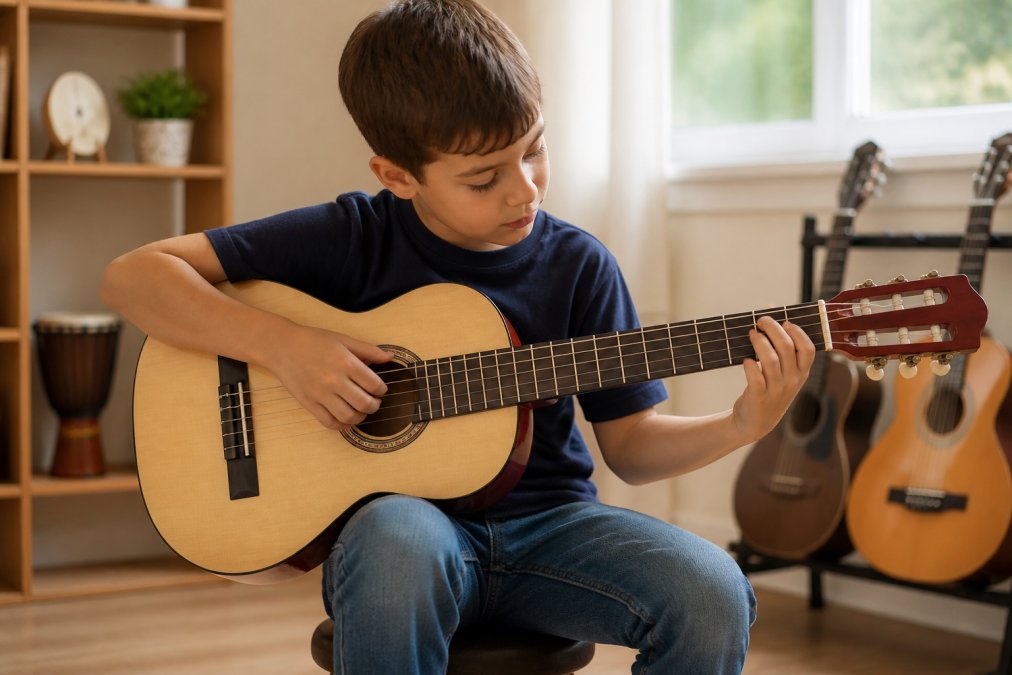
Have your child sit with the guitar and try fretting a note on the first few frets. Their arm should bend at roughly 90 degrees, and their fingers should reach comfortably without overextending.
Full-size guitars for older or taller children
Full-size acoustic guitars (64-66 cm scale length) work for teenagers or exceptionally tall children. Wait until your child is genuinely tall or approaching their teenage years before upgrading.
Top Beginner Acoustic Guitar Models for Kids
1. Yamaha JR1 3/4 Junior Acoustic Guitar
Yamaha's JR1 is the benchmark for beginner acoustic guitars. The spruce top produces genuine acoustic resonance. The 540mm scale length sits perfectly between 1/2 and 3/4 size. Build quality is uncompromising, with excellent tuning stability and a comfortable neck profile. At around A$179.99, you'll need a separate clip-on tuner (around A$15-25).
Best for: Children aged 8-12, music school students, families prioritising quality over budget.
2. Fender FA-15N 3/4 Nylon Acoustic Guitar
Fender's FA-15N brings the brand's reputation into the budget-friendly space. The laminate Agathis top pairs with Sapele back and sides, producing warm tone. The gig bag is included at around A$188. Nylon strings are genuinely kind to young fingers.
Best for: Children new to guitar who want gentleness on fingers and classical technique development.
3. Valencia VC103K 3/4 Classical Guitar Package
Valencia's VC103K is the budget champion at around A$139.99. The package includes a gig bag and tuner. The linden top, back, and sides are laminate construction, practical for beginners.
Best for: Budget-conscious families, very young beginners (aged 5-8), children testing whether they'll commit to guitar.
4. Artist LSP34 Natural 3/4 Beginner Acoustic Guitar Pack
The Artist LSP34 is a complete package at around A$189, coming with gig bag, clip-on tuner, strap, spare strings, and two picks. The 3/4 scale steel-string design delivers authentic acoustic tone. Laminated Basswood construction is durable and practical for beginners.
Best for: Families wanting a complete, ready-to-play package. Children aged 10+ with reasonable hand strength who want contemporary acoustic tone.
5. Cort AD Mini Travel Size Acoustic Guitar
The Cort AD Mini is a 3/4 size guitar with a solid spruce top paired with mahogany back and sides, rare at this price point. The 580mm scale length is comfortable for smaller hands. Pricing varies across retailers (typically A$255-349).
Best for: Children with smaller hands, families valuing portability, players who want genuine tone quality in a compact package.

6. Squier SA-150 Dreadnought Acoustic Guitar
Squier's SA-150 is the full-size option for older children or taller beginners at around A$349. The dreadnought body shape delivers the classic acoustic tone heard in folk and contemporary music. The slim mahogany neck is genuinely comfortable.
Best for: Teenagers or exceptionally tall children, families wanting authentic dreadnought tone.
7. Martinez MF-25-NST Small-Body Guitar
Martinez's MF-25-NST is a folk-size (small-body) guitar, smaller than a dreadnought but larger than a 3/4 classical guitar. It is ideal for players with smaller hands who want full-size tone.
Best for: Players with smaller hands seeking full-size tone, those preferring folk-size aesthetics.
8. Ashton D20CEQ Dreadnought Cutaway Acoustic Guitar with EQ
The Ashton D20CEQ adds amplification capability with a built-in pickup and EQ system at around A$259. The sapele soundboard, back, and sides deliver warm tone. The cutaway body allows easier access to upper frets.
Best for: Teenagers or advanced beginners wanting amplification capability, players interested in band playing or performances.
How to Maintain a Beginner Acoustic Guitar
A well-maintained guitar stays in tune, sounds better, and lasts decades.
Tuning and string care
Tune regularly. A guitar that drifts out of tune between practice sessions frustrates beginners. Establish a routine: tune at the start of every practice session. A clip-on tuner (around A$15-25) is reliable and beginner-friendly.
Replace strings when they sound dull. New strings sound bright and stay in tune reliably. A typical beginner should replace strings every 3-6 months. String replacement is straightforward: loosen the tuning pegs, remove old strings, thread new strings through the bridge and tuning pegs, and tune up.

Cleaning and humidity control
Wipe down after playing. Sweat, dust, and oils accumulate on the neck and body. A soft microfibre cloth removes these safely. This takes 30 seconds and extends the guitar's life significantly.
Avoid harsh cleaners. Never use furniture polish, alcohol, or abrasive cleaners on acoustic guitars. Plain water on a soft cloth is sufficient.
Control humidity. Acoustic guitars expand and contract with humidity changes. Ideal humidity is 45-55% [EXTERNAL_LINK: according to Fender's guitar care guide | fender.com]. A small humidifier in the room where the guitar is stored helps, especially during dry months.
Storage and protection
Store in a gig bag or case. A gig bag protects against dust, bumps, and accidental damage. A hard case (A$50-100+) offers maximum protection but is less convenient for frequent moving.
Keep away from extremes. Don't store guitars near heaters, air conditioners, or direct sunlight. A cool, dry closet or corner of a bedroom is ideal.
Avoid leaning the guitar against walls. The headstock is vulnerable. Always place the guitar in a stand or lay it flat.
Rental vs Purchase: What Works Best for Kids
Renting makes sense if:
- Your child is very young (under 8) and might lose interest
- You're uncertain whether your child will commit long-term
- You want to test different guitar types before buying
Monthly rental typically costs A$20-40, with the option to purchase later. Many rental agreements credit rental payments toward purchase.
Purchasing makes sense if:
- Your child has demonstrated genuine interest over several months
- You want to own the instrument long-term
- Rental costs over time exceed purchase price (they often do within 12-18 months)
A beginner guitar costs A$140-350. Over 18 months of rental, you might spend A$360-720, more than purchasing a decent instrument outright. The practical middle ground: purchase an entry-level guitar (Valencia VC103K or Artist LSP34 around A$140-190), then upgrade to a quality instrument (Yamaha JR1 or Cort AD Mini) once your child commits.
Essential Accessories for New Young Players
Tuner (clip-on, around A$15-25): Essential for keeping the guitar in tune.
Gig bag (around A$30-50): Protects the guitar during transport and storage.
Guitar strap (around A$10-20): Allows playing while standing. Padded straps (around A$15-25) are more comfortable during longer sessions.
Spare strings (around A$5-10 per set): Strings break, especially as beginners learn.
Music stand (around A$15-40): Holds sheet music or tabs at eye level while playing.
Capo (around A$10-20): Clamps across the fretboard to change the key without retuning.
Footstool (around A$20-40): Raises the guitar to a comfortable height when sitting, improving posture and comfort.
Metronome (around A$15-40 or free app): Develops rhythm and timing.
Most beginners don't need all these accessories immediately. Start with a tuner, strap, and spare strings.
Selecting the best beginner acoustic guitar for kids comes down to matching the instrument to your child's size, hand strength, and musical interests. Yamaha JR1 delivers quality and authentic tone for most children aged 8-12. For younger players or those prioritising comfort, nylon-string guitars like Valencia VC103K or Fender FA-15N are gentler on developing fingers.
At Muzic Man, we stock quality beginner guitars from trusted brands, with Australia-wide shipping and a Gold Coast shop where you can see instruments in person. Whether you're starting your child on classical guitar, contemporary acoustic, or exploring different sizes, our team can help you find the right fit. Visit our online store or call our Robina location to discuss your child's needs and find an instrument that inspires rather than frustrates.
=== FAQ ANSWERS (audit these too, same rules) ===
[1] Q: What size beginner acoustic guitar is best for a child? A: Size depends on age and height. Most children under 8 need a 1/2 or 3/4 size guitar; those 8-12 typically use 3/4 size; children over 12 or taller than 150cm can use full-size. A proper fit means the child can reach the frets comfortably and wrap their arm around the body. Visit a music shop or check sizing charts based on your child's measurements to ensure the right scale length and body size.
[2] Q: Should I buy a nylon or steel string guitar for a child beginner? A: Nylon strings are gentler on young fingers and cause less hand fatigue, making them ideal for absolute beginners. Steel strings produce a brighter, louder tone and are better for pop or rock styles, but they require stronger fingers and proper technique to avoid pain. Most children start with nylon and transition to steel strings as their finger strength develops. Classical guitars with nylon strings also encourage proper posture and technique.
[3] Q: Are budget beginner acoustic guitars good quality? A: Entry-level beginner guitars, especially those with complete starter packages, offer solid quality for learning. Laminate construction (common at this price point) is durable and can withstand beginner use, though solid wood tops provide better tone and resonance. Focus on playability, tuning stability, and comfortable action height rather than premium materials. A well-setup budget guitar is far better than an expensive, poorly adjusted one.
[4] Q: What accessories do I need when buying a beginner acoustic guitar for my child? A: Essential accessories include a gig bag or case for protection, a clip-on tuner for easy tuning, spare strings, a strap, and picks. Many beginner packages bundle these together. Additional useful items are a guitar stand for storage, a humidifier to protect the wood, and a music stand for lessons. A capo is helpful for playing songs in different keys without retuning.
Frequently Asked Questions
What size beginner acoustic guitar is best for a child?
Size depends on age and height. Most children under 8 need a 1/2 or 3/4 size guitar; those 8-12 typically use 3/4 size; children over 12 or taller than 150cm can use full-size. A proper fit means the child can reach the frets comfortably and wrap their arm around the body. Visit a music shop or check sizing charts based on your child's measurements to ensure the right scale length and body size.
Should I buy a nylon or steel string guitar for a child beginner?
Nylon strings are gentler on young fingers and cause less hand fatigue, making them ideal for absolute beginners. Steel strings produce a brighter, louder tone and are better for pop or rock styles, but they require stronger fingers and proper technique to avoid pain. Most children start with nylon and transition to steel strings as their finger strength develops. Classical guitars with nylon strings also encourage proper posture and technique.
Are budget beginner acoustic guitars good quality?
Entry-level beginner guitars, especially those with complete starter packages, offer solid quality for learning. Laminate construction (common at this price point) is durable and can withstand beginner use, though solid wood tops provide better tone and resonance. Focus on playability, tuning stability, and comfortable action height rather than premium materials. A well-setup budget guitar is far better than an expensive, poorly adjusted one.
What accessories do I need when buying a beginner acoustic guitar for my child?
Essential accessories include a gig bag or case for protection, a clip-on tuner for easy tuning, spare strings, a strap, and picks. Many beginner packages bundle these together. Additional useful items are a guitar stand for storage, a humidifier to protect the wood, and a music stand for lessons. A capo is helpful for playing songs in different keys without retuning.
This article was written using GrandRanker