



How to Verify Online Instrument Stock: A 2026 Guide
26th Aug 2026
Table of Contents
- Why Verifying Online Instrument Stock Matters
- Step 1: Check if the Online Store Is Legitimate
- Step 2: Confirm Stock Status Before Purchasing
- Step 3: Identify Genuine vs Counterfeit Instruments
- Step 4: Assess Instrument Condition and Technical Specifications
- How to Spot Fake Online Music Stores
- Reliable Music Gear Shipping Australia Wide
- Musical Instrument Consumer Rights Australia
Last Updated: August 26, 2026
Why Verifying Online Instrument Stock Matters
Buying musical instruments online offers convenience and access to gear across Australia, but it introduces real risks. When you can't hold an instrument before purchase, verifying stock legitimacy becomes your primary defence against counterfeit products, misrepresented condition, and fraud. The difference between a genuine, in-stock item and a fake or pre-order misrepresented as available can cost you hundreds of dollars and months of frustration.
Online retailers range from established businesses with transparent practices to opportunistic sellers operating from dodgy websites. A guitar listed as "in stock" might actually be on pre-order with a six-month wait. A keyboard advertised as new might arrive damaged or with missing components. Your only real protection is knowing how to verify online instrument stock before you hand over money.
This guide walks you through practical steps to verify whether an online music store is legitimate, confirm actual stock status, authenticate instruments, and understand your consumer rights.
Step 1: Check if the Online Store Is Legitimate
A legitimate online retailer should be easy to verify. If you're digging for basic information about a business, that's already a red flag.
Start by checking the seller's Australian Business Register (ABR) if they claim to be Australian. Visit the Australian Business Register and search their business name or Australian Business Number (ABN). A genuine retailer will have current registration with a clear business structure.
Look for physical contact details on their website: a real phone number and email address, not just a contact form. Call the number and ask basic questions about stock and shipping. Reputable businesses like Muzic Man, which operates a physical store in Robina and ships Australia-wide, list multiple contact methods because they stand behind their products.
Check for secure payment options. Your payment details should be protected by SSL encryption (look for "https://" and a padlock icon). Legitimate retailers offer multiple payment methods: credit cards, PayPal, or afterpay-style services. If a store only accepts bank transfer with no buyer protection, that's a warning sign.
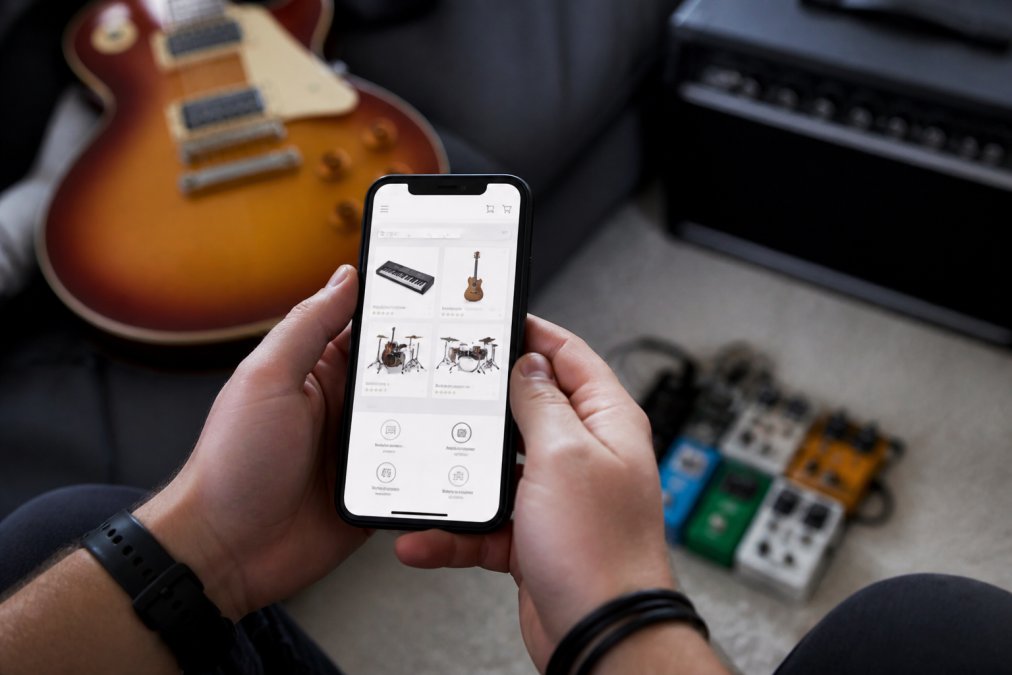
Verify Australian Consumer Law compliance. The website should display clear information about returns, warranties, and dispute resolution. Look for statements about your rights under the Australian Consumer Law, which protects you against faulty goods and misrepresentation.
Check the domain age using a WHOIS lookup tool. A brand-new domain registered last week is riskier than an established one. Scammers often use newly registered domains and abandon them after a few months of fraud.
Step 2: Confirm Stock Status Before Purchasing
"In stock" doesn't always mean what you think it means. Some retailers use vague language to obscure true availability.
The distinction between "in stock" and "pre-order" is critical. In stock means the retailer physically has the item in their warehouse right now and can ship it within their stated timeframe (typically 1-5 business days) (accc.gov.au). Pre-order means you're paying for something that hasn't arrived yet and won't ship until the manufacturer delivers it to the retailer. A retailer that labels a pre-order as "in stock" is misleading you, and you have grounds for a dispute under Australian Consumer Law.
Contact the retailer directly before purchasing. Send an email or call and ask: "Is this item currently in stock in your Australian warehouse, or is it on pre-order?" A legitimate business will give you a straight answer. If they're evasive, that's a signal they're hiding something.
Ask about shipping timeframes in writing via email. A retailer shipping from Australia should deliver within 3-7 business days to most locations. This protects you if the order gets delayed.
Check stock levels on the website. If a product shows "1 in stock" but you've been looking at it for a week and the number hasn't changed, the inventory system might not be live. Contact them directly to confirm.
Step 3: Identify Genuine vs Counterfeit Instruments
Counterfeit musical instruments exist, particularly for well-known brands like Yamaha, Roland, Fender, and Ibanez. A fake instrument will perform poorly, have cheap components, and potentially damage your playing technique.
Check the serial number against the manufacturer's records. Every legitimate instrument has a unique serial number, usually printed on the back of the headstock (guitars), inside the lid (keyboards), or on the body. Visit the manufacturer's website and use their serial number lookup tool. If the serial number doesn't appear in their database, or if multiple instruments have the same serial number, it's counterfeit.
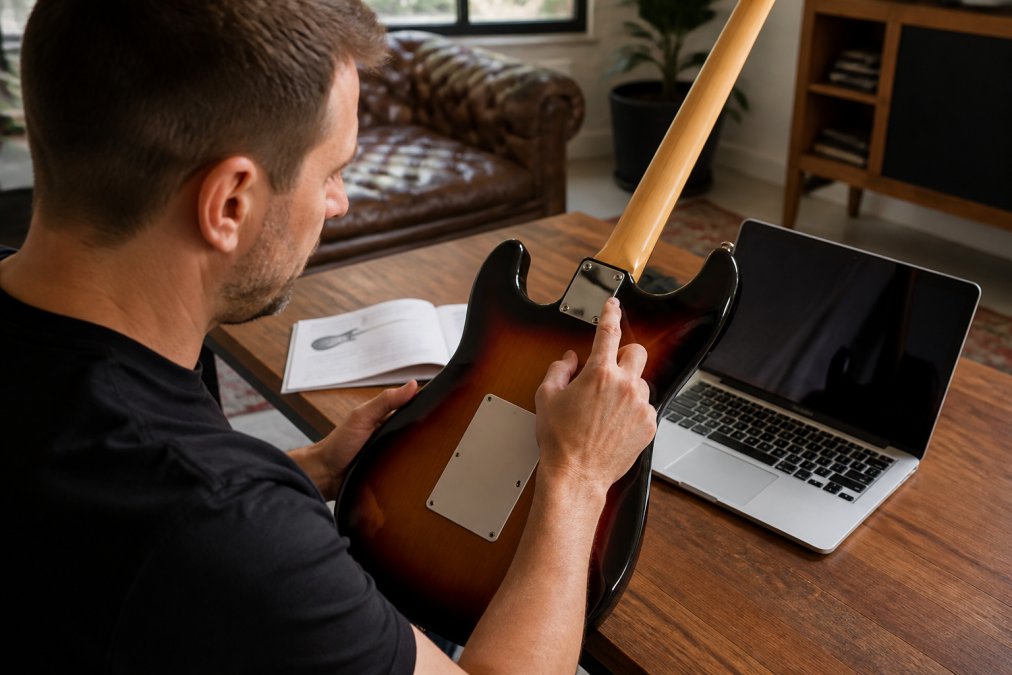
Inspect product photos carefully for authenticity markers. Genuine instruments have consistent branding, clean printing on logos, and proper finishing. Look for spelling errors, misaligned logos, or poor-quality paint work. Check the tuning pegs, bridge, and hardware. A "Fender Stratocaster" selling for $150 when legitimate ones start at $400 is almost certainly fake.
Compare photos against the manufacturer's official images. Visit the brand's website and pull up the exact model. Does the retailer's photo match? If you can reverse-image search the photo and find it on multiple sites, the retailer might be using fake images.
Ask for additional photos from the retailer. If they can't provide close-ups of the serial number, hardware, and finish, they might not actually have the item.
Step 4: Assess Instrument Condition and Technical Specifications
For new instruments, the product description should include the exact model number, colour, finish, included accessories, and warranty information. Vague descriptions like "nice guitar" or "works great" are unprofessional.
Read the full technical specifications. For keyboards and digital pianos, check power supply requirements, connectivity options (USB, MIDI, audio outputs), and included accessories. For guitars, verify the wood type, finish, hardware specifications, and whether it includes a case or stand.
For second-hand items, the condition assessment is everything. The retailer should describe any visible wear, damage, or repairs. Ask specific questions: "Has this been professionally serviced?" "Are there any cracks, dents, or finish damage?" "Does it come with the original case?"
Verify power supply compatibility for electronic instruments. Confirm it includes an Australian-compatible power supply (240V, 50Hz). Some overseas retailers ship US or European models with incompatible power supplies. Reputable Australian retailers source instruments with correct power specifications for the local market.
Check hardware condition on second-hand instruments. For guitars, inspect the tuning pegs, bridge, and nut for cracks or damage. For keyboards, ask the retailer to confirm all keys and buttons work.
How to Spot Fake Online Music Stores
Suspiciously low prices are the most obvious warning sign. If a brand-new Yamaha keyboard that retails for $1,200 is being sold for $400, something is wrong. Either it's counterfeit, stolen, or the listing is a bait-and-switch scam. Compare prices across several established retailers to understand the normal range.
Poor website design and unprofessional presentation suggest a low-effort operation. Spelling errors, broken links, low-quality photos, and outdated design are warning signs.
Check customer reviews across multiple platforms. Google Reviews, Trustpilot, and industry-specific forums provide independent feedback. Look for patterns in complaints about delayed shipping, poor communication, or damaged items. Multiple similar complaints suggest a real problem.
Vague or absent return policies are a red flag. Legitimate retailers clearly state how long you have to return an item, what condition it needs to be in, and who pays for return shipping.
Watch for pressure tactics. Legitimate retailers don't use artificial scarcity ("Only 1 left!", "Sale ends today!") to push you into a purchase. They don't require payment via methods with no buyer protection.
Reliable Music Gear Shipping Australia Wide
Verify shipping timeframes and tracking options before you buy. The retailer should clearly state how long delivery takes and whether they provide tracking. Standard shipping from Australian retailers should take 3-7 business days depending on your location.
Ask whether the retailer uses a reputable courier service. Australia Post, Sendle, StarTrack, and Fastway are established providers with tracking and insurance options.
Confirm that fragile items like instruments are insured during shipping. The retailer should either include insurance in the shipping cost or offer it as an option.
Understand your rights under Australian Consumer Law regarding delivery. If an item doesn't arrive within the stated timeframe, you can request a refund or replacement. If it arrives damaged, you can claim a refund or repair at the retailer's expense.
Track your shipment from the moment it leaves the retailer's warehouse. If tracking shows your package has been in transit longer than expected or appears stuck, contact the retailer immediately.
Musical Instrument Consumer Rights Australia
Australian Consumer Law provides strong protections when you buy instruments online. You have the right to goods that are of acceptable quality, fit for purpose, and as described. If an instrument arrives faulty, damaged, or significantly different from how it was described, you can demand a refund, repair, or replacement. The retailer cannot exclude these rights in their terms and conditions.
If you discover a fault within a reasonable time after purchase (typically 3 months, but potentially longer for expensive items), the burden is on the retailer to prove the fault didn't exist when they sold it to you.
For second-hand instruments, you still have consumer protections, but the standard for "acceptable quality" is lower. A second-hand guitar doesn't need to be perfect, but it should be fit for playing and free from major defects.
Return policies must comply with Australian Consumer Law. A retailer cannot impose a blanket "no returns" policy. Some retailers impose restocking fees on returns, which is legal, but they must clearly disclose this before you buy.
If a retailer refuses to honour your rights, you can lodge a complaint with the Australian Competition and Consumer Commission (ACCC). You can also pursue a claim through your state's civil disputes tribunal or small claims court.
Keep all documentation: receipts, emails, photos of damage, and correspondence with the retailer. This evidence will be essential if you need to escalate a dispute.
Verifying online instrument stock protects you from fraud, counterfeits, and misrepresentation. The steps outlined here, checking business legitimacy, confirming actual stock status, authenticating products, and understanding your consumer rights, take 15-30 minutes per purchase but save you from expensive mistakes. Retailers like Muzic Man that maintain transparent practices, offer detailed product information, stock genuine branded instruments, and provide Australia-wide shipping with proper tracking make the process straightforward. Your due diligence upfront is the difference between a smooth purchase and months of regret.
Frequently Asked Questions
Q: How can I tell if an online music store is legitimate in Australia?
A: Check if the retailer is registered with the Australian Business Register (ABR) and has an Australian Business Number (ABN). Look for clear contact details, secure payment options (SSL encryption), and customer reviews on independent platforms. Legitimate retailers display Australian Consumer Law information and have transparent return policies. Verify the business address and phone number by calling directly, fraudulent stores often have no working contact methods or vague location details.
Q: What does 'in stock' mean on a music retailer's website, and how do I verify it's actually available?
A: An 'in stock' label means the item is theoretically available for immediate dispatch, but this doesn't guarantee it won't be cancelled after purchase if stock runs out. Contact the retailer directly via email or phone before buying to confirm current availability. Ask for an estimated dispatch date. Reputable retailers will provide tracking numbers and realistic delivery timeframes. If a store can't confirm stock within 24 hours, consider shopping elsewhere.
Q: How do I protect myself from counterfeit instruments when buying online?
A: Request the serial number before purchase and verify it against the official manufacturer's database. Examine high-resolution product photos for authenticity markers like consistent branding, proper packaging, and correct hardware. Avoid deals that seem too cheap, counterfeit gear is often priced significantly below market value. Buy only from authorised dealers listed on the brand's official website.
Q: What are my consumer rights if I receive a faulty or misrepresented instrument?
A: Under the Australian Consumer Law, you're entitled to a refund, repair, or replacement if goods are faulty, not as described, or unfit for purpose within a reasonable time. Musical instruments have a reasonable expectation of durability based on price and brand. If a retailer refuses to help, you can lodge a complaint with your state's Office of Fair Trading or the ACCC. Document everything: photos, emails, and delivery proof. Most reputable retailers honour returns if the instrument is unused and in original condition, subject to their specific return policy.
This article was written using GrandRanker