




Reliable Music Gear Shipping Australia Wide: 2026 Guide
18th Aug 2026
Table of Contents
- Why Music Gear Shipping Australia Wide Demands Extra Care
- How to Pack a Guitar for Shipping: Step-by-Step
- Shipping Costs for Musical Instruments in Australia
- Choosing a Courier Service for Fragile Freight
- Musical Instrument Shipping Insurance: What You Need to Know
- Tracking, Climate Control, and Handling Instructions
- Unboxing and Inspection Checklist When Your Gear Arrives
- Music Gear Shipping Australia Wide: Getting It Right Every Time
Last Updated: August 18, 2026
Shipping a guitar across the country sounds simple until something goes wrong. At Muzic Man, we've seen how poorly packed instruments or wrong courier choices turn exciting purchases into stressful claims. Reliable music gear shipping Australia wide protects instruments worth hundreds or thousands of dollars. This guide covers packing techniques, courier selection, insurance, local logistics for Robina and Gold Coast residents, and what to do when your gear arrives.
Why Music Gear Shipping Australia Wide Demands Extra Care
Musical instruments are fragile in ways most parcels aren't. Guitars have long necks under string tension, hollow bodies prone to cracking, and hardware that shifts easily. Keyboards contain delicate electronics and weighted mechanisms. Brass instruments have thin-walled tubing that dents under light pressure.
Australia's geography compounds these risks. Parcels travelling from Queensland to Western Australia or Tasmania spend three to five days in transit through multiple handling facilities and temperature extremes. According to Australia Post's parcel handling guidelines, items classified as fragile require specific internal packaging to qualify for damage consideration, "fragile" stickers alone provide no protection.
The real danger isn't a single catastrophic drop but cumulative vibration, inadequate internal support, and temperature-driven humidity changes that crack wood or fail electronics. Every parcel passes through multiple handlers who don't know what's inside.
How to Pack a Guitar for Shipping: Step-by-Step
Proper packing is the single biggest factor in whether your instrument arrives intact.
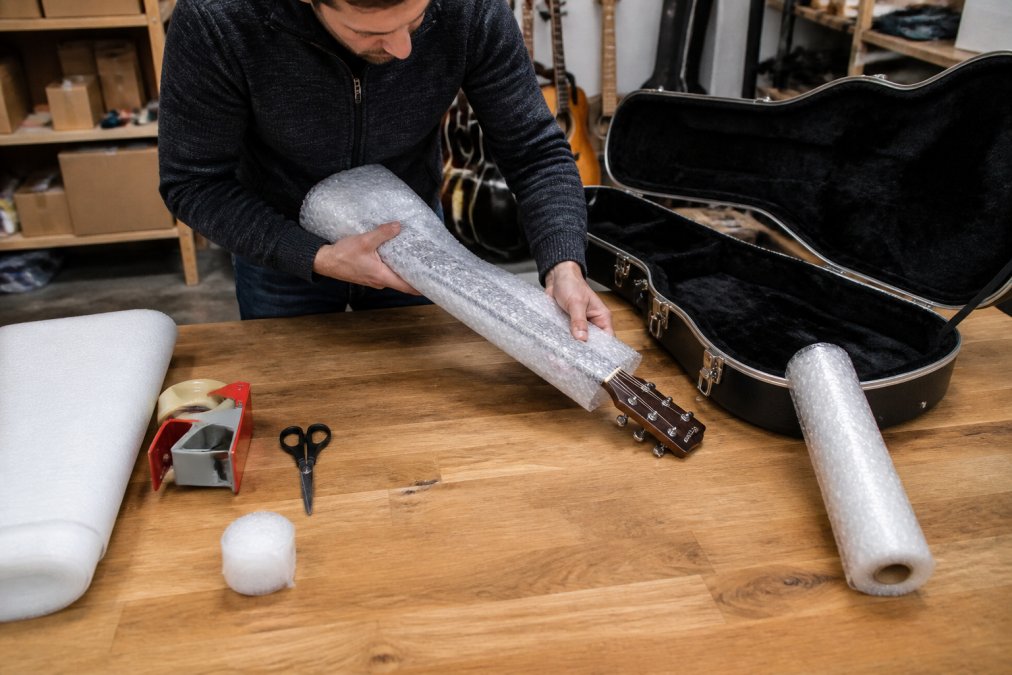
What you'll need: A hard-shell case, bubble wrap, packing foam or crumpled paper, a double-walled cardboard outer box, packing tape, and silica gel sachets.
- Detune the strings by a full step or two. String tension pulls the neck forward during temperature changes, increasing risk of neck bow or bridge separation.
- Fill the case interior before closing it. Place bubble wrap or foam around the headstock, under the neck, and in any cavity where the body can shift. The guitar should not move when you shake the closed case.
- Wrap the hard-shell case in bubble wrap. Use at least two layers, paying extra attention to corners and the headstock end.
- Use a double-walled outer box. Allow at least 7-10 cm of shock-absorbent material on every side. Single-walled boxes are inadequate for instrument shipping.
- Fill all void space. Crumpled paper, foam peanuts, or cut foam blocks should prevent any internal movement. Shake the box; if anything shifts, add more packing.
- Add silica gel sachets. These absorb moisture and protect against humidity changes during long transit.
- Seal and label clearly. Use strong packing tape on all seams. Mark the heaviest side so handlers can orient the box correctly.
Packing Keyboards, Brass, and Other Instruments
Keyboards require their original manufacturer packaging whenever possible; the foam inserts are moulded to exact dimensions. If unavailable, use custom-cut foam rather than loose fill, which can compress and leave the instrument unsupported.
Brass instruments should be packed in their cases with all slides and mouthpieces removed and wrapped separately. Valve casings are particularly vulnerable; wrap each valve cap individually. For instruments without cases, custom crating is worth the cost for anything of significant value.
Drum hardware and cymbals are surprisingly easy to damage in transit. Cymbals should be separated by foam or cardboard dividers and never stacked without protection. Hardware with sharp edges must be wrapped to prevent puncturing the outer box.
Shipping Costs for Musical Instruments in Australia
Shipping costs vary considerably based on size, weight, destination, and courier selected. A full-size guitar in a hard-shell case typically falls into a dimensional weight category that makes it more expensive than its actual weight suggests.
How Dimensional Weight Affects Your Shipping Quote
Dimensional weight (volumetric weight) calculates a theoretical weight based on physical dimensions: length × width × height divided by a courier-specific factor. Couriers charge whichever is greater: actual weight or dimensional weight.
For a guitar in a double-walled outer box, dimensional weight almost always exceeds actual weight. A guitar weighing 4 kg might be billed as 8-12 kg depending on the courier's formula. Use the shipping calculator on your chosen courier's website and compare at least two quotes.
| Factor | Impact on Cost |
|---|---|
| Dimensional weight | Usually higher than actual weight for instruments |
| Destination zone | Remote/regional areas attract surcharges |
| Transit speed | Express services cost significantly more |
| Declared value | Higher declarations increase insurance premiums |
| Packaging type | Oversized boxes attract additional handling fees |
Muzic Man offers Australia-wide delivery; pricing depends on the item, destination, and delivery option selected. Check the website directly for current shipping rates on specific products.
Choosing a Courier Service for Fragile Freight
No major parcel network guarantees gentle handling. What you're choosing between is reliability of delivery timeframes, quality of the tracking network, and ease of making a damage claim.
For fragile freight like instruments, door-to-door delivery services with fewer handling touchpoints are preferable to economy freight passing through multiple depots. Express services arrive faster and spend less time in handling facilities, reducing cumulative damage risk.
When evaluating a courier service, look for:
- Real-time tracking from collection
- Clear liability terms for fragile or high-value items
- A documented claims process with reasonable timeframes
- Compatibility with your packaging dimensions
- Delivery network coverage to your recipient's address, including regional areas
According to the Australian Competition and Consumer Commission's guidance on consumer guarantees, goods must arrive in acceptable condition under Australian Consumer Law. However, this applies to the retailer's obligations and does not automatically cover private senders or protect against damage from inadequate packaging.
Local Logistics for Robina and Gold Coast Residents
For musicians based in Robina and across the Gold Coast, proximity to Muzic Man's physical store is a practical advantage. Gold Coast residents can browse and collect in person, eliminating transit risk entirely.
For those shipping gear out of the region, the Gold Coast sits within a well-serviced logistics corridor. Most major couriers offer next-business-day delivery to Brisbane and same-state destinations, with two-to-three day windows for Sydney and Melbourne. Remote Queensland destinations can add two or more days and often attract regional surcharges.
Booking collection rather than dropping parcels at a depot gives you one less handling touchpoint and reduces damage risk before the parcel enters the main delivery network.
Musical Instrument Shipping Insurance: What You Need to Know
Musical instrument shipping insurance is not automatically included with most standard courier services, and default liability limits are often far lower than the instrument's value.
Most couriers offer standard liability (fixed amount per kilogram) and declared value cover (you state the item's worth and pay an additional premium). For any instrument worth more than a few hundred dollars, declared value cover is essential.
Key points to confirm before shipping:
- What the policy covers: Many policies exclude "fragile items" or items that break due to "inherent fragility" rather than external impact. Read the fine print.
- Packaging requirements: Insurers can void a claim if packaging doesn't meet stated standards. Document your packing with photographs.
- Value declaration accuracy: Understating value to reduce premiums creates problems at claim time. Declare full replacement value.
- Transit time and storage: Some policies lapse if a parcel sits in a depot beyond a certain number of days.
According to Insurance Council of Australia's guidance on goods in transit, transit insurance for high-value goods is a distinct product category. For professional musicians shipping expensive gear, a standalone marine or goods-in-transit policy through a specialist insurer may provide broader cover than courier-issued options.
Tracking, Climate Control, and Handling Instructions
A tracking number is your primary tool for managing a shipment if something goes wrong. Register for proactive notifications so you know immediately if a parcel is delayed or undeliverable.
Climate control is underappreciated in music gear shipping. Wooden instruments are sensitive to temperature and humidity fluctuations. A guitar travelling in a freight container during an Australian summer can experience significant temperature swings. Silica gel sachets help but don't substitute for minimising transit time when shipping high-value wooden instruments.
Include a printed note inside the outer box (not just on the label) stating the contents, correct orientation, and a contact number. This helps if the outer label is damaged in transit.
Pro audio equipment and electronics benefit from anti-static packaging in addition to standard cushioning. If shipping a keyboard amplifier or mixing desk, use anti-static foam or bags for exposed circuit boards or connectors.
Unboxing and Inspection Checklist When Your Gear Arrives
The moment your instrument arrives is when your protection strategy either pays off or fails. Do not sign for a delivery without completing a basic inspection first.
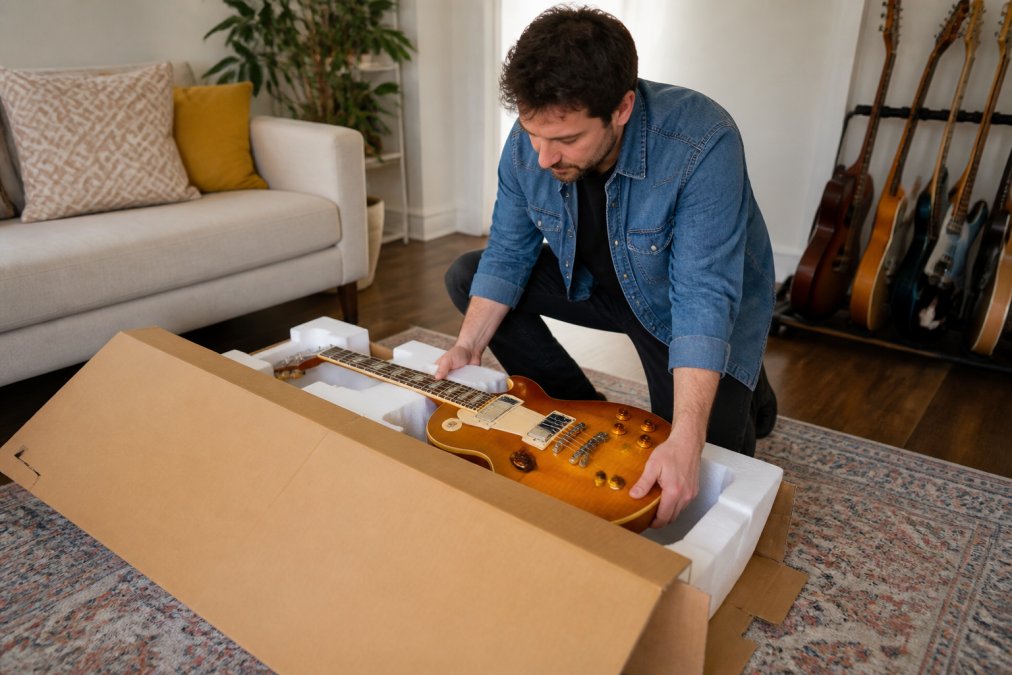
Use this checklist every time:
- Inspect the outer box before opening. Note any crushing, punctures, or water damage. Photograph the condition before opening.
- Check the seal tape. Broken or re-taped seams indicate the parcel was opened or dropped and repacked.
- Open carefully and document. Take photos or video as you unpack, especially if you notice anything unusual about internal packaging.
- Check the instrument for visible damage. Look at the headstock, neck joint, bridge, and body for cracks or finish damage.
- Test functionality. For electronics, plug in and test before discarding packaging.
- Check all accessories and components. Verify all included items are present and undamaged.
- Report damage within 24-48 hours. Most couriers require damage to be reported within a very short window. Delayed reporting can void a claim.
If damage is found, keep all original packaging. Couriers and insurers typically require the original box and packing materials to assess a claim. Disposing of packaging before a claim is resolved is one of the most common reasons claims are rejected.
According to Australian Consumer Law guidance from the ACCC, if goods arrive damaged, you are entitled to a remedy from the seller, which may be a repair, replacement, or refund.
Music Gear Shipping Australia Wide: Getting It Right Every Time
Reliable music gear shipping Australia wide comes down to three things: pack the instrument properly, choose a courier with genuine fragile freight capability, and cover the value with appropriate transit insurance. Cut corners on any one and the others may not save you.
Instruments that arrive in perfect condition are packed properly, not as an afterthought. A double-walled outer box, hard-shell case, adequate internal cushioning, and a declared value policy are not optional extras for expensive gear, they are the baseline.
For musicians in Robina and across Queensland, a well-serviced local logistics corridor and access to a physical store make the process more manageable than in remote parts of the country. For buyers further afield, these principles apply regardless of location.
Music gear shipping is one area where doing it right the first time is always cheaper than dealing with a damage claim.
Shipping musical instruments across Australia involves real risks that careful preparation can almost entirely eliminate. Muzic Man offers Australia-wide delivery on its full range of instruments and accessories, backed by a physical store in Robina for Gold Coast customers who prefer to browse and collect in person. Whether you're ordering an entry-level guitar or a professional-grade keyboard, get in touch with the Muzic Man team to confirm shipping options, current stock availability, and delivery timeframes for your location.
Frequently Asked Questions
How long does music gear shipping usually take within Australia?
Transit times vary by courier service and destination. Metro areas typically receive parcels within two to five business days, while regional and remote locations can take five to ten business days or more. Overnight or express options are available through most major carriers for an additional cost. When ordering from an online retailer, check their stated dispatch timeframe separately from the carrier's transit time, as both affect when your instrument actually arrives at your door.
Does Muzic Man offer insurance for instrument shipping?
Muzic Man ships instruments Australia wide and takes instrument protection seriously during transit. For specific details about transit insurance, value declaration options, and what is covered if damage occurs, visit the Muzic Man website or contact the team directly. For high-value gear, it is always worth confirming the level of cover before your order is dispatched, and asking whether additional transit insurance can be arranged for pro audio equipment or premium instruments.
What is the import duty rate for musical instruments in Australia?
Most musical instruments imported into Australia attract a 0% customs duty rate under the Australian Customs Tariff. However, GST of 10% applies to imported goods valued above AUD 1,000 under the low-value imported goods rules administered by the Australian Border Force. Quarantine requirements under the Biosecurity Act 2015 also apply to instruments containing timber, animal-skin components, or other organic materials. Always check current tariff classifications with the Australian Border Force before importing.
What should I look for in a music gear retailer's shipping policy?
Check whether the retailer confirms stock availability before dispatch, not just at the time of order. Look for clear information on transit insurance, damage claims procedures, and how long dispatch takes after payment. A reliable retailer will provide a tracking number automatically, state which courier service is used, and outline the process for reporting damage on arrival. Policies that include a defined timeframe for resolving claims give you the most protection when shipping high-value instruments.
This article was written using GrandRanker