


Best Microphones for Live Vocals in Australia 2026
Posted by Editorial Team on 2nd Nov 2026
Last Updated: November 1, 2026
Quick Summary
The best microphones for live vocals in Australia are dynamic models with a cardioid pattern, because they reject stage noise and feedback and need no phantom power. The Shure SM58 is the most common starting point for most singers. Budget for cables, stands and any wireless system, not just the microphone itself.
- Dynamic microphones are the safer choice for most live work because they are rugged and reject stage noise.
- A cardioid pattern rejects most sound from behind the capsule, which helps against feedback from a wedge monitor.
- Condensers need phantom power and pick up more stage noise, so reserve them for quiet, controlled venues.
- Wireless systems add a transmitter, receiver and batteries, and their frequency band should be checked as legal in Australia.
- Test any microphone at your actual stage volume with your actual monitors before buying.
Table of Contents
- How We Chose These Live Vocal Microphones
- Quick Comparison: Live Vocal Microphones at a Glance
- Dynamic vs Condenser Microphone for Live Vocals
- Best Wired Vocal Microphone for Gigs
- Best Wireless Microphone for Singers in Australia
- Live Vocal Microphone Feedback Rejection on Stage
- Picking Your Live Vocal Microphone and Next Steps with Muzic Man
- Frequently Asked Questions
Choosing the best microphones for live vocals in Australia comes down to three things: how the mic handles feedback, whether it suits your stage and PA, and what it costs once you add the cables and stand. Muzic Man stocks a range of vocal microphones and PA gear online, and this guide walks through how to narrow the field. Pricing and stock change over time, so please check our product pages for current figures.
How We Chose These Live Vocal Microphones
We built this shortlist around the job a live vocal mic has to do: reject stage noise, handle close-up singing, and survive being dropped in a gig bag. We looked at microphones named in current live-vocal guides, then filtered for models a singer can realistically buy and set up without a studio. Models that appeared only in recording or podcasting roundups were kept out of the main picks.
Be aware of the limits of that method. The sources we reviewed gave us product names and broad positioning, not hands-on test results, so this is a selection guide rather than a lab review. Check the specifications on the manufacturer's site before you buy.
Quick Comparison: Live Vocal Microphones at a Glance
The table below compares the shortlist on the things that actually decide a live vocal mic: capsule type, polar pattern, connectivity and what it needs from your PA. Pricing depends on the model, configuration, quantity and delivery, so check the Muzic Man product page or ask our team for current figures.
| Microphone | Type | Polar pattern | Connectivity | What it needs from your rig | Indicative AUD price band | Best for |
|---|---|---|---|---|---|---|
| Shure SM58 | Dynamic | Cardioid | XLR | Any mixer or PA with a mic preamp; no phantom power | Under $250 | Most live singers; loud stages; hire-rig friendly |
| Shure PGA58 | Dynamic | Cardioid | XLR | Any mixer or PA with a mic preamp; no phantom power | Under $150 | First mic, rehearsal rooms, backup vocalists |
| Shure MV7X | Dynamic | Cardioid | XLR | Mic preamp with enough clean gain; no phantom power | $250-$400 | Singers who want a broadcast-style low-end on stage |
| Shure KSM9 | Condenser | Cardioid / supercardioid (switchable) | XLR | Phantom power (+48 V) and a controlled stage | $800-$1,100 | Quiet venues, seated acoustic sets, detailed capture |
| Sennheiser e935 | Dynamic | Cardioid | XLR | Any mixer or PA with a mic preamp; no phantom power | $300-$450 | Feedback-prone stages and tight monitor mixes |
A few reading notes. Polar pattern matters more than brand for feedback: a cardioid rejects most sound from directly behind the capsule, which is why it suits a singer standing in front of a wedge monitor. Connectivity is simpler than it looks, the difference is whether your mixer supplies phantom power for a condenser.
Dynamic vs Condenser Microphone for Live Vocals
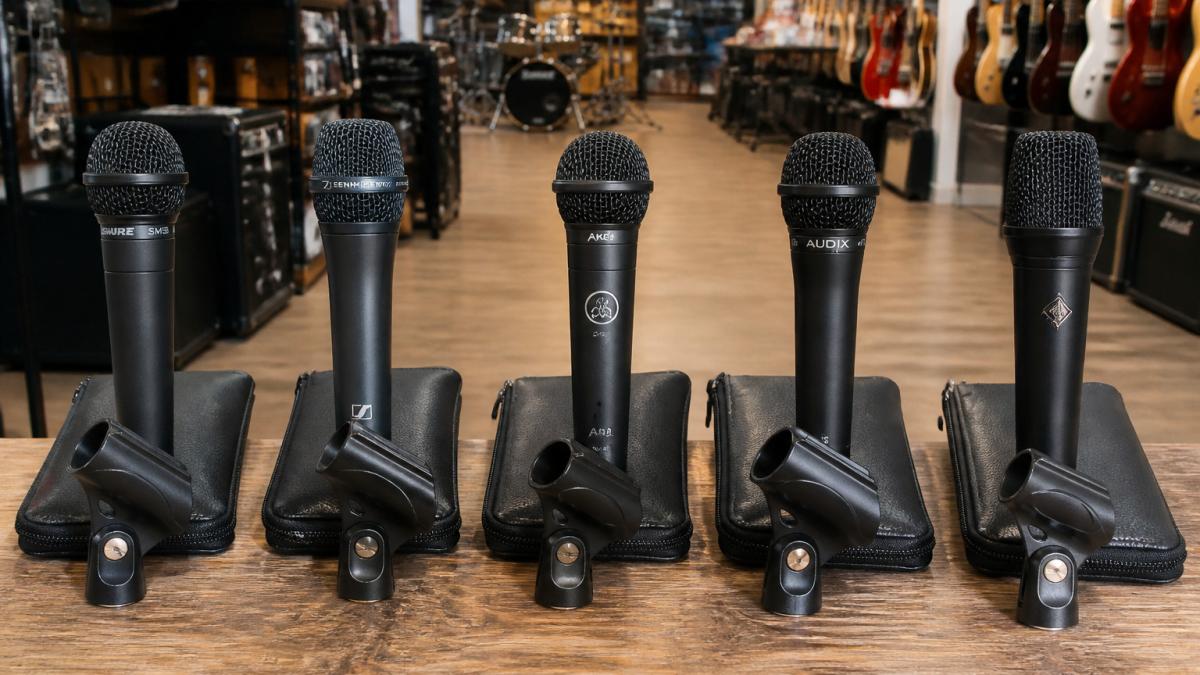
For most live work, a dynamic microphone is the safer choice, and it remains the core of the best microphones for live vocals in Australia. Dynamics are rugged, handle high sound pressure without distortion, and reject much of the stage noise around you. They do not need phantom power, so they work with almost any PA or mixer.
A condenser captures more detail and air, which can sound excellent in a controlled room. On a loud stage, though, it picks up more of the surrounding sound and feedback, and it needs phantom power. Reserve a condenser for a quiet venue, a seated acoustic set, or a setup where you control the monitors.
A common mistake is buying a condenser because it sounds more impressive in a shop. Test it at your actual volume with your actual monitors before committing.
Best Wired Vocal Microphone for Gigs
For gigs, a wired dynamic mic is the workhorse. The Shure SM58 is the model that appears most often in live-vocal guides, and it is the one we would start with for most singers. It tolerates rough handling, works with almost any cable and mixer, and is easy to replace if you lose one at a venue.
The Shure PGA58 is a related dynamic option in the same family, positioned as an entry-level choice for live use. If you are starting out, it is worth comparing the two side by side.
Pair any wired mic with a quality XLR cable and a sturdy stand. Cheap cables are a frequent source of crackle and dropouts that get blamed on the microphone.
Best Wireless Microphone for Singers in Australia
Wireless gives you freedom to move, but it adds a system to manage: a transmitter, a receiver, batteries, and radio frequency. Wireless systems are also where many singers lose a gig to dropouts or interference, so buy a reputable system and check that its frequency band is legal to use in Australia before you buy.
If you want a wireless option, look at systems that pair a handheld transmitter with a receiver and a dynamic capsule such as the SM58. Stick with a known brand, keep spare batteries on hand, and test the system in the room where you will play.
Wireless pricing depends on the system, the number of channels and the bundle. Contact Muzic Man for current options and availability.
Live Vocal Microphone Feedback Rejection on Stage
Feedback is a loop: the microphone hears the speaker, the mixer amplifies it, the speaker sends it back louder. Microphone choice cannot break that loop on its own, but it decides how much headroom you get before the loop starts. The practical rule is that the narrower and more predictable the pickup pattern, the louder you can run the vocal before the room takes over.
Polar pattern in practice. A cardioid dynamic such as the Shure SM58 or Sennheiser e935 picks up mostly from the front and rejects the rear, which is why it pairs well with a wedge monitor sitting directly behind the mic stand. A supercardioid pattern rejects more from the sides but has a small lobe at the rear, so monitor placement matters more, point the wedge at the null, not the lobe. An omnidirectional capsule is the wrong tool on a loud stage because it hears the room as much as the singer.
Loud stages and live bands. With a full band, stage volume is the enemy. A dynamic mic with a cardioid pattern and a tight working distance, lips close to the grille, gives the best gain-before-feedback. Condensers such as the Shure KSM9 can sound superb in a controlled acoustic set, but on a loud stage they pick up drum bleed and monitor spill, and the extra detail is lost in the mix. If you must use a condenser live, keep it for a quiet room and a singer who does not move off the mic.
Small rooms. In a pub or small club, the room itself feeds back earlier because reflective walls return sound to the mic. A cardioid dynamic, a modest vocal level and monitors aimed away from the mic will do more than any pedal. Resist the urge to crank the gain to compensate for a quiet mic, set the vocal fader first and let the singer work the mic.
Handling noise and stage movement. Dynamic mics are generally more forgiving of handling noise and drops, which matters when a singer grips the grille or moves around. A mic with a well-damped body and a secure clip reduces the thumps that get amplified through the PA.
What to check before buying. Confirm the polar pattern, the mic's sensitivity and max SPL, and whether your mixer supplies phantom power if you are considering a condenser. Then check the rest of the chain: a quality XLR cable, a stand that holds the mic at the right angle, and a monitor position that keeps the wedge out of the pickup pattern. Those three items fix more feedback problems than swapping microphones.
Picking Your Live Vocal Microphone and Next Steps with Muzic Man
Start with a dynamic mic such as the SM58 unless your venue is quiet and controlled. Add a cardioid option if feedback is a regular problem, and move to wireless only once you have a reliable system to run it.
If you are building a complete setup, our PA amplifier range is a place to look for the amplification side of a live vocal rig. For a question about compatibility or a quote, visit our contact page and ask our team, who can talk through which mic and system suits your venue.
Frequently Asked Questions
What is the best microphone for live vocals?
For most live singers, a cardioid dynamic microphone is the safest starting point because it handles high sound pressure, rejects off-axis noise and tolerates rough handling. The Shure SM58 is widely used for live vocals and is a sensible reference point. The right choice still depends on your voice, the venue and whether you need a wired or wireless setup. Muzic Man can help you compare current stock and talk through your options before you buy, and pricing varies by model and configuration, so check the website for current prices.
Are dynamic or condenser microphones better for live singing?
Dynamic microphones are generally better for live singing because they are robust, handle loud stage volumes well and are less prone to feedback in untreated rooms. Condenser microphones capture more detail and sensitivity, which suits studio work or quiet acoustic settings, but they are more fragile and pick up more of the room. For most gigs with a band and monitors, a dynamic microphone is the practical choice, while a condenser can work in controlled, quieter environments.
What should I look for in a live vocal microphone?
Look at the polar pattern first, as a cardioid pattern helps reject sound from the sides and rear, which reduces feedback. Check the microphone type, build quality and whether it suits your performance style. Consider the connection, since wired XLR is standard for gigs and wireless suits movement-heavy performances. Frequency response and handling noise also affect how your voice sounds through the PA, so test where possible or ask for advice before buying.
Do I need a wired or wireless microphone for live vocals?
A wired microphone is the reliable default for most gigs because it has no battery to run out and no radio interference to manage. A wireless microphone suits singers who move around the stage, dance or perform in larger venues where cables become a hazard. Wireless systems need a compatible receiver, correct frequency management and fresh batteries, so factor that into your setup and budget.