


Best Value Musical Equipment for Hobbyists
29th Aug 2026
Table of Contents
- Best Value Musical Equipment for Hobbyists: Quick Comparison
- How We Evaluated Entry-Level Instruments
- Best Budget Musical Instruments for Beginners
- Affordable Home Studio Setup Australia
- Tips for Buying Second-Hand Musical Gear
- Total Cost of Ownership and Long-Term Value
- Local Sourcing and Expert Advice in Robina
- Which Equipment Should You Choose?
Last Updated: August 29, 2026
Best Value Musical Equipment for Hobbyists: Quick Comparison
Finding quality instruments without overspending requires knowing where to look and what matters. The best value instruments aren't always the cheapest, they're the ones that deliver playability, durability, and sound quality at a price that doesn't force you to choose between rent and your hobby.
Quick Picks:
- Best Overall Entry-Level Guitar: Yamaha Pacifica 112V, versatile tone, excellent build quality, genuinely playable
- Best Budget Digital Piano: Casio CDP-S110, properly weighted keys at the lowest price point
- Best Portable Acoustic Option: Martinez Acoustic Middy Traveller, compact without sacrificing sound
- Best Home Studio Starter Kit: Focusrite Scarlett 2i2 Studio (3rd Gen), everything you need in one package
How We Evaluated Entry-Level Instruments
We assessed each instrument across five criteria: playability, build quality, sound output, learning curve, and value proposition. Playability matters most, a cheap guitar with poor action will hurt your fingers and make you quit. Build quality determines whether your instrument survives a year of regular practice. Sound output must be encouraging, even if not professional-grade. Learning curve affects whether you'll stick with the hobby. Value proposition identifies the sweet spot where cost-effective instruments don't compromise on essentials.
Best Budget Musical Instruments for Beginners
Electric Guitars: Squier Bullet Stratocaster and Yamaha Pacifica 112V
The Squier Bullet Stratocaster at approximately A$299 is the absolute entry point for electric guitars. The classic Stratocaster body shape is iconic, the three single-coil pickups deliver versatile tone suitable for rock, blues, and pop, and it's genuinely playable out of the box. The limitation: the pickups are functional but uninspiring, and you'll need to buy an amplifier separately.
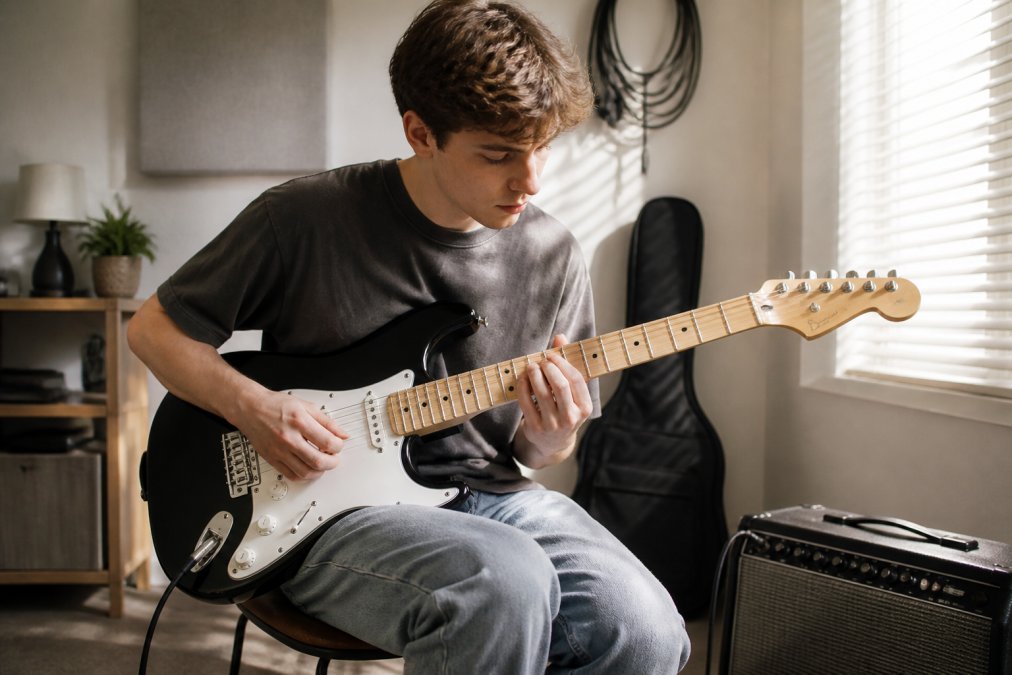
The Yamaha Pacifica 112V at approximately A$400-A$500 is the better choice if you can stretch your budget. The alder body with bolt-on maple neck feels substantially more solid. The HSS pickup configuration (humbucker and two single-coils) gives you a wider range of tones, the humbucker delivers warm, thick sounds for rock and metal, while the single-coils handle brighter tones for blues and funk. Yamaha's build quality is reliable, the instrument holds tuning better, and intermediate players often keep their Pacifica long-term as a backup. For most hobbyists, the Yamaha Pacifica 112V is the best value electric guitar.
Digital Pianos: Casio CDP-S110 and Roland FP-30X
A cheap digital piano with unweighted keys teaches incorrect technique from day one (peer-reviewed research). The Casio CDP-S110 delivers weighted keys, the Scaled Hammer Action Keyboard II mimics acoustic piano key resistance, at approximately A$599. This is the lowest price for a properly weighted 88-key piano. The Casio is lightweight at 10.5 kg and includes 10 built-in tones and USB connectivity.
The Roland FP-30X at around A$999 features the more sophisticated PHA-4 Standard keyboard action and SuperNATURAL Piano sound engine, producing richer, more expressive tones. Roland's build quality is noticeably superior, and the keyboard feels more responsive. You'll need to buy a stand and pedal unit separately, which adds cost.
For budget-conscious pianists: start with the Casio CDP-S110. For hobbyists committed to learning well: the Roland FP-30X is the better value despite higher upfront cost.
Drum Kits: Acoustic vs Electronic Options
Acoustic drums deliver authentic feel but create noise impractical in apartments. The PDP Center Stage 5-Piece Drum Kit is a reliable acoustic option for hobbyists with space. Poplar shells deliver a balanced sound suitable for rock, pop, and jazz. Total cost of ownership is higher, you need cymbals, stands, pedals, and regular tuning.
The Alesis Surge Mesh Kit is the electronic alternative. All-mesh drum heads deliver a realistic playing feel, and the kit includes 385 sounds and 24 preset kits. Electronic drums are quiet, you can practise with headphones, and maintenance is minimal (aes.org). Your decision depends on your living situation: in a house with space, acoustic drums; in an apartment, electronic drums are the only realistic option.
Acoustic Guitars and Portable Options
The Martinez Acoustic Middy Traveller solves the portability problem. This mid-sized acoustic is smaller than a full dreadnought, making it comfortable for travel or apartment living. It produces a warm tone and fits in a standard gig bag. The limitation: smaller body size means less projection than a full-sized dreadnought. For hobbyists prioritising portability and affordability, the Martinez Middy is the entry point.
Affordable Home Studio Setup Australia
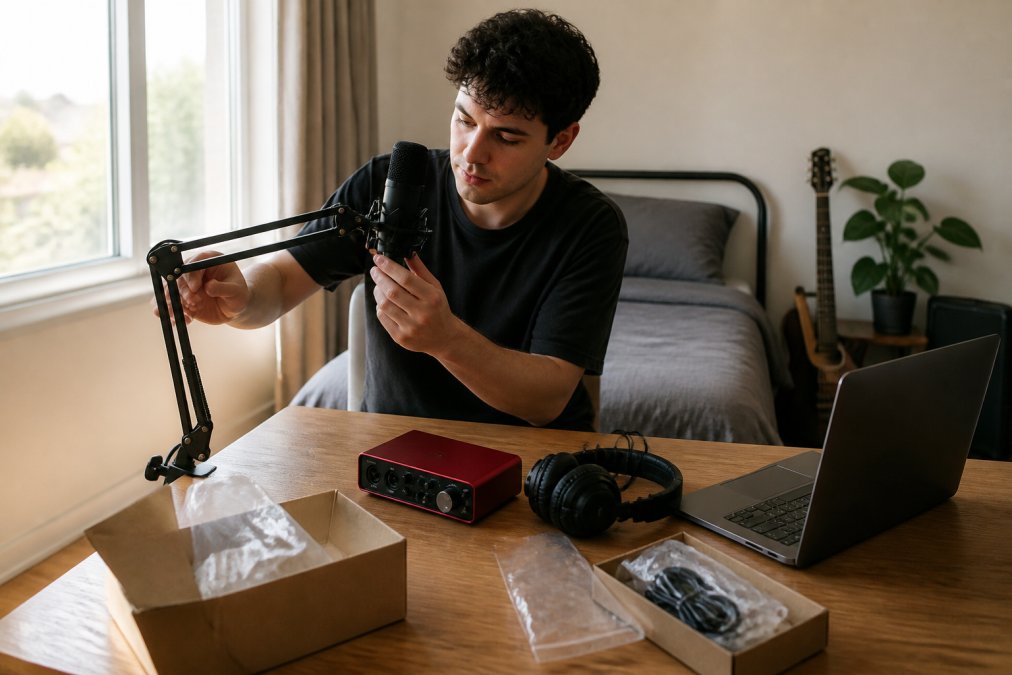
The Focusrite Scarlett 2i2 Studio (3rd Gen) is a complete starter package at approximately A$499. You get a 2-in/2-out USB audio interface with two Scarlett mic preamps, a CM25 MkIII condenser microphone, HP60 MkIII headphones, and bundled software including Ableton Live Lite and Pro Tools First. This is the most efficient entry into home recording, a professionally matched bundle rather than buying components separately. The Scarlett preamps are clean and transparent, and the included microphone is suitable for vocals and acoustic instruments.
You'll need to add: a microphone stand or boom arm (A$30-A$60), an XLR cable (A$15-A$25), and optional acoustic treatment. For hobbyist recording, the Focusrite Scarlett 2i2 Studio is the most cost-effective path.
Tips for Buying Second-Hand Musical Gear
Second-hand instruments offer exceptional value, often selling at 40-60% of the original price (reverb.com). Inspect the instrument in person if possible. Check for cracks in the wood, test the action and play every fret on every string, and ask about the instrument's history and storage conditions.
Buy from reputable sellers on Facebook Marketplace or Gumtree, and verify the seller's history. Ask for photos from multiple angles and a video of the instrument being played. Meet in a public place. Consider budgeting for a professional inspection or setup if buying from a private seller, a guitar setup costs A$50-A$100 and can transform a playable instrument into a great one.
For Robina residents, buying locally means you can inspect the gear before purchasing and get immediate support if something's wrong.
Total Cost of Ownership and Long-Term Value
The initial purchase price is only part of the story. A Squier Bullet at A$300 might seem appealing, but upgrading to a Yamaha Pacifica within a year means spending A$600-A$800 total. Starting with the Pacifica costs A$400-A$500, saving you money long-term. Resale value matters: a well-maintained Yamaha Pacifica 112V sells for 60-70% of its original price, while a Squier Bullet sells for 40-50%.
Year One Estimated Costs:
- Electric Guitar: A$500-A$1,100 (instrument, amplifier, cables, strings, maintenance)
- Digital Piano: A$750-A$1,450 (instrument, stand, pedal unit, headphones)
- Acoustic Drums: A$700-A$1,550 (kit, cymbals, hardware, maintenance)
- Home Studio: A$560-A$760 (interface, microphone bundle, stand, cables)
For hobbyists committing to the instrument, investing slightly more upfront in quality is more cost-effective than upgrading repeatedly.
Local Sourcing and Expert Advice in Robina
Buying online is convenient, but there's real value in handling an instrument before committing. Robina residents can test guitars, pianos, and drums at Muzic Man in person. Local sourcing eliminates shipping delays and damage risk. Expert advice avoids costly mistakes, choosing an instrument genuinely wrong for your situation or investing in something you'll outgrow in months. Local retailers who've worked with hundreds of hobbyists know which instruments deliver value.
Which Equipment Should You Choose?
The best instrument for you depends on three factors: your living situation, your budget, and your commitment level. In an apartment or shared housing, electronic drums and digital pianos are more practical. Start with the lowest price point that doesn't compromise on playability. If you're uncertain whether you'll stick with the hobby, entry-level instruments are appropriate. If you're confident you'll play regularly, invest slightly more in quality.
| Instrument | Budget Option | Best Value Option | Premium Option | Best For |
|---|---|---|---|---|
| Electric Guitar | Squier Bullet Stratocaster (A$299) | Yamaha Pacifica 112V (A$400-A$500) | Higher-end Yamaha or Fender | Versatile players, rock/blues/pop |
| Digital Piano | Budget unweighted keyboard | Casio CDP-S110 (A$599) | Roland FP-30X (A$999) | Learning proper technique |
| Acoustic Guitar | Budget full-size | Martinez Middy Traveller | Full-size dreadnought | Portability, limited space |
| Acoustic Drums | Entry-level 5-piece | PDP Center Stage | Premium birch shells | Space and neighbours permit |
| Electronic Drums | Basic rubber pads | Alesis Surge Mesh Kit | Higher-end mesh kits | Quiet practice, apartments |
| Home Studio | Single microphone + interface | Focusrite Scarlett 2i2 Studio | Larger interface, better mic | Recording and production |
Finding best value musical equipment for hobbyists means balancing cost with playability, durability, and sound quality. The instruments we've covered deliver on all three without breaking the budget. Whether you're starting with an electric guitar, learning piano, or building a home studio, there's a path forward that doesn't require professional-grade investment.
Muzic Man stocks a wide range of high quality branded musical instruments and supplies and can help you navigate the choice based on your specific situation. Visit the Gold Coast store to test gear in person, or browse the online store for Australia-wide delivery. Our team is committed to quality and value, and we're here to help you find the right instrument for your journey.
=== FAQ ANSWERS (audit these too, same rules) ===
[1] Q: What is the most affordable musical instrument to start with? A: Ukuleles and entry-level keyboards are among the cheapest options, but for guitar players, the Squier Bullet Stratocaster offers exceptional value as a playable electric guitar. For acoustic instruments, a travel-sized guitar like the Martinez Acoustic Middy provides good sound at a lower cost than full-sized models. The choice depends on your musical interests and which instrument feels most motivating to learn.
[2] Q: Are budget musical instruments worth the investment for hobbyists? A: Yes, when you select carefully. Entry-level instruments from established brands like Yamaha, Casio, and Squier deliver solid build quality and playability without excessive cost. The key is choosing an instrument that feels good to play and sounds acceptable, this keeps motivation high during the learning phase. Many hobbyists upgrade later, but a quality entry-level instrument provides genuine value and can be resold if you decide the hobby isn't for you.
[3] Q: What equipment should I get to start a home music studio? A: Start with an audio interface (like the Focusrite Scarlett 2i2), a condenser microphone, headphones, and recording software. The Focusrite Scarlett 2i2 Studio bundle includes most of these essentials. You'll also need a computer and a quiet space. Acoustic treatment (foam panels or blankets) helps, but isn't essential initially. Begin with this core setup and add equipment only when you identify specific needs.
[4] Q: How do I choose between entry-level and professional-grade gear? A: Entry-level gear suits hobbyists still exploring their musical direction and commitment level. Professional-grade equipment justifies higher cost only when you're earning income from music or have specific technical requirements. For most hobbyists, mid-range instruments like the Yamaha Pacifica or Roland FP-30X offer excellent playability and sound without professional pricing. Upgrade when your current gear becomes a limitation, not before.
[5] Q: What should I look for when buying second-hand musical gear? A: Inspect for physical damage, check that all parts function (strings, keys, pedals), and test the sound. Ask about maintenance history. Second-hand gear from established brands holds value well, and you'll recover most costs if you resell later. Avoid heavily damaged instruments unless you're experienced with repairs.
Frequently Asked Questions
What is the most affordable musical instrument to start with?
Ukuleles and entry-level keyboards are among the cheapest options, but for guitar players, the Squier Bullet Stratocaster offers exceptional value as a playable electric guitar. For acoustic instruments, a travel-sized guitar like the Martinez Acoustic Middy provides good sound at a lower cost than full-sized models. The choice depends on your musical interests and which instrument feels most motivating to learn.
Are budget musical instruments worth the investment for hobbyists?
Yes, when you select carefully. Entry-level instruments from established brands like Yamaha, Casio, and Squier deliver solid build quality and playability without excessive cost. The key is choosing an instrument that feels good to play and sounds acceptable, this keeps motivation high during the learning phase. Many hobbyists upgrade later, but a quality entry-level instrument provides genuine value and can be resold if you decide the hobby isn't for you.
What equipment should I get to start a home music studio?
Start with an audio interface (like the Focusrite Scarlett 2i2), a condenser microphone, headphones, and recording software. The Focusrite Scarlett 2i2 Studio bundle includes most of these essentials. You'll also need a computer and a quiet space. Acoustic treatment (foam panels or blankets) helps, but isn't essential initially. Begin with this core setup and add equipment only when you identify specific needs.
How do I choose between entry-level and professional-grade gear?
Entry-level gear suits hobbyists still exploring their musical direction and commitment level. Professional-grade equipment justifies higher cost only when you're earning income from music or have specific technical requirements. For most hobbyists, mid-range instruments like the Yamaha Pacifica or Roland FP-30X offer excellent playability and sound without professional pricing. Upgrade when your current gear becomes a limitation, not before.
What should I look for when buying second-hand musical gear?
Inspect for physical damage, check that all parts function (strings, keys, pedals), and test the sound. Ask about maintenance history. Second-hand gear from established brands holds value well, and you'll recover most costs if you resell later. Avoid heavily damaged instruments unless you're experienced with repairs.
This article was written using GrandRanker