


Professional Grade Guitar Gear for Pros: 2026 Guide
25th Aug 2026
Table of Contents
- What Defines Professional Grade Guitar Gear
- Essential Professional Grade Guitar Instruments
- Tube vs. Digital Amplification for Professional Use
- Best Professional Guitar Pedals for Live Performance
- Professional Guitar Setup Checklist for Touring
- How to Maintain Professional Guitar Gear
- Build Quality and Reliability Standards
- Conclusion
Last Updated: August 25, 2026

Professional grade guitar gear for pros is built to withstand touring schedules, handle studio demands, and deliver consistent tone night after night. At Muzic Man, we understand that working musicians need gear that won't fail during a critical gig or recording session. This guide breaks down what separates professional-grade equipment from entry-level alternatives, and how to source reliable instruments and accessories whether you're based in Robina or anywhere across Australia.
The difference between amateur and pro gear comes down to build quality, component durability, and tonal consistency under pressure. Professional musicians depend on equipment that performs in unpredictable environments, from humid outdoor festivals to air-conditioned studios to tour buses crossing the country.
What Defines Professional Grade Guitar Gear
Professional grade guitar gear is engineered for reliability, tonal accuracy, and durability under constant use. Key markers include premium materials (solid tonewoods, quality electronics, reinforced hardware), precision manufacturing tolerances that ensure consistency, and components selected for longevity. A professional guitar maintains tuning stability through temperature and humidity changes, while professional amplifiers deliver headroom without premature breakup.
Build quality shows in the details: proper fret crowning and polishing, shielded electronics to reduce hum, quality potentiometers that don't crackle, and hardware that doesn't strip or corrode. Many professional instruments feature modular designs where electronics can be replaced or upgraded without compromising the instrument's structure.
Reliability means consistency, a professional-grade instrument plays the same way after six months of touring as it did on day one, which matters whether you're recording or playing a sold-out show where your tone needs to cut through a full band mix.
Essential Professional Grade Guitar Instruments
Professional musicians choose instruments based on the genres they play, the venues they perform in, and the specific tonal characteristics their music demands.
Electric Guitars Built for the Road
The Fender American Professional II Stratocaster represents the modern standard for touring electric guitarists. Built in the USA with V-Mod II single-coil pickups, it delivers classic Stratocaster tone that cuts through any mix with a comfortable deep 'C' neck profile. The upgraded 2-point tremolo system with cold-rolled steel block stays in tune reliably, crucial when switching between clean and heavily distorted passages multiple times per song.
The PRS Custom 24 sits at the premium end of professional-grade electrics, offering exceptional versatility and build quality. The mahogany body with carved figured maple top delivers warmth and sustain, while the patented PRS tremolo maintains tuning stability better than most competitors. The 85/15 humbucking pickups provide a wide tonal palette, from clean articulate passages to thick, saturated high-gain tones (prsguitars.com). Professionals choose the Custom 24 because it holds its value exceptionally well and performs identically whether recording in a Melbourne studio or playing a festival in regional Queensland.
For touring musicians, tuning stability and build quality matter more than anything else. Both instruments maintain their setup across temperature and humidity changes, which is non-negotiable when moving between venues daily.
Acoustic Electric Guitars for Versatile Performance
The Maton EBG808TE 'Tommy Emmanuel' Acoustic Electric Guitar is handmade in Melbourne and represents Australian craftsmanship at the professional level. Built with solid Sitka Spruce top and Queensland Maple back and sides, it delivers focused, articulate tone that projects well in live settings. The AP5-Pro pickup system captures natural acoustic tone without the thin, brittle character that plagues many amplified acoustics. The smaller 808 body shape suits fingerstyle players and reduces feedback issues during amplified performances.

For musicians seeking ultimate customisation, the Fenech Masterbuilt Series Acoustic Guitars offer bespoke instruments designed by master luthier Aaron Fenech. Each guitar is a collaborative build where you specify tonewoods, body dimensions, and hardware. These investment pieces are commissioned for specific albums or tours.
Tube vs. Digital Amplification for Professional Use
Professional musicians choose between tube and digital amplification based on their specific needs, venue constraints, and tonal priorities.
Tube amplifiers deliver dynamic responsiveness and harmonic content that many professionals prefer for live performance. The Marshall DSL40CR is a workhorse for touring musicians, the 40-watt all-valve power section offers two footswitchable channels with two modes each, giving access to everything from pristine cleans to high-gain distortion. The power reduction feature drops output to 20 watts for lower-volume rehearsals or smaller venues.
The Fender '65 Deluxe Reverb Reissue represents the opposite end of the tube amplifier spectrum, a 22-watt combo built for tone rather than volume. Professional blues, country, and jazz guitarists choose it for its iconic clean tone, lush spring reverb, and responsive tube-driven vibrato. The two 6V6 power tubes deliver a dynamic, touch-responsive feel that digital modelling struggles to replicate.
Digital modelling amplifiers offer flexibility and silent recording capabilities essential for modern studios. The Universal Audio OX Amp Top Box functions as a reactive load box for your existing tube amp, allowing you to play at any volume while capturing studio-quality tones through speaker, microphone, and room modelling.

Best Professional Guitar Pedals for Live Performance
Your pedalboard signal chain directly affects your tone. Professional-grade pedals are engineered to maintain signal integrity across multiple effects through true bypass wiring, component quality, and durability under constant use.
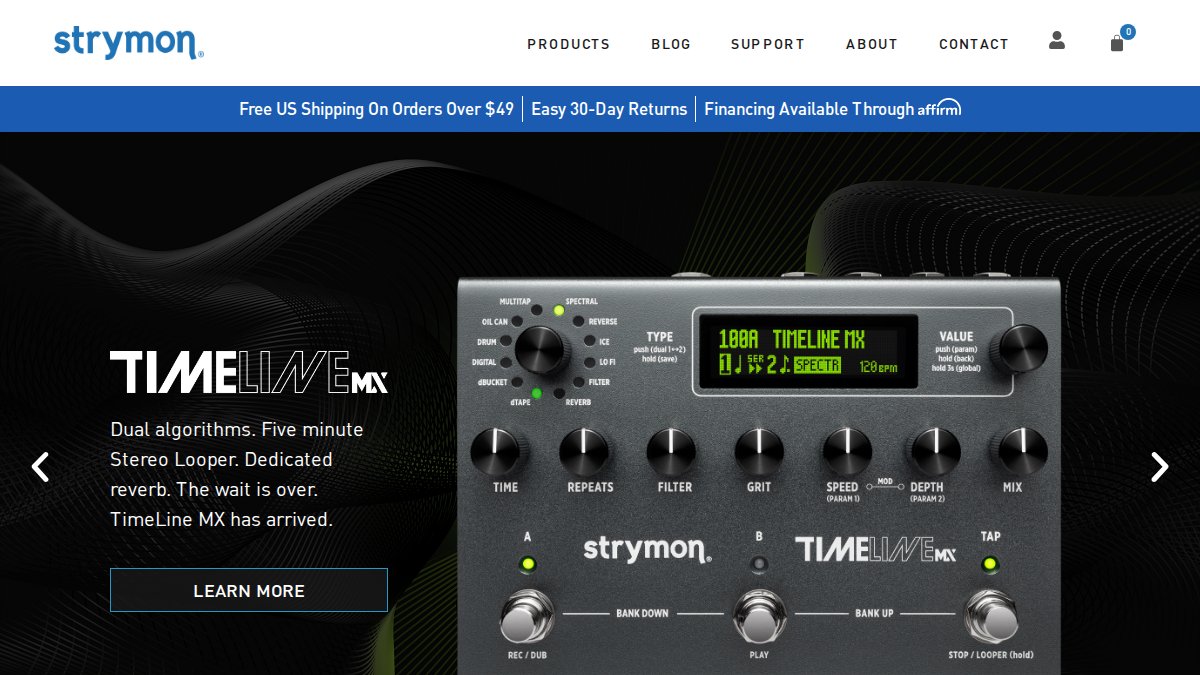
The Strymon BigSky Reverb Pedal sets the standard for professional reverb effects. Twelve studio-grade reverb algorithms delivered through 24-bit 96kHz converters ensure pristine audio quality without digital artifacts. Professional touring musicians choose the BigSky for lush, expansive reverb tones that enhance their sound without degrading the signal. The MIDI input and output allow extensive control and preset management, crucial when running multiple effects and needing to recall settings instantly during performance.
Signal chain integrity matters as much as individual pedal quality. Each connection introduces potential tone loss through buffering, impedance mismatch, or poor-quality patch cables. Professional-grade pedals use true bypass switching or high-quality buffered outputs to maintain tone across the entire signal chain. Quality patch cables with proper shielding prevent hum and signal degradation.
Professional Guitar Setup Checklist for Touring
Professional musicians maintain their instruments according to a rigorous checklist before every tour, ensuring tuning stability, intonation, and playability remain consistent across hundreds of performances.
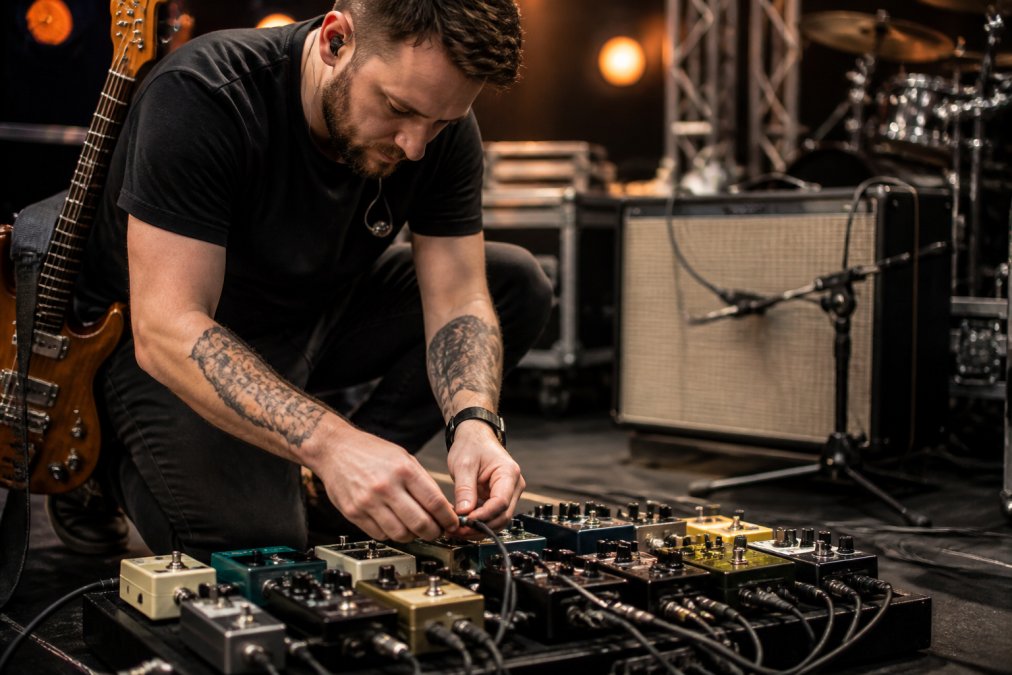
Start with tuning machine stability, verify that tuning machines lock down firmly and don't slip under string tension. Check that nut slots are properly cut and strings sit at the correct height without binding. Verify bridge height and intonation across all twelve frets, adjusting if necessary. Professional touring musicians check intonation weekly during a tour because temperature and humidity changes affect wood expansion and intonation accuracy.
Your truss rod adjustment determines neck relief and fret height consistency. A slight forward bow (about 0.5mm at the seventh fret) is ideal for most playing styles (fender.com). Check your truss rod before every tour and adjust if necessary.
Inspect your output jack and electronics before touring. Ensure the output jack is tight and makes solid contact with your cable. Check that volume and tone potentiometers don't crackle or have dead spots. Test your electronics in a quiet environment before touring to identify any noise issues.
Your bridge and saddle should be checked for cracks or movement. Verify that your bridge isn't lifting and that the saddle is seated properly. Check that strap buttons and hardware are tight and secure, and verify that cable connections are solid with backup cables for every pedal and amplifier connection.
How to Maintain Professional Guitar Gear
Professional musicians understand that maintenance directly impacts reliability and tone quality. Regular maintenance prevents failures during critical performances and extends the lifespan of expensive instruments.
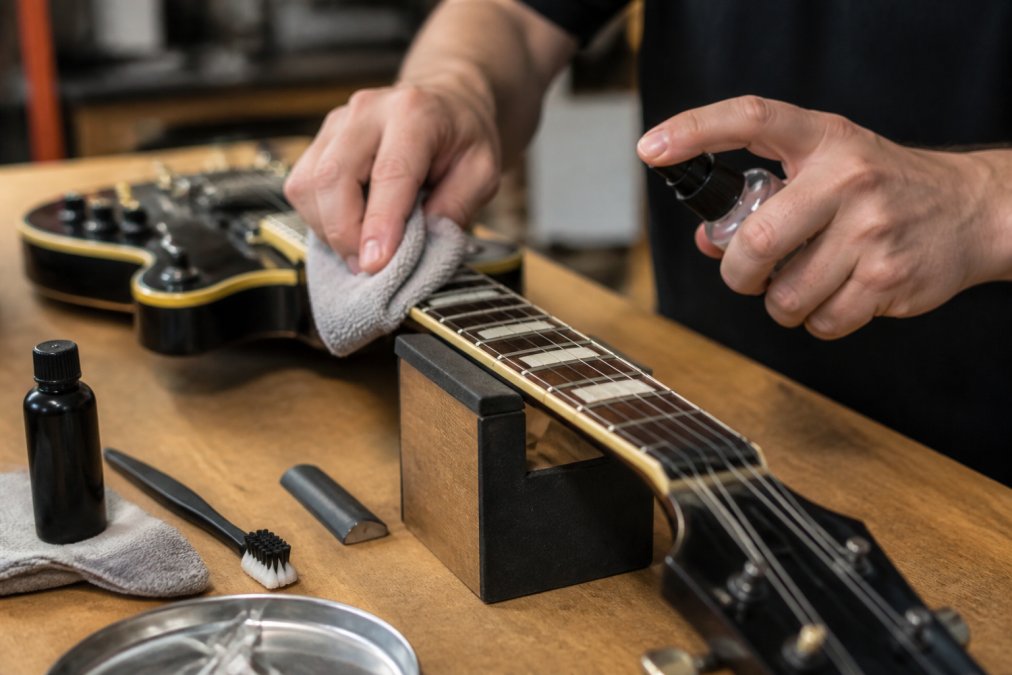
Clean your guitar after every performance, especially if you've been sweating or playing in humid environments. Use a soft microfibre cloth to wipe down the body, neck, and fretboard. For the fretboard, use dedicated fretboard cleaner or lemon oil on rosewood and ebony (avoid oil on maple fretboards). Sweat and humidity accelerate corrosion of electronics and hardware.
Change your strings every two to four weeks depending on playing intensity (the American Academy of Dermatology). Fresh strings maintain brightness, tuning stability, and sustain. Keep backup strings in your gig bag so you can replace a broken string immediately.
Inspect your electronics quarterly. Check that all solder joints are solid and that there's no corrosion on potentiometers or switches. Have your electronics serviced annually by a qualified technician to prevent failures during touring.
Protect your amplifier from dust and humidity with a protective cover when not in use. Tube amplifiers need regular maintenance, have a technician bias your tubes annually and replace tubes proactively before they fail.
Your pedalboard requires regular inspection. Check that all patch cables are secure and that your power supply delivers consistent voltage to each pedal. Carry backup patch cables and a spare power supply on tour.
Store your guitars in a stable environment away from direct sunlight and extreme temperature or humidity changes. Use a humidifier in dry climates and a dehumidifier in humid environments. Professional musicians invest in flight cases for touring instruments, which protect against physical damage and provide climate control during transport.
Build Quality and Reliability Standards
Professional grade guitar gear meets exacting standards for component quality, manufacturing precision, and long-term durability. The difference between professional and amateur equipment becomes apparent after months of touring when amateur gear fails and professional gear continues performing reliably.
Quality fret work determines playability and tuning stability. Professional guitars have frets crowned to precise specifications and polished smooth so strings make contact at the correct height across all twelve frets. Professional luthiers spend hours on fret work to ensure perfect playability.
Component selection matters throughout professional-grade equipment. Professional pickups use quality magnets and precisely wound coils to deliver consistent output and tonal character. Professional potentiometers resist crackling and maintain smooth operation after years of use. Professional amplifiers use quality transformers that handle high current without distortion or failure.
Manufacturing tolerances separate professional from amateur gear. Professional guitars have neck joints precisely fitted to ensure structural integrity and consistent playability. Professional amplifiers have component layouts that optimize signal flow and minimize noise.
Warranty and support matter for professional musicians. Quality manufacturers stand behind their products with comprehensive warranties and accessible repair services. When your professional-grade guitar needs service, you can send it to an authorised technician who understands the instrument's specifications.
Conclusion
Professional grade guitar gear represents an investment in reliability, tone quality, and durability that touring musicians depend on. From electric guitars like the Fender American Professional II Stratocaster and PRS Custom 24, to acoustic instruments handmade in Melbourne like the Maton EBG808TE, to professional-grade amplifiers and effects, the right equipment transforms your ability to perform consistently across tours and studio sessions.
Whether you're based in Robina or touring across Australia, sourcing professional-grade instruments requires access to quality retailers who understand what working musicians need. At Muzic Man, we stock leading professional-grade brands and provide Australia-wide shipping so you can access top-tier equipment regardless of your location. Our physical Gold Coast shop offers hands-on experience with professional instruments, and our online store delivers nationwide access to the gear that professional musicians depend on. Visit Muzic Man to explore professional-grade guitars, amplifiers, and accessories backed by competitive pricing and reliable Australia-wide delivery.
Frequently Asked Questions
What defines professional-grade guitar gear versus hobbyist equipment?
Professional grade guitar gear prioritises build quality, tuning stability, and reliability under demanding conditions. Instruments feature solid tonewoods, precision hardware, and consistent playability across multiple units. Amplifiers deliver predictable tone and robust construction for touring. Pedals use true bypass switching and quality components that withstand frequent use. Hobbyist gear often uses laminated materials, cheaper electronics, and components prone to failure after moderate use. Professionals invest in equipment that maintains its performance across hundreds of gigs and years of touring.
What should be included in a professional guitar setup checklist?
A professional setup includes properly intonated instruments, tested signal chains with quality patch cables, a tuning system with backup tuner, spare strings and batteries, cable testers, and a pedalboard configured for minimal latency. Check amplifier output and speaker impedance matching, verify all footswitches function correctly, test effects loop routing, confirm backup amplifier availability, and ensure spare tubes and fuses are on hand. Inspect all connectors for corrosion, verify grounding to eliminate hum, and have backup power supplies for digital devices. Document your signal flow and take photographs for quick reassembly after transport.
Is it worth investing in boutique pedals for professional gigs?
Boutique pedals offer superior tone shaping, true bypass switching, and build quality that survives touring. Established brands like Strymon deliver consistent audio fidelity and MIDI integration for complex rigs. However, reliability matters more than exclusivity; a well-maintained standard pedal outperforms a neglected boutique unit. Consider boutique options when they solve specific tonal problems or integrate seamlessly with your signal chain. Budget-conscious professionals often mix boutique reverb or delay pedals with reliable standard overdrive pedals, prioritising where sound quality has the most impact on your performance.
How do professional guitarists choose touring gear?
Professionals prioritise road-ready equipment with proven reliability, compact design for transport, and minimal setup time between venues. They select amplifiers with power reduction for various venue sizes, instruments with stable tuning systems and solid construction, and pedals built to withstand constant use and temperature changes. Weight and portability matter for touring; many choose combo amplifiers or load boxes over full stacks. They research gear used by working musicians in their genre, test equipment in live settings before committing, and maintain detailed records of serial numbers and settings for insurance and quick troubleshooting.
What are the most reliable guitar brands for professional use?
Established brands like Fender, PRS, Marshall, and Maton deliver consistent build quality and strong resale value. Fender's American Professional series offers modern refinements with classic tone; PRS Custom models provide versatility across genres. For Australian musicians, Maton handmade guitars offer exceptional playability and amplified tone. Marshall and Fender valve amplifiers remain industry standards for tone and durability. Universal Audio load boxes enable silent recording without compromising valve amplifier character. Research specific models used by professionals in your genre, check independent reviews from working musicians, and prioritise brands with strong warranty support and local service availability.
This article was written using GrandRanker