


Top 5 Guitar Pedals for Blues Music: Tone Picks
Posted by Editorial Team on 5th Nov 2026
Last Updated: November 4, 2026
Quick Summary
The BOSS BD-2 Blues Driver is a strong starting point among guitar pedals for blues, offering amp-like dynamic overdrive that cleans up with your guitar volume. Pair it with a mid-humped overdrive, a fuzz, and delay or reverb to cover the core blues sounds. Build your chain with the drive pedals first, before any time-based effects.
- The BD-2 is a dynamic, amp-like overdrive rather than a mid-humped boost.
- Start with Gain around 9 o'clock for light edge-of-breakup tones.
- With humbuckers, back the Gain off a notch so the tone does not get thick.
- Place a transparent drive like the BD-2 before a mid-humped overdrive such as a Tube Screamer.
- Keep reverb and delay mixes modest so your notes stay defined.
Table of Contents
- Why These Five Pedals Make the Cut
- 1. BOSS BD-2 Blues Driver: The Classic Blues Overdrive
- 2. Ibanez Tube Screamer TS808 and Tube Screamer Mini: Mid-Hump Drive
- 3. Dunlop Fuzz Face: Vintage Blues-Rock Fuzz
- 4. TC Electronic Hall of Fame: Reverb for Ambient Blues
- 5. MXR Carbon Copy: Analog Delay for Blues Textures
- How to Build a Blues Pedalboard and Set the Signal Chain
- Blues Guitar Tone Tips for Getting the Most From Your Pedals
- Frequently Asked Questions
Why These Five Pedals Make the Cut
Blues guitar lives or dies on dynamics. A good pedal should respond to how hard you pick, add grit when you dig in, and clean up when you back off the volume knob. This guide covers five guitar pedals for blues, spanning overdrive, fuzz, reverb and delay.
We picked these five because they cover the core sounds blues players reach for: a classic drive, a mid-focused overdrive, a vintage fuzz, an ambient reverb and an analogue delay. The list is a starting point. Your amp, guitar and playing style will change how each one sounds.
For current prices and availability, check Muzic Man's website or ask our team for a quote.
1. BOSS BD-2 Blues Driver: The Classic Blues Overdrive
The BOSS BD-2 Blues Driver is one of the most recognised overdrive pedals in the blues world, and for good reason: it is designed to sit between a clean amp and a fully cranked one, adding grit without smothering the guitar's natural voice. The standard BD-2 uses Level, Tone and Gain controls; the BD-2W Waza Craft version adds a Standard/Custom switch and upgraded components for a slightly warmer, more open response.
What it does well for blues
The BD-2 is a dynamic, amp-like overdrive rather than a mid-humped boost. That makes it a strong choice for players who want the pedal to clean up when they roll the guitar volume back and bite when they dig in. It works particularly well as the first pedal in a blues chain, pushing a clean valve amp into light breakup or adding sustain to single-note lines.
Settings to start with
- Light edge-of-breakup: Gain around 9 o'clock, Tone at noon, Level to match your clean amp volume.
- Classic blues drive: Gain around 11 o'clock, Tone slightly past noon to add presence, Level just above unity.
- Slide and single-note sustain: Gain around 1 o'clock, Tone backed off to 10 o'clock to tame harshness on the high strings.
How it pairs with guitars and amps
With single-coil pickups (Stratocaster, Telecaster) the BD-2 keeps the glassy top end intact and responds strongly to picking dynamics. With humbuckers it can get thick quickly, so back the Gain off a notch. Into a valve amp already running hot, keep Gain low and use Level to push the front end; into a clean solid-state amp, the pedal does more of the distortion work itself.
Pros and Cons
Pros:
- Amp-like, dynamic response that suits blues picking styles
- Works as a first-stage drive or a standalone overdrive
- BD-2W adds a Custom mode for a warmer, more open voice
Cons:
- The standard BD-2 has no true bypass, which matters on large boards
Watch out: stacking the BD-2 after a mid-humped overdrive can make the tone muddy, try it first in the chain and let the second pedal add colour.
The table below sums up the settings and pairing notes for the BD-2 as the article describes them.
| Setting or case | Starting point | Note |
|---|---|---|
| Light edge-of-breakup | Gain around 9 o'clock | Tone at noon, Level matched to clean volume |
| Classic blues drive | Gain around 11 o'clock | Tone just past noon for presence |
| Slide and single-note sustain | Gain around 1 o'clock | Tone at 10 o'clock tames high strings |
| Single-coil pickups | Keep Gain as set | Keeps glassy top end and dynamics |
| Humbuckers | Back Gain off a notch | Otherwise can get thick quickly |
| BD-2W Waza Craft | Standard/Custom switch | Custom mode gives warmer, more open voice |
2. Ibanez Tube Screamer TS808 and Tube Screamer Mini: Mid-Hump Drive
The Tube Screamer family is known for its mid-focused drive.
If you want a pedal that pushes a tube amp into a more vocal, singing overdrive, this family is worth a close look.
Pros and Cons
Pros:
- Appears in more than one blues-pedal recommendation
- The Mini offers a smaller footprint for crowded boards
Cons:
- Detailed controls and Australian pricing were not stated in our sources
3. Dunlop Fuzz Face: Vintage Blues-Rock Fuzz
Fuzz is a different effect category from overdrive. Where overdrive pushes the signal into soft clipping, fuzz applies heavier distortion with a thicker, more sustaining character. The Dunlop Fuzz Face is named in blues-rock pedal recommendations.
Fuzz is one of the more characterful guitar pedals for blues, and it tends to react strongly to guitar volume and pickup choice, so expect your tone to shift as you roll the volume back.
Pros and Cons
Pros:
- A fuzz option, giving you a different effect category from the overdrives above
- Named in a blues-pedal recommendation
Cons:
4. TC Electronic Hall of Fame: Reverb for Ambient Blues
Reverb adds space. For slow blues, slide playing and atmospheric lead lines, a reverb pedal can make a small amp sound like it is playing in a room. The TC Electronic Hall of Fame is named among blues pedal options.
Reverb is best used with a light touch in most blues settings. Too much and the notes blur together.
Pros and Cons
Pros:
- Adds a different effect type from the drive pedals listed above
- Named in a blues-pedal list
Cons:
5. MXR Carbon Copy: Analog Delay for Blues Textures
Delay repeats your notes, which adds depth to solos and rhythm parts. The MXR Carbon Copy is an analogue delay named in blues pedal recommendations.
Set the repeats low for subtle slapback, or higher for lush echoes during slow passages. You can also find a starter setup with cables, patch and mounting accessories to put the whole chain together.
Pros and Cons
Pros:
- Adds a delay effect not covered by the drive pedals
- Named in the blues-pedal recommendations we reviewed
Cons:
How to Build a Blues Pedalboard and Set the Signal Chain
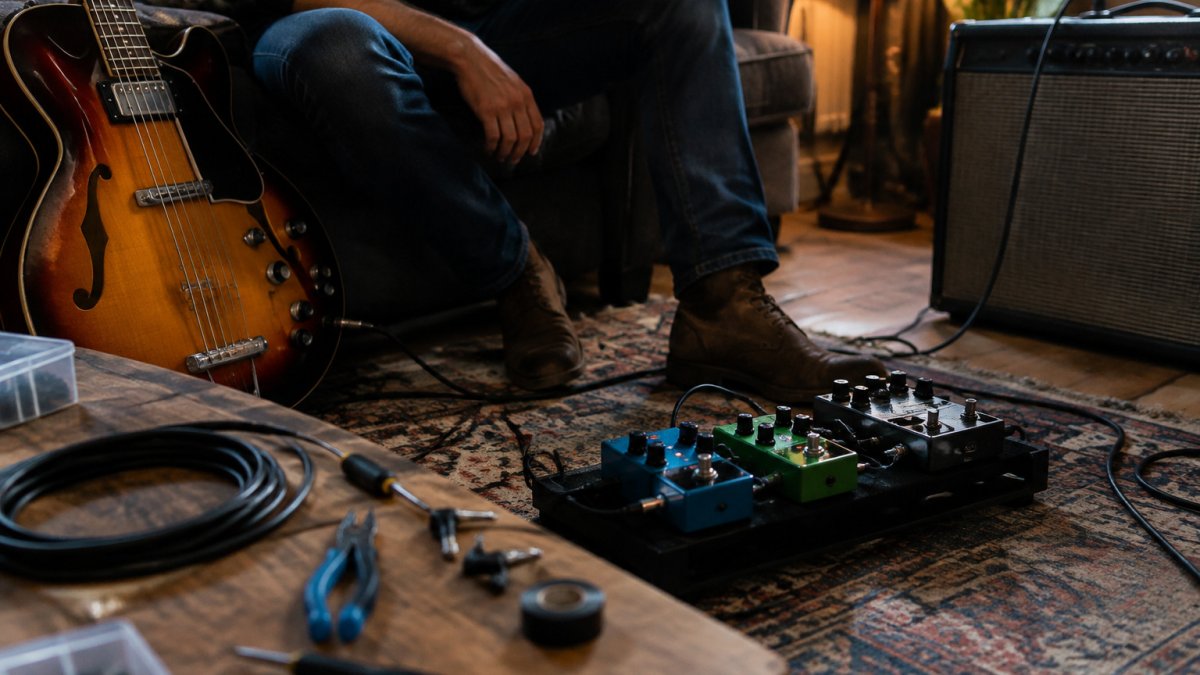
A typical blues chain runs from the guitar through a tuner, then drive (overdrive or fuzz), then modulation or wah if you use them, then time-based effects such as delay and reverb, and finally into the amp. Put drive before delay and reverb so the repeats and reverb tails stay clean.
Why order matters for blues
The order of your drive pedals changes the character of the whole board. A common blues pattern is to run a transparent, amp-like drive (such as the BD-2) first, then a mid-humped overdrive (such as a Tube Screamer) after it. The first pedal sets the base grit; the second adds midrange push and compression for solos. Swap them and the mid-hump colours everything downstream, which can make the transparent pedal sound narrower.
Fuzz is the exception. You can pick up a footswitch to turn each pedal on and off as you build the chain. Many fuzz pedals, particularly vintage-style germanium circuits, sound best first in the chain, before any buffered pedal, because they interact directly with the guitar's impedance. If your fuzz sounds thin or gated after a tuner, try moving it to the very front.
A practical blues board layout
- Guitar into a tuner (true bypass preferred so it does not load the fuzz).
- Fuzz first if you use a vintage-style circuit.
- Transparent overdrive (BD-2) as the base drive.
- Mid-humped overdrive (Tube Screamer) for solos and extra push.
- Modulation (chorus, tremolo) if your blues style calls for it.
- Delay (Carbon Copy) for slapback or ambient repeats.
- Reverb (Hall of Fame) last before the amp.
Power and noise
Running several pedals from one supply can introduce hum, especially with analogue delays and fuzz. A power conditioner with voltage regulation helps keep noise out of the chain. Keep patch cables short and routed away from power leads where possible.
Buying locally on the Gold Coast
For players on the Gold Coast, visit our Gold Coast shop or browse our online store to find supporting gear for building a board.
Blues Guitar Tone Tips for Getting the Most From Your Pedals
Start with the guitar and amp before adding pedals. Most blues tone comes from how the amp responds to your playing, and pedals should shape that rather than mask it.
Use your guitar's volume knob as a tone control. Rolling it back often cleans up a drive pedal without changing your pedal settings.
Set your drive pedals to sit just below the point where they distort your clean amp tone, then push them when you want more grit. Keep reverb and delay mixes modest so your notes stay defined.
Test your pedals with the same riff in each setting so you can hear the difference clearly.
Frequently Asked Questions
What are the essential guitar pedals for playing blues?
The core blues pedal kit usually starts with an overdrive for warm, responsive breakup, then adds a fuzz for vintage rock grit, a reverb for space, and a delay for ambient depth. A wah is a useful extra for expressive phrasing. You do not need all of them at once. Start with one overdrive, because it shapes most blues tones, and add effects as your playing and musical direction become clearer. Prices vary by model and retailer, so check current pricing with Muzic Man before you buy.
Do I need a compressor pedal for blues guitar?
A compressor is optional for most blues players. It evens out volume differences between picked and soft notes and can add sustain, which suits slow bends and sustained leads. Many players already get enough sustain from a driven amp or an overdrive pedal, so a compressor is usually a refinement rather than a necessity. If your playing is dynamic and you want consistent level across a set, try one. If you already have an overdrive that sounds good, add the compressor later.
What is the best overdrive pedal for a classic blues tone?
For a classic blues tone, many players start with the BOSS BD-2 Blues Driver, which is recommended in blues pedal comparisons. The Ibanez Tube Screamer TS808 is another common choice, valued for its mid-focused drive that cuts through a band. The best option depends on your amp and guitar. Test a few pedals with your own setup where possible, and check current pricing with Muzic Man.
What is the difference between a blues driver and a tube screamer?
A blues driver such as the BOSS BD-2 is a common choice for blues overdrive. A Tube Screamer, such as the TS808 or the Tube Screamer Mini, is a well-known overdrive family. Both are blues-friendly. Pick based on whether you want broad dynamic range or a tighter, mid-forward character.