


Cheap Beginner Drum Kits: Smarter Alternatives
30th Sep 2026
Table of Contents
- Why Cheap Beginner Drum Kits Cost More Than You Think
- Best Electronic Drum Kits for Home Practice
- Buying Second-Hand Drums in Australia: What to Check Before You Pay
- Drum Practice Pad Benefits: The Cheapest Way to Start
- Hybrid Kits: Combining Practice Pads, Triggers and a Small Acoustic Setup
- Sourcing Beginner Drum Kits Locally: What Regional Buyers Should Know
- Conclusion
- Frequently Asked Questions
Last Updated: September 29, 2026
Why Cheap Beginner Drum Kits Cost More Than You Think
The sticker price is the smallest number on the invoice. That is the uncomfortable truth about beginner drum kits, and it is why so many first-time buyers end up spending far more than they planned within the first year. At Muzic Man, we see it constantly: a kit bought on price alone, then replaced piece by piece until the "cheap" option has cost more than the right one would have.
A drum kit is a system, not a single purchase. Shells, hardware, cymbals, throne, sticks and somewhere to actually play all have to be accounted for. Miss one and the kit sits unused.
Below, we break down the smarter alternatives to expensive beginner drum kits, from electronic kits and practice pads to second-hand buys and hybrid setups. The goal is simple: get you playing for less, without buying twice.
Best Electronic Drum Kits for Home Practice
Electronic kits are the default answer for anyone practising in a unit, a share house or a bedroom with neighbours nearby. They are quieter, smaller and far more forgiving of a late-night session than an acoustic set. But the sticker price is only part of the story, the module, the pad surfaces and the resale value all shape what you actually get for your money over the first two years.
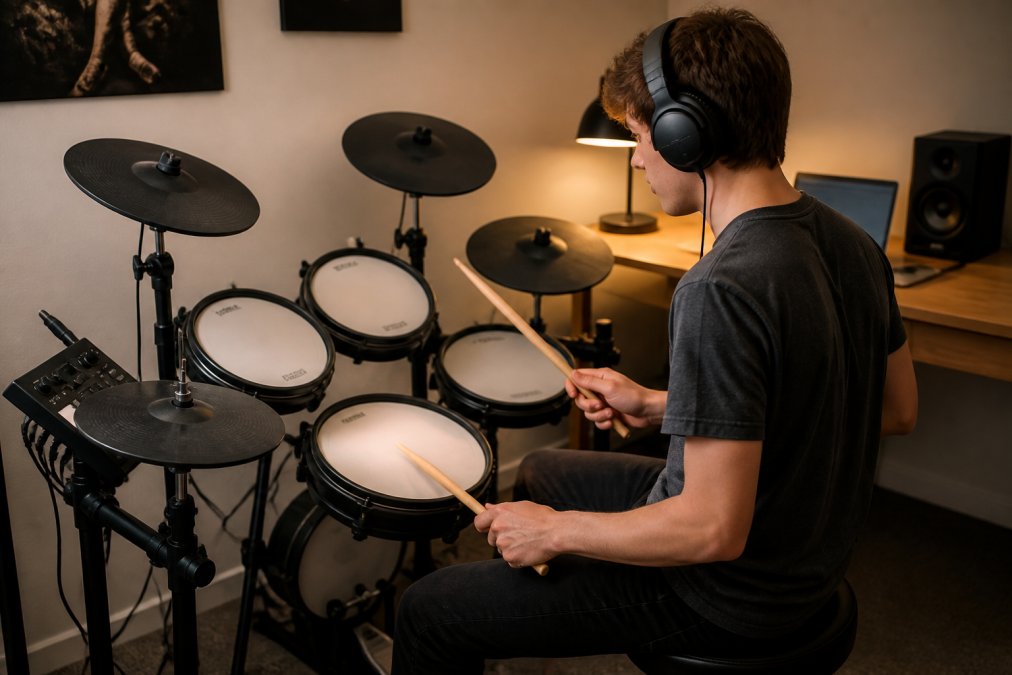
Three models consistently stand out for beginners in Australia:
- Alesis Nitro Max, all-mesh heads, Bluetooth play-along and a foldable frame that suits tight rooms. The mesh snare and toms give realistic rebound, and the module includes a metronome, coaching modes and USB-MIDI out for recording into a laptop.
- Roland TD-02KV, a mesh snare, Roland's sound engine and built-in coaching tools that help you actually improve. Roland modules tend to hold resale value better than most, which matters if you upgrade within a year or two.
- Yamaha DTX-402K, rubber pads rather than mesh, but outstanding reliability and training functions for students. The rubber surfaces are louder under the stick than mesh, so consider this if you share a wall.
A common pattern among beginners is to buy the cheapest module available, then discover it lacks a headphone mix, a line-in for playing along to tracks, or MIDI out for recording. Those features are what turn a kit from a noisemaker into a practice tool. Check the module spec sheet before you commit, not after.
Mesh vs Rubber Pads: What Quiet Practice Actually Means
Mesh pads use a woven head over a sensor, so sticks rebound like a real drum and the strike is muffled. Rubber pads are firmer and noticeably louder under the stick, though still far quieter than an acoustic snare.
For shared walls, mesh is worth the extra. For a detached house or garage, rubber is perfectly workable and often cheaper. One trade-off most buyers miss: mesh heads wear out.
What the Sound Module Adds to Your Practice
The module is the brain of an electronic kit, and it is where beginners get the most long-term value. A good module offers built-in metronomes, coaching functions, play-along songs and headphone output.
- Headphone output with independent volume, essential for late-night practice without disturbing anyone.
- Line-in or Bluetooth, lets you play along to tracks from your phone or laptop.
- MIDI out or USB-MIDI, opens the door to recording and to software like drum notation apps.
- Coaching or training modes, some modules score your timing and accuracy, which accelerates improvement.
Buying Second-Hand Drums in Australia: What to Check Before You Pay
The second-hand market is where the biggest savings sit, and also the biggest traps. A used kit can be excellent value or a money pit, and the difference is usually visible in ten minutes of inspection.
Check these before handing over any money:
- Bearing edges, run a finger around the shell edge. Dents or splits mean the drum will never tune properly.
- Shell roundness, sight down the drum. Out-of-round shells are usually warped from heat or damp.
- Hardware threads, tighten every wing nut and memory lock. Stripped threads are common on older kits.
- Cymbal cracks, inspect the bell and edges. Hairline cracks spread and cannot be repaired.
- Hoops and lugs, bent hoops and missing lugs are expensive to replace individually.
- Pedal condition, a worn bass drum pedal is the first thing to fail on a used kit.
Drum Practice Pad Benefits: The Cheapest Way to Start
A practice pad is the lowest-cost entry point into drumming, full stop. It is a rubber or mesh surface that mimics stick response, and it costs a fraction of a full kit while building the skills that actually matter first: grip, stroke control, rudiments and timing.
Why the Pad Is Also a Resale-Value Play
Here is the angle most beginner guides skip: a practice pad is the only drumming purchase that holds its value almost perfectly. A quality pad from a known brand can be resold for close to what you paid, because there is nothing to wear out beyond the rubber surface. That makes it the lowest-risk way to test whether you actually enjoy drumming before committing to a full kit.
From Pad to Kit: A Staged Path
A common pattern among beginners who stick with drums is a staged progression rather than a single big purchase:
- Practice pad plus metronome, build grip, stroke control and rudiments. Lowest risk, highest skill return.
- Add a bass drum practice pad, introduces foot coordination without a full kit.
- Add an electronic kit or a small acoustic setup, once you know you are committed, and once you have worked out where you can actually play.
- Consider a hybrid setup, if you want acoustic feel with electronic quiet, as covered below.
Hybrid Kits: Combining Practice Pads, Triggers and a Small Acoustic Setup
A hybrid kit blends acoustic and electronic elements: mesh heads or triggers on real shells, a small acoustic setup for feel, and a module for sound. It is the setup serious beginners graduate to when they want both response and quiet.
Sourcing Beginner Drum Kits Locally: What Regional Buyers Should Know
Freight is the hidden cost that sinks regional purchases. A full acoustic kit is bulky and heavy, and shipping to regional Queensland often adds more to the total than the difference between two kits.
| Option | Typical Outlay | Noise Level | Best For |
|---|---|---|---|
| Practice pad only | Lowest | Very low | Testing the hobby |
| Electronic kit | Moderate | Low | Units and shared walls |
| Second-hand acoustic | Variable | High | Detached homes, budget buyers |
| Hybrid setup | Higher | Adjustable | Players committed long term |
Conclusion
The real cost of a beginner kit is never the sticker price. It is the freight, the missing hardware, the cymbals sold separately and the upgrade you did not plan for.
Frequently Asked Questions
What is the best budget drum kit for beginners?
The best budget option depends on your space and noise limits. Electronic kits with mesh heads suit apartments and shared homes because they are quiet and compact. Compact acoustic kits with a small bass drum work for houses with a spare room. Second-hand kits stretch your budget further if you inspect the shells, bearing edges and hardware before paying. Set a total budget that includes a throne, pedal, sticks and headphones, not just the kit itself.
Can I use practice pads as an alternative to a full drum kit?
Yes. A practice pad and a pair of sticks cost very little and let you build stick control, rudiments and timing before you commit to a full kit. Many teachers start students on a pad for the first few weeks. The drum practice pad benefits include portability, near-silent practice and forcing you to focus on technique rather than volume. Add a kick practice pad if you want to work on foot coordination too.
Is buying a second-hand drum kit a good alternative for beginners?
It can be, provided you check the condition carefully. Look for cracks around the shell and bearing edges, rusted or stripped tension rods, and hardware that no longer holds position. Ask how old the drum heads are, since replacing a full set adds to your cost. Buying second-hand drums in Australia also means checking the listing location, because freight on a full kit from interstate can erase the savings.
What are the benefits of electronic drum kits for home practice?
Electronic kits let you practice at any hour through headphones, which matters in apartments and shared houses. Mesh pads feel closer to acoustic heads than rubber, and the sound module gives you multiple kits, metronome and coaching functions in one unit. Most models fold down or sit on a compact rack, so they fit in a bedroom. The trade-off is that rubber pads are louder than mesh and smaller pads can feel cramped.
How can I start learning drums without a full acoustic kit?
Start with a practice pad for rudiments, then add a kick practice pad for footwork. When you are ready for a fuller setup, an electronic kit or a compact acoustic kit with a small bass drum covers most of what a beginner needs. A hybrid setup, where you combine a small acoustic kit with triggers or practice pads, also works well if you want acoustic feel at low volume. Buy from a retailer that ships Australia-wide so freight is predictable.