


Electric vs Acoustic Guitar for Beginners: Which to Pick
Posted by Editorial Team on 6th Nov 2026
Last Updated: November 5, 2026
Quick Summary
An acoustic guitar suits beginners who want to strum and sing without any extra gear, while an electric guitar suits those drawn to amplified sounds, riffs and lead playing. Electric vs acoustic depends on the music you want to play, not on which is universally better. Name the songs you want to learn and the right guitar usually follows.
- Acoustic guitars need no amplifier, so you can play anywhere immediately.
- Electric guitars usually have lighter strings and lower action, which is easier on new fingers.
- An electric setup must budget for an amplifier and cable, raising the total cost.
- Choose acoustic for chord-based songs and singing; choose electric for riffs and solos.
- A professional setup and comfortable neck matter more than the guitar's brand.
Table of Contents
- Electric vs Acoustic Guitar: The Short Answer for Beginners
- Is Electric Guitar Easier to Play Than Acoustic?
- Acoustic vs Electric: Sound, Pros and Cons Side by Side
- What Each Guitar Costs to Start in AUD
- How to Choose Your First Guitar Based on the Music You Play
- Beginner Guitar Accessories You Actually Need
- Booking Your First Guitar Fitting at Muzic Man in Robina
- Frequently Asked Questions
Electric vs Acoustic Guitar: The Short Answer for Beginners
Choosing between an electric and an acoustic guitar is one of the first decisions most new players face, and at Muzic Man we hear the electric vs acoustic question almost every week from customers in Robina and across Queensland. The short answer is that an acoustic guitar suits players who want to strum and sing with no extra gear, while an electric guitar suits players drawn to amplified sounds, riffs and lead playing. Neither is universally the better beginner choice. The right pick depends on the music you want to play. Explore a shortlist of beginner electric guitars matched to different playing styles.
Academy of Rock makes the same point, recommending acoustic guitars for unplugged playing, strumming and singing, and electric guitars for amplified sounds and riffs Academy of Rock guide to acoustic or electric guitar for beginners. That use-based split is a useful starting filter. If you can name the songs you want to play, you can usually name the guitar you need.
Is Electric Guitar Easier to Play Than Acoustic?
Many beginners assume an electric guitar is easier, but the answer is more nuanced than that. Electric guitars are often easier on the fingers, while acoustic guitars can feel harder at first. Browse the full range of acoustic models to compare body sizes and string options before weighing them against electrics. The reason is string tension and action. Levine Music notes that electric guitars generally have lighter-gauge strings and lower string action, which makes them more comfortable to press down in the early weeks Levine Music guide to choosing your first guitar.
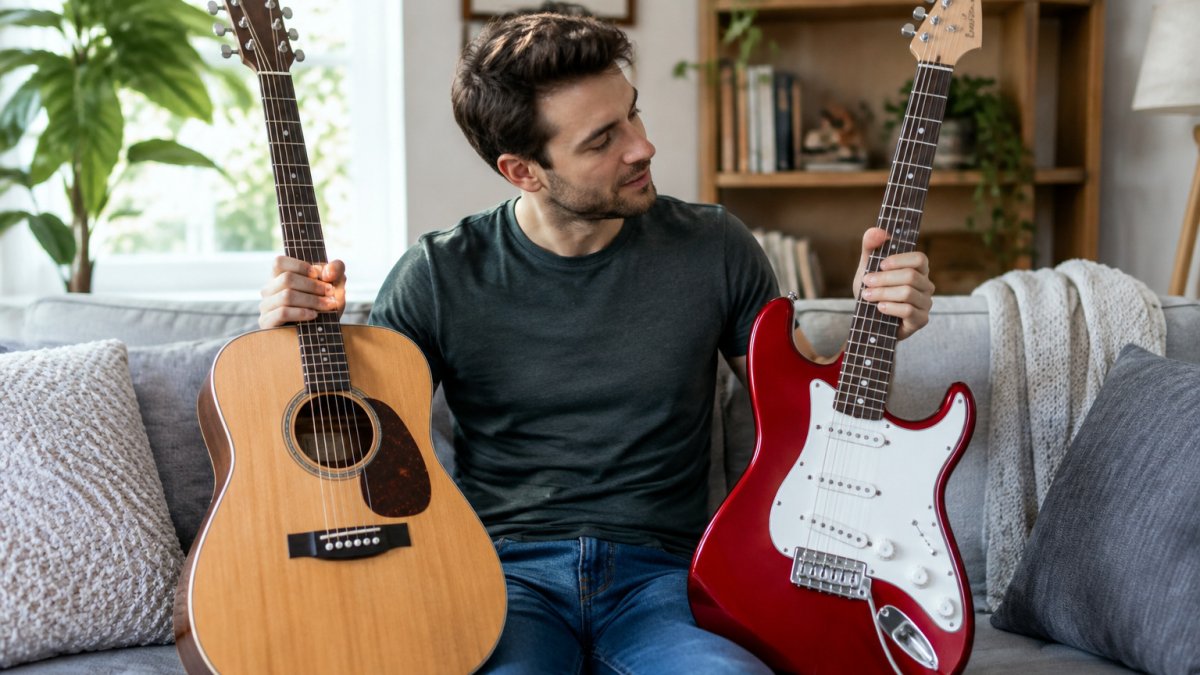
Ease of playing is only part of the picture. An electric guitar still needs an amplifier, a cable and a little setup before it sounds like anything at practice volume. An acoustic guitar needs none of that, so it is often the simpler option for a player who wants to pick one up and play at any time.
Finger comfort and string tension
Acoustic guitars use heavier strings and a higher action, so the first few weeks can leave fingertips sore. This soreness is normal and fades as calluses form, usually within a few weeks of regular short practice sessions.
Electric guitars are gentler on the fingers from day one. If sore fingers are the thing most likely to make you quit, an electric guitar with light-gauge strings can keep you practising. Ask the shop to set up the instrument with a low action before you take it home.
Neck width, body size and holding comfort
Neck width and body size affect how a guitar feels in the hands and on the body. Electric guitars typically have slimmer bodies and necks, which many smaller players find easier to reach around. Acoustic guitars have larger bodies, and a full-size model can feel awkward for younger or smaller players.
Try both types in person if you can. Sit down, hold each guitar as you would at home, and check whether your fretting hand can reach the notes comfortably.
Acoustic vs Electric: Sound, Pros and Cons Side by Side
| Factor | Acoustic guitar | Electric guitar |
|---|---|---|
| Needs an amplifier | No | Yes |
| Finger comfort at first | Harder | Easier |
| Typical music | Folk, pop, singer-songwriter | Rock, blues, metal, lead playing |
| Portability | Easy to carry anywhere | Needs amp and cable |
| Starting cost | Generally lower | Generally higher once amp is included |
Acoustic pros: No extra gear, a natural sound for singing, and a lower starting cost. Fender describes acoustic guitars as usually less expensive than electric guitars, which matters when the budget is tight Fender comparison of acoustic and electric guitars.
Acoustic cons: Heavier strings can be tough on new fingers, and the larger body suits some players less than others.
Electric pros: Easier on the fingers, many tones, and strong suitability for riffs and lead playing.
Electric cons: You need an amplifier and cable, and the total cost rises once you add them.
What Each Guitar Costs to Start in AUD
Most beginner guides talk about the price of the guitar and stop there. That is only half the story. A playable setup includes the instrument plus the accessories you need on day one, and for an electric guitar that means amplification. Comparing total setup cost is the only fair way to decide which option suits your budget.
Rather than quote fixed prices that change with stock, sales and model year, here is the structure of a realistic beginner budget in Australian dollars, with the components you should price up before you commit.
Acoustic guitar setup
- The guitar itself, new or used. Beginner acoustic models sit at the lower end of the market, and a used instrument in good condition can reduce the outlay further.
- A clip-on tuner.
- A spare set of strings in a light gauge.
- A padded gig bag or case.
- Picks and a capo.
- A strap if you plan to stand while playing.
- Optional but strongly recommended: a professional setup (action adjustment, intonation check, fresh strings) from a technician.
Electric guitar setup
- The guitar itself.
- A practice amplifier. This is the single biggest addition over an acoustic setup, and it is not optional if you want the guitar to sound like an electric guitar.
- An instrument cable.
- A clip-on tuner.
- A spare set of strings.
- A strap.
- A padded gig bag or case.
- Optional: a headphone output on the amp, or a small headphone amp, for silent practice.
- Optional but recommended: a professional setup.
How the totals compare
Because the electric setup adds an amplifier and cable, the total outlay is almost always higher than an acoustic setup at the same guitar quality level.
Where beginners overspend
- Buying an electric guitar without budgeting for an amplifier, then discovering the guitar is too quiet to enjoy.
- Skipping the professional setup, which can make a perfectly good guitar feel hard to play and discourage practice.
- Buying a large amp for home use when a small practice amp with a headphone output would suit a bedroom or apartment better.
- Paying for premium accessories before confirming the guitar itself feels comfortable.
Where beginners underspend
- A very cheap acoustic with high action and heavy strings is the most common reason beginners stop practising. A modest increase in guitar budget, or a professional setup on a cheaper instrument, usually pays off in comfort.
- A tuner is not optional. Playing an out-of-tune guitar makes everything sound wrong and is demoralising in the first weeks.
For current prices and bundle options, visit Muzic Man's website or contact our team.
How to Choose Your First Guitar Based on the Music You Play
The music you want to play is the strongest signal for which guitar to buy first.
If you want to strum and sing
Songs built around chords and a vocal melody, folk, pop, singer-songwriter, country, suit an acoustic guitar. See our best beginner acoustic guitar for kids guide for sizes and string types suited to young players. You can read about Sanchez acoustic guitars for beginners to intermediate players as one option to consider.
If you want to play riffs and lead lines
Rock, blues, metal and lead playing suit an electric guitar. The lighter strings and lower action make bends and fast passages easier, and the amplified sound is part of the genre.
If you want to play both
Many beginners want to play acoustic-style songs and also try rock riffs. In that case, choose the instrument that matches the songs you most want to play in your first three months.
If you are drawn to a particular artist or song
Name the song you most want to be able to play. If it is built on acoustic chords, an acoustic guitar is the direct route.
If you have small hands or are buying for a younger player
Fit matters more than type. A full-size acoustic can feel large and hard to reach around. Look for a smaller body acoustic, a short-scale model, or an electric guitar with a slim neck.
If you are undecided
Choose the guitar that makes you want to practise. For most undecided beginners, an acoustic guitar is the simpler starting point because it needs no amplifier and can be played immediately.
If you are in or near Robina, come in and hold both types before you decide.
Beginner Guitar Accessories You Actually Need
For an acoustic guitar: a tuner, a set of spare strings, a padded gig bag, picks and a capo. A strap is useful if you plan to stand while playing.
For an electric guitar: an amplifier, a instrument cable, a tuner, spare strings and a strap. A cheap pedal is optional and can wait until you know what sound you like.
For a simple start, a starter kit that bundles the essentials can save time. You can see what is included in the Music Nomad KISS starter kit before deciding. Music Nomad's "Keep It Simple Setup" (KISS) starter kit bundle is one example of a ready-made package covering the basics Music Nomad KISS starter kit bundle.
Watch out: an electric guitar bought without an amplifier will sound very quiet, so check that your chosen bundle includes one before you order.
Booking Your First Guitar Fitting at Muzic Man in Robina
If you live in or near Robina, Queensland, our Gold Coast shop lets you hold and play guitars before you buy. Trying the neck, body and weight in person is the fastest way to find a guitar that feels right. Visit our store or browse the online range, with Australia-wide shipping available.
Our team can help you match a guitar to the music you want to play and your budget. Visit the Muzic Man website to explore current stock, then contact us to arrange a fitting or ask questions before you buy.
Frequently Asked Questions
Is electric or acoustic guitar easier for beginners to learn?
Neither is objectively easier, but many beginners find electric guitars more comfortable at first. Electric guitars typically use lighter-gauge strings and lower string action, which reduces finger pressure needed to fret notes cleanly. Acoustic guitars need more hand strength and can feel stiffer during early practice. If you want to play along with recordings and sing, the acoustic often suits you better because it needs no amplifier. Choose the type that matches the music you want to play, since that motivation matters most in the first months.
Do beginners need an amplifier to learn electric guitar?
An electric guitar produces little audible sound on its own, so an amplifier is needed for normal practice and for hearing the tone you are playing. A small practice amp is the usual starting point. Headphones that plug into the amp let you practise quietly at home without disturbing neighbours or housemates. Budget for the amp, a lead and a tuner alongside the guitar itself, so the first purchase is complete and playable straight away.
Can you switch from acoustic guitar to electric guitar later?
Yes, many players start on acoustic and move to electric once they know what music they enjoy. The chord shapes, strumming and reading skills carry over directly. Electric guitars usually feel easier on the fingers, so the switch often feels like an upgrade in comfort. Only the amplifier and effects are new skills to learn. Keeping your first acoustic and adding an electric later is a common, sensible path.
What accessories do you need to start playing electric guitar?
A beginner electric guitar setup usually needs an amplifier, a instrument cable, a tuner, a spare set of strings, a strap and a guitar picks pack. A soft case or gig bag protects the instrument during transport. Headphones are useful for quiet practice. Check the bundle contents before buying, because some beginner packages already include several of these items, which can lower the total cost in AUD compared with buying each part separately.