




7 Ways to Maintain Your Musical Instruments
18th Sep 2026
Table of Contents
- 1. Control Humidity Before It Warps Your Instrument
- 2. Clean Your Musical Instruments After Every Session
- 3. Stock the Best Instrument Cleaning Kits for Your Setup
- 4. Store Musical Instruments in the Right Stand or Case
- 5. Follow a Musical Instrument Maintenance Schedule
- 6. Protect Instruments from Temperature Swings During Travel
- 7. Inspect Strings, Pads and Hardware Before They Fail
- Frequently Asked Questions
Last Updated: September 17, 2026
1. Control Humidity Before It Warps Your Instrument
Instrument humidity control is the practice of keeping the air around your instrument within a stable range so wood, glue joints and metal parts don't swell, shrink or corrode. For acoustic guitars and orchestral strings, the safe target sits around 45-50% relative humidity.
Queensland's climate makes this harder than it sounds. A humid summer can push indoor air well past 60%, while air-conditioned rooms in winter can drop below 30%. Both extremes move timber.
Two-way humidification systems solve this better than sponge-based options because they add or absorb moisture automatically. A sponge humidifier only adds moisture, so it does nothing during a wet February.
2. Clean Your Musical Instruments After Every Session
Cleaning your musical instruments after every session removes the oils, salts and dust that slowly dull finishes and corrode hardware. It takes under a minute and prevents most long-term surface damage.
The routine is simple:
- Wipe strings and fretboard with a dry, lint-free cloth
- Wipe down the body, neck and hardware
- Clear moisture from wind instrument bores with a swab
- Wipe drum hardware with a dry cloth to stop rust forming
A common mistake is spraying polish directly onto the instrument. Spray the cloth instead. Liquid that pools near tuning pegs or electronics causes more problems than the dirt you were removing.
3. Stock the Best Instrument Cleaning Kits for Your Setup
The best instrument cleaning kits match your instrument type rather than covering everything at once. A guitarist and a trumpet player need almost nothing in common.
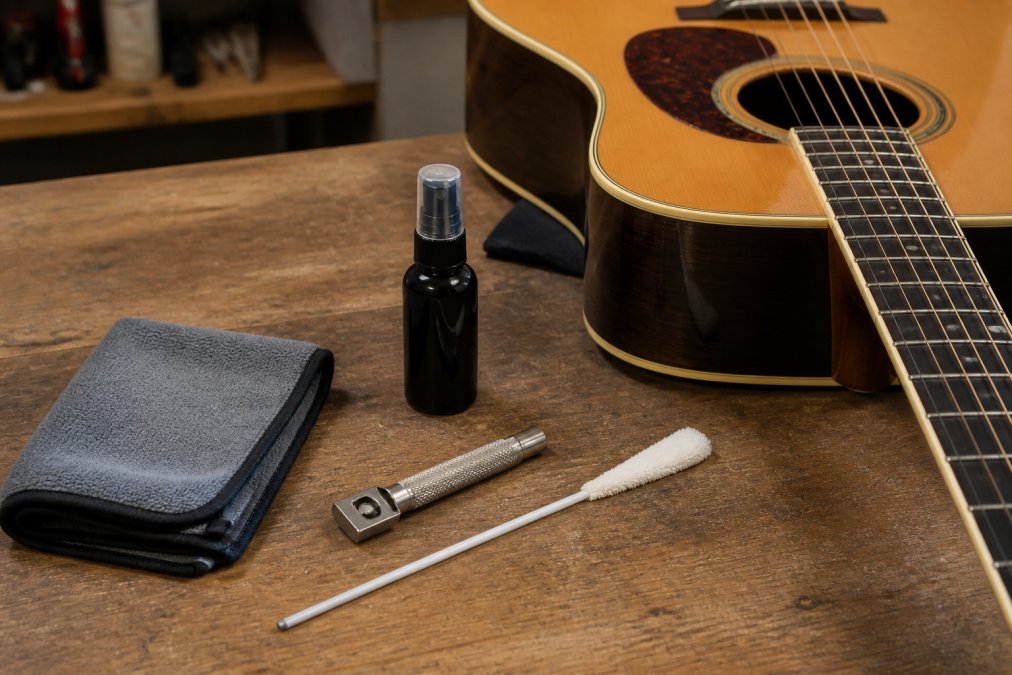
What Belongs in a Basic Cleaning Kit
- A non-hemmed microfiber cloth, safe on all finishes
- A soft brush for bridges, pickups and hardware crevices
- Instrument-appropriate polish, not household furniture spray
- String cleaner or fretboard conditioner for fretted instruments
- Bore swabs and pad paper for winds
Specialist Kits for Winds, Percussion and Strings
Guitarists benefit from a fret polishing system, which restores shine to tarnished fret wire and makes bending noticeably smoother. Acoustic players should add a two-way humidification system to the kit rather than treating humidity as a separate job.
Woodwind and brass players need cleaning swabs, polishing cloths and the right valve oil or slide grease. Percussionists need lug lubricant and hardware cloths, because tension rods rust quietly and then seize.
4. Store Musical Instruments in the Right Stand or Case
Storage is where most avoidable damage happens. An instrument left leaning against a wall or resting on a couch is one door slam away from a repair bill.
For instruments in daily use, a floor stand with a locking yoke and protective padding keeps the instrument accessible without risking a fall. For anything not played this week, a hard case is the better home.
- Daily players: padded floor stand with a secure neck grip
- Weekly players: hard case with fitted foam
- Touring or transport: waterproof, impact-resistant case
- Long-term storage: case plus humidity control, away from external walls
One honest limitation of floor stands: they take up more floor space than a wall hanger, which matters in a small practice room.
5. Follow a Musical Instrument Maintenance Schedule
A musical instrument maintenance schedule turns maintenance from a reactive repair into a routine. Most players already know what to do; they just don't do it on a rhythm.
Daily, Weekly and Monthly Tasks
| Frequency | Task | Time Needed |
|---|---|---|
| After each session | Wipe strings, body and hardware | 1-2 minutes |
| Weekly | Check humidity, inspect strings for wear | 5 minutes |
| Monthly | Condition fretboard, clean crevices, check screws and straps | 15 minutes |
| Quarterly | Deep clean, check intonation and action | 30 minutes |
| Annually | Professional setup and inspection | Booked service |
When to Book a Professional Service
Book a technician when you notice fret buzz that wasn't there before, a neck that has moved, sticking valves, or hardware that won't hold adjustment. Seasonal shifts cause most of these, which is why a setup once a year is a reasonable baseline for instruments played regularly.
6. Protect Instruments from Temperature Swings During Travel
Rapid temperature change is the enemy, not cold itself. Moving an instrument from an air-conditioned car into a hot boot, or from a warm room into a chilly venue, stresses glue joints and finish.
Let the instrument acclimatise inside its case before opening it. A closed case changes temperature slowly, which is exactly what you want.
- Never leave an instrument in a parked car
- Loosen strings slightly for long trips
- Use a hard case for anything beyond a short drive
- Pack padding so the instrument cannot shift inside the case
For touring musicians or anyone regularly moving gear, a waterproof, dust-tight case with fitted foam is the difference between a scuff and a cracked top.
7. Inspect Strings, Pads and Hardware Before They Fail
Inspection is the cheapest maintenance you'll ever do. Failures rarely happen without warning, and the warning is usually visible a week earlier.
Check these weekly:
- Strings: look for flat spots, kinks and discolouration near the bridge and nut
- Pads and corks: check for tears, stickiness or poor sealing on woodwinds
- Tuning pegs and machine heads: test for slippage or stiffness
- Strap buttons and screws: tighten anything that moves
- Drum hardware: check tension rods and lug threads for rust
Replace strings before they break, not after. A string that snaps mid-set costs far more than a set of replacements.
Maintaining musical instruments comes down to consistency, not equipment. Humidity control, a quick clean after playing, sensible storage and a written schedule cover almost everything that goes wrong.
At Muzic Man, we stock the accessories that make this routine practical for players across Australia, including cleaning kits, humidification systems, protective cases and stands, with Australia-wide shipping and a Gold Coast shop in Robina for hands-on advice. If you're local, drop in and we'll help you match a care kit to your instrument; if you're elsewhere in Queensland or beyond, browse the online store and get the right gear delivered. Get started with Muzic Man and keep your instruments playing the way they did on day one.
Frequently Asked Questions
What is the best way to store musical instruments in humid Queensland climates?
Keep instruments in a hard case with a two-way humidity control system that holds relative humidity around 45-50%. Add a moisture absorber to the room if needed, and avoid garages, sheds and rooms with open windows near the coast. Check the case weekly during summer. Storing musical instruments away from direct sea breeze and air conditioning vents prevents mould, rust and warped timber.
How often should I clean my instrument?
Wipe strings, body and hardware with a lint-free microfiber cloth after every session. Deeper cleaning, such as polishing the finish or treating the fretboard, suits a weekly or fortnightly routine depending on how often you play. Wind players should swab the bore after each use. A consistent routine is the simplest way to protect the finish and keep tuning stable.
What should a musical instrument maintenance schedule include?
A practical schedule covers daily wiping and string cleaning, weekly checks of tuning pegs, bridge pins and strap buttons, monthly fretboard conditioning and hardware lubrication, and a professional service once a year. Keep a note of each task in a notebook or phone reminder. Adjust the frequency for heavy gigging or coastal environments where salt and humidity speed up wear.
Can I use household cleaners on my instrument?
No. Most household sprays contain alcohol, ammonia or abrasives that strip lacquer, dry out fretboards and dull metal hardware. Use products made for musical instruments, such as a non-abrasive guitar polish and a dedicated microfiber cloth. If you are unsure which product suits your finish, ask the team at your local music shop before applying anything new.