


Best Budget Instruments for Serious Players: 2026 Guide
18th Aug 2026
Table of Contents
- What Separates Budget Instruments Worth Buying From Those Worth Avoiding
- Best Budget Instruments for Serious Players Across Every Category
- 1. Squier Classic Vibe '60s Stratocaster, Best Entry-Level Electric Guitar
- 2. Yamaha FG830, Best Acoustic Guitar for Technical Development
- 3. Roland FP-30X, Best Digital Piano for Serious Students
- 4. Casio CDP-S160, Best Compact Weighted Keyboard
- 5. Pearl Roadshow Drum Kit, Best Affordable Percussion Setup
- Acoustic vs. Digital Trade-Offs: Which Type Fits Your Practice Routine
- Best Value Musical Instruments for Intermediate Players: Resale Value and Long-Term Playability
- Upgrading From Beginner to Professional Gear: When and How to Make the Move
- How to Maintain Budget Instruments for Longevity
- Conclusion
Last Updated: August 17, 2026
Most musicians shopping for budget instruments make the same mistake: they chase the lowest price and end up with gear that actively holds back their development. At Muzic Man, we see players buy the cheapest option available, struggle with poor intonation and uncomfortable action, then quit within six months. Often, the instrument was the problem.
The truth about budget instruments is more nuanced than most guides let on. There is a meaningful difference between student-grade gear that supports genuine technical development and cheap gear that simply exists. Below, we break down exactly how to tell the difference, then walk through the best options across every major instrument category.
Quick Picks:
- Best Entry-Level Electric Guitar: Squier Classic Vibe '60s Stratocaster, vintage feel, professional playability
- Best Acoustic Guitar: Yamaha FG830, solid tonewood construction that improves with age
- Best Digital Piano: Roland FP-30X, authentic weighted action, serious sound engine
- Best Compact Keyboard: Casio CDP-S160, slim form, full 88 weighted keys
- Best Percussion Setup: Pearl Roadshow Drum Kit, complete package, reliable build quality
What Separates Budget Instruments Worth Buying From Those Worth Avoiding
The best budget instruments for serious players share one quality that cheap gear almost never has: they reward practice. A well-made entry-level instrument gives honest feedback, stays in tune, and develops alongside your technique.
Build Quality and Tonewoods at the Entry Level
Build quality comes down to materials and assembly consistency. Tonewoods matter enormously in acoustic instruments. A solid Sitka spruce top on an acoustic guitar produces significantly more sound projection and tonal complexity than a laminate top, and it improves with age as the wood opens up and resonates more freely. According to Yamaha's acoustic guitar construction guides, solid-top construction is one of the clearest dividing lines between entry-level instruments that develop your ear and those that plateau immediately.
For electric guitars and digital instruments, build quality shows up in fretboard finish, hardware durability, and neck joint consistency. A poorly seated neck creates tuning instability that no amount of practice can compensate for.
Action Height, Intonation, and Setup: The Hidden Cost of Cheap Gear
Action height is the distance between the strings and the fretboard. Too high, and the instrument is physically harder to play. Too low, and strings buzz against frets, muddying your tone. Most budget instruments ship with action that is either too high or inconsistent.
This is the hidden cost of cheap gear. A factory setup on a $200 guitar might require $80-$100 in professional setup work before it plays well. A better-built instrument at a higher price point often arrives closer to playable, making the effective cost difference smaller than the sticker price suggests.
Poor intonation means the instrument plays in tune at the nut but goes sharp or flat as you move up the fretboard. For serious players building harmonic range and learning repertoire, this is a fundamental obstacle to developing a reliable musical ear.
Best Budget Instruments for Serious Players Across Every Category
The five instruments below represent the strongest value across their respective categories, selected for playability, build quality, and long-term technical development.
1. Squier Classic Vibe '60s Stratocaster, Best Entry-Level Electric Guitar
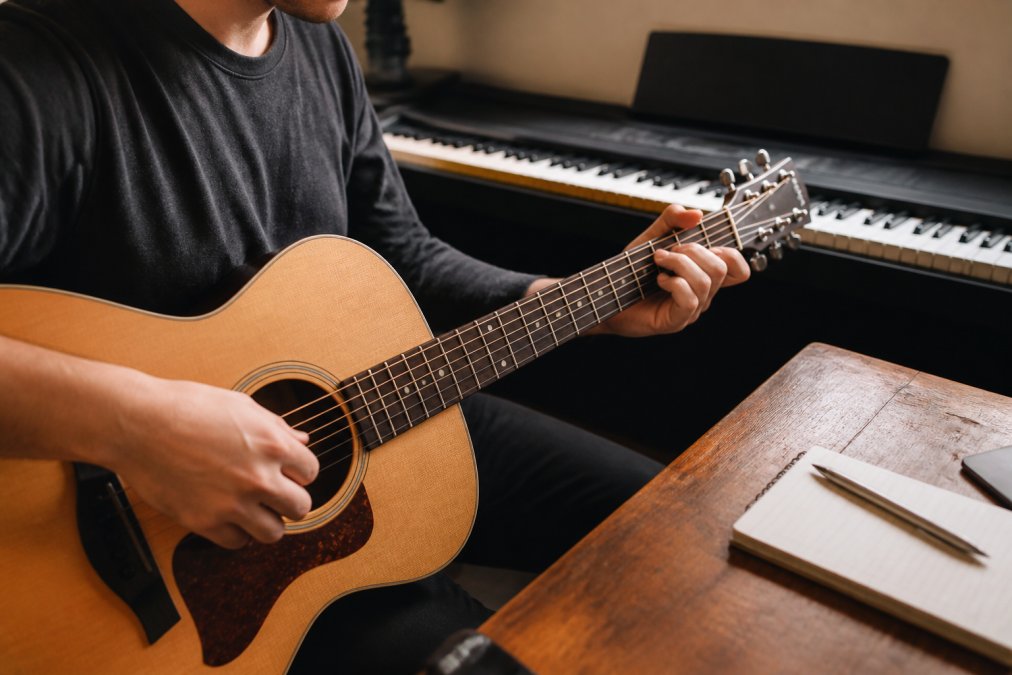
The Squier Classic Vibe '60s Stratocaster delivers genuine Stratocaster chime and versatility across blues, rock, funk, and indie without the price tag of a USA-made Fender.
The fretboard uses Indian laurel with a smooth 'C'-shape maple neck. The three Fender-designed alnico V single-coil pickups produce the characteristic bright, glassy Stratocaster tone rather than the muddy sound common on lower-tier electrics. The 6-saddle vintage-style synchronised tremolo bridge holds tuning stability well for this price point.
Pros:
- Vintage-correct aesthetics and authentic Stratocaster feel
- Alnico V pickups deliver real tonal character
- Excellent build consistency for the price point
Cons:
- Poplar body rather than alder or ash
- May sit at the upper end of strict budget definitions
The Classic Vibe series holds its price better than almost any other entry-level electric on the market, making resale value meaningful.
Best for: Serious beginners and intermediate players who want a platform they can genuinely grow with.
2. Yamaha FG830, Best Acoustic Guitar for Technical Development
The Yamaha FG830 proves that a solid-top acoustic doesn't have to be a luxury. The solid Sitka spruce top paired with rosewood back and sides produces a rich, full sound that rivals instruments costing significantly more, and it improves with every year of regular playing.
The scalloped bracing underneath the top allows the top to vibrate more freely, producing better sound projection and a wider harmonic range than unscalloped bracing found on most instruments at this price.
Pros:
- Solid spruce top that genuinely improves with age
- Scalloped bracing enhances resonance and harmonic complexity
- Strong resale value
Cons:
- Requires professional setup for optimal action height
- Rosewood back and sides may not suit all tonal preferences
3. Roland FP-30X, Best Digital Piano for Serious Students
The Roland FP-30X is the standard recommendation for serious piano students who cannot accommodate an acoustic instrument. It earns that reputation through the PHA-4 Standard keyboard with escapement and Ivory Feel keys.
Escapement is the mechanism in acoustic grand pianos that allows the hammer to reset mid-keystroke for rapid repeated notes. Most digital pianos at this price omit it entirely. The FP-30X includes it, a detail that matters enormously for developing proper technique on repertoire demanding fast, controlled repetition.
The SuperNATURAL sound engine produces convincing piano timbre with realistic dynamic response. Bluetooth audio and MIDI connectivity allow integration with learning apps and recording software.
Pros:
- PHA-4 keyboard with escapement supports genuine technical development
- SuperNATURAL sound engine produces authentic piano timbre
- Bluetooth MIDI for app integration and recording
Cons:
- Onboard speakers lack power for larger spaces without external amplification
- Some advanced features found in higher-end Roland models are absent
For serious students, the acoustic vs. digital trade-off is manageable. The FP-30X bridges that gap better than any other instrument at its price point, as noted in Roland's product documentation for the FP-30X.
4. Casio CDP-S160, Best Compact Weighted Keyboard
The Casio CDP-S160 solves space constraints with a genuinely slim, portable design that still delivers 88 fully weighted keys through Casio's Scaled Hammer Action II mechanism.
Scaled hammer action means the keys are weighted differently across the keyboard, heavier in the bass register, lighter in the treble, mimicking the feel of an acoustic piano. This matters for building the correct hand strength and touch sensitivity that serious practice demands.
Pros:
- 88 fully weighted keys with scaled action in a compact form factor
- Compatible with Casio's Chordana Play app for structured learning
- USB to Host connectivity for recording and MIDI integration
Cons:
- Fewer onboard sounds than higher-end digital pianos
- Built-in speakers are adequate for practice but not performance
The CDP-S160 is the right choice for players who prioritise portability without sacrificing the weighted keyboard feel that is non-negotiable for technical development.
5. Pearl Roadshow Drum Kit, Best Affordable Percussion Setup
The biggest mistake beginner drummers make is buying a kit that cannot be properly tuned. Poor tuning stability makes it impossible to develop a reliable sense of pitch and dynamics.
The Pearl Roadshow avoids this problem. The 9-ply poplar shells hold tuning reasonably well, and the double-braced hardware provides stability that cheaper kits cannot match. The complete package, drums, hi-hats, crash/ride cymbal, hardware, and throne, means players can start developing a practice routine immediately.
Pros:
- Complete package ready to play from day one
- Double-braced hardware provides durability and stability
- Solid foundation for developing technique and dynamics
Cons:
- Stock cymbals are basic and will likely need upgrading
- Shell and finish options are limited compared to professional kits
Plan to upgrade the stock cymbals as your technique develops; better cymbals reveal dynamics and tonal nuance that the stock options cannot produce.
Acoustic vs. Digital Trade-Offs: Which Type Fits Your Practice Routine
Acoustic instruments produce sound through physical vibration. Digital instruments generate sound electronically, with quality determined by the sophistication of the sound engine and the accuracy of the key or pad action.
For pianists, the acoustic vs. digital question comes down to space, budget, and access to tuning. An acoustic upright piano produces a richness of timbre and dynamic response that no digital instrument fully replicates. A quality digital piano like the Roland FP-30X requires no tuning, occupies a fraction of the space, and allows silent practice through headphones, a genuine advantage for players in shared living situations.
For guitarists, the acoustic vs. electric question is primarily about genre and context. Acoustic guitars develop right-hand dynamics and tone production skills that transfer directly to electric playing. Electric guitars, particularly through a clean amp, reveal intonation issues more clearly than acoustic instruments, making them a surprisingly effective tool for ear training.
Best Value Musical Instruments for Intermediate Players: Resale Value and Long-Term Playability
The best value musical instruments for intermediate players are those that retain resale value while supporting continued technical growth. Instruments from established manufacturers (Yamaha, Roland, Fender's Squier line, Pearl) hold their resale value far better than generic alternatives. A Yamaha FG830 purchased today will likely sell for a meaningful percentage of its original price in three to five years.
Long-term playability is the second factor. An instrument that is comfortable and responsive at a beginner level should remain playable as technique develops. The instruments listed in this guide all share this quality. According to ABRSM's guidance on instrument selection for students, the quality of an instrument has a measurable impact on the rate of musical development, particularly in the first two years of study.
Instrument | Category | Approx. RRP (AUD) | Resale Value Retention | Best For |
|---|---|---|---|---|
Squier Classic Vibe '60s Strat | Electric Guitar | ~$699 | High | Serious beginners, intermediate players |
Yamaha FG830 | Acoustic Guitar | ~$599 | High | Technical development, stage use |
Roland FP-30X | Digital Piano | ~$999 | Moderate-High | Serious students, gigging musicians |
Casio CDP-S160 | Compact Keyboard | ~$799 | Moderate | Practice-focused players, small spaces |
Pearl Roadshow | Drum Kit | ~$500-700 | Moderate | Beginners to intermediate drummers |
Note: Prices shown are approximate retail prices sourced from manufacturer and retailer listings and are subject to change. Visit Muzic Man for current pricing.
Upgrading From Beginner to Professional Gear: When and How to Make the Move
Upgrading from beginner to professional gear is the right move when your instrument is limiting your development, not when you simply want something new. The clearest signals are specific: you are consistently playing in tune but the instrument's intonation is unreliable, your technique has outgrown the action height or ergonomics, or you are performing in contexts where the instrument's sound projection or build quality is a liability.
The upgrade path is rarely a single jump. Many serious players move through two or three instruments before reaching professional-grade gear. Each step up should address a specific limitation of the previous instrument.
Setup modifications worth considering:
- Professional fret levelling and crown polish
- Nut replacement with bone or synthetic bone
- Bridge saddle adjustment for intonation
- Pickup upgrade on electric guitars
How to Maintain Budget Instruments for Longevity
Proper instrument care is where serious players separate themselves from casual ones. Budget instruments require more attentive maintenance than professional gear precisely because their components have less tolerance for neglect.
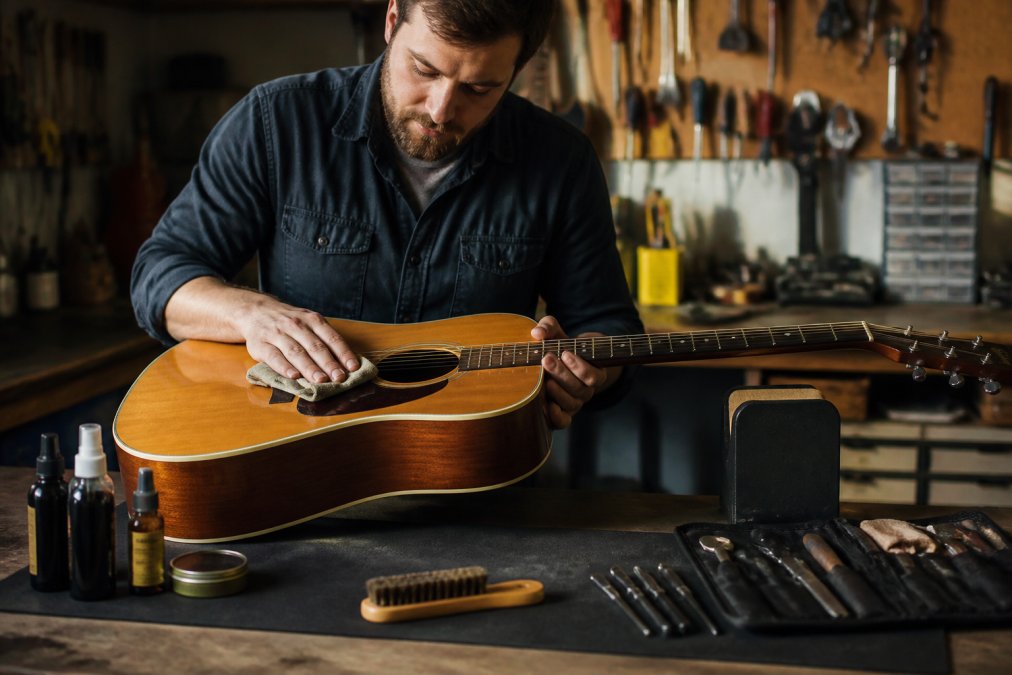
Humidity damage on acoustic instruments is the leading cause of structural problems: cracking tops, lifting bridges, and warping necks. Acoustic guitars should be stored with a humidity level between 45% and 55%. A simple in-case humidifier addresses this for minimal cost.
Essential maintenance checklist:
- Wipe down strings after every playing session
- Clean the fretboard with an appropriate conditioner every 3-4 months
- Check and tighten all hardware monthly
- Store instruments in their cases when not in use
- Have the instrument professionally set up at least once per year
- Replace strings regularly
- For digital pianos and keyboards, keep keys covered when not in use
For drum kits, regular tuning is the single most impactful maintenance habit. Drumheads stretch and lose tension over time. Replacing heads annually and learning to tune each drum to a consistent pitch is a skill that pays dividends in tone and technique.
As documented in Music Australia's resources on instrument care and education, consistent instrument maintenance directly correlates with sustained musical engagement.
Choosing the right gear at the start of a musical journey is harder than it looks, and the stakes are real: a poor instrument can genuinely slow development and frustrate players out of a pursuit they would otherwise love. Muzic Man stocks the full range of instruments covered in this guide, with Australia-wide shipping and a physical store for players who want to play before they buy. Browse the current range at muzicman.com.au for up-to-date pricing and availability, or visit the Gold Coast store for hands-on advice from staff who play the instruments they sell.
Frequently Asked Questions
Are budget musical instruments suitable for serious or semi-professional performance?
Many student-grade instruments from reputable brands perform well in live and studio settings once properly set up. The Squier Classic Vibe Stratocaster and Yamaha FG830, for example, are used by working musicians at gigs and recordings. The key is choosing instruments with solid tonewoods, stable tuning, and good intonation, then investing in a professional setup. Budget instruments rarely limit a player's technical development at beginner or intermediate level.
What features should a serious musician look for in a budget instrument?
Prioritise build quality, playability, and tuning stability over cosmetic details. For guitars, check for a solid wood top rather than laminate, a comfortable fretboard radius, and low action height. For digital pianos, weighted keys with graded hammer action are non-negotiable for proper technique. Percussion players should look for double-braced hardware and poplar or birch shells. A professional setup after purchase dramatically improves any entry-level instrument's playability.
Is it better to buy a high-end used instrument or a new budget model?
A well-maintained used instrument from a respected brand often delivers better value than a new budget model at the same price. Used gear from established makers typically has superior tonewoods, hardware, and resale value. The risk is condition: inspect the fretboard, neck joint, and tuning pegs carefully, or have a technician assess it before purchasing. New budget instruments from brands like Squier, Yamaha, and Pearl offer consistent quality and warranties, which removes that uncertainty.
How do I balance cost and quality when buying my first serious instrument?
Set a realistic ceiling, then spend as close to it as possible within a reputable brand's entry-level range. Instruments priced mid-range within a brand's lineup, such as the Squier Classic Vibe or Yamaha FG830, consistently outperform the cheapest options in playability and durability. Factor in the cost of a professional setup, a case, and basic maintenance supplies. Buying once at a slightly higher price almost always costs less than replacing a poor instrument within a year.
Which brands offer the best value for money for intermediate musicians?
Squier (Fender's student brand), Yamaha, Roland, Casio, and Pearl consistently deliver strong value at entry and intermediate price points. Squier's Classic Vibe series and Yamaha's FG acoustic range are widely regarded as benchmark options for budget-conscious players who refuse to compromise on tone or build quality. Roland's FP-30X and Casio's CDP-S160 lead the digital piano category for serious students needing weighted keys and reliable sound engines without paying flagship prices.
This article was written using GrandRanker