



How to Plan Holiday Music Instrument Purchases Ahead
Posted by Editorial Team on 7th Nov 2026
Last Updated: November 6, 2026
Quick Summary
To plan holiday instrument purchases, first set the day the gift must arrive, usually Christmas Eve, then work backwards. Allow at least two weeks for research, a few days to order, and extra time for shipping across Australia. Keep a spare week as a buffer for delays or faults.
- Confirm the family's actual exchange date before choosing a delivery deadline.
- Allow at least two weeks for research and comparison, longer for beginners.
- Place the order by the first week of December for a 24 December delivery target.
- Build a full budget that includes a case, strings, setup, delivery and lessons.
- Check the instrument for cracks, loose parts and tuning as soon as it arrives.
Table of Contents
- Set Your Holiday Deadline and Work Backwards
- Choose an Instrument Based on the Player's Goals and Skill Level
- How to Choose a Musical Instrument Gift for Someone Else
- Build a Full Holiday Budget, Including Accessories
- Planning Holiday Instrument Delivery Across Australia
- How to Inspect a Musical Instrument on Delivery
- Lock In Your Holiday Order and Next Steps
- Frequently Asked Questions
Set Your Holiday Deadline and Work Backwards
Holiday instrument purchases can go wrong when people start too late. Stock sells out, delivery windows shrink, and the gift arrives on the wrong day. The fix is simple: pick your delivery date first, then work backwards from it.
Start with the day the gift must be in hand, usually Christmas Eve, but confirm the family's actual exchange date first. Then count back the steps you need to finish before that day:
- Choose the instrument: Allow at least two weeks for research and comparison, longer if the player is a beginner and you need to confirm school band or orchestra requirements.
- Confirm stock and place the order: Allow a few days, since popular models can sell out. Check whether the seller holds stock locally or ships from interstate.
- Allow for delivery: Build in extra time for shipping across Australia, and more during busy periods. Couriers typically publish Christmas cut-off dates each year, and these can fall earlier for regional and remote addresses.
- Plan a buffer: Keep a spare week in case anything runs late, is damaged in transit, or needs a setup adjustment before wrapping.
A worked example makes this concrete. If the gift must be under the tree on 24 December, aim to place the order by the first week of December, finish your comparison shopping by mid-November, and start researching in the last week of October. That schedule leaves room for a replacement if the first instrument arrives with a fault.
If you plan to collect in person rather than have the instrument shipped, confirm the seller's current opening hours and whether collection is available on the days you can travel.
Watch out: a delivery estimate that looks comfortable in November can slip by a week or more once couriers hit their December peak, so treat the published transit time as a minimum rather than a promise.
Write these dates in your calendar. A simple timeline keeps the whole process on track and makes it easy to spot a problem early.
Choose an Instrument Based on the Player's Goals and Skill Level
The right instrument depends on who will play it. A ukulele suits a young child who wants to try music for the first time. A guitar with a sturdy build suits a teenager who has been practising for a year. A serious adult player may need a higher-quality instrument with better playability.
Think about these questions before you shop:
- How much experience does the player have? Beginners need something easy to tune and comfortable to hold.
- What style do they want to play? Pop, classical and jazz each lean toward different instruments.
- Will they practise every day? Regular practice justifies a better instrument.
Browse our range of beginner-friendly instruments to compare options by age and skill level. If the player is already advanced, our budget picks for serious players show gear with real playability and solid build quality.
How to Choose a Musical Instrument Gift for Someone Else
Buying an instrument for someone else makes holiday instrument purchases harder, because you may not know their current level. A safe approach is to pick an instrument that is easy to learn and widely used, such as a ukulele, a keyboard or a harmonica. These options have low entry costs and simple setups.
Check these points before you buy:
- Ask a friend or family member who knows the recipient's interests.
- Consider the recipient's space. A keyboard needs room and power, while a harmonica fits in a pocket.
- Look for accessories such as a tuner, a stand or a case, which make a gift feel complete.
Our guide to the easiest instruments to learn compares options with costs, pros and cons, so you can match the gift to the person.
Build a Full Holiday Budget, Including Accessories
The instrument is only part of the total cost. Many buyers forget the extras, which can add up quickly. Plan for these items as well:
- The instrument itself
- A case or gig bag to protect it
- Strings, reeds or sticks, depending on the instrument
- A tuner or metronome
- A stand or music stand
- Delivery costs
- Any insurance you want for the transit
- A first setup or service, if the instrument needs one
- A few lessons, if the recipient is a beginner
Rather than pricing each item in isolation, build a simple two-column comparison. In the first column, list the instrument's sticker price. In the second, list the total cost of ownership: case, consumables, setup, delivery and any lessons. Two instruments with similar sticker prices can differ sharply once the extras are counted, and the cheaper-looking option often loses once a case and setup are added.
Sequence the spending so the essentials come first. The instrument and a protective case are non-negotiable. Consumables such as strings or reeds are worth buying at the same time so the gift is usable on day one. Lessons and maintenance can follow after the holiday, which spreads the cost without leaving the recipient with an instrument they cannot play.
Australian consumer protections matter here. Under the Australian Consumer Law, goods sold by a business must be of acceptable quality, fit for purpose and match their description. Keep your receipt and any online order confirmation, because you may need them if the instrument develops a fault. Before you pay, read the seller's returns and warranty policy, especially for online purchases where you cannot inspect the instrument first. Check who pays return shipping if something goes wrong, and whether the warranty is handled locally or requires sending the instrument interstate.
Watch out: a low sticker price can hide a short warranty or a returns policy that makes you pay postage both ways, so compare the total risk as well as the total cost.
Pricing depends on the model, quantity, dates and delivery options. For current prices and a quote, visit the Muzic Man website or contact our team directly. Add up every item before you commit, so the final figure has no surprises.
Before you commit, compare what each option really costs once the extras are counted:
| Cost item | Why it matters | When to buy |
|---|---|---|
| The instrument | Sticker price only | Order first |
| Case or gig bag | Protects the instrument in transit | Buy with the instrument |
| Strings, reeds or sticks | Makes the gift usable on day one | Buy at the same time |
| Tuner or metronome | Helps the player practise | Buy with the instrument |
| Delivery costs | Can change the total significantly | Check before paying |
| First setup or service | Some instruments need it before play | Buy at the same time if needed |
| A few lessons | Helps beginners get started | Can follow after the holiday |
Planning Holiday Instrument Delivery Across Australia
Delivery is the step that most often causes last-minute stress. Shipping times vary by location and by season, and busy holiday periods can slow things down. Order early so you have room to spare.
Plan your delivery with these steps:
- Check the estimated transit time before you pay.
- Use a delivery address where someone will be home to receive the parcel.
- Track the order from dispatch to arrival.
- Order a week earlier than you think you need to.
Our shipping times guide explains realistic transit estimates across Australia, so you can set a sensible delivery date.
How to Inspect a Musical Instrument on Delivery
When the parcel arrives, take a few minutes to check the instrument before the gift is wrapped or put away. Open the case in a well-lit room and look for any visible damage, such as cracks, loose parts or scratches.
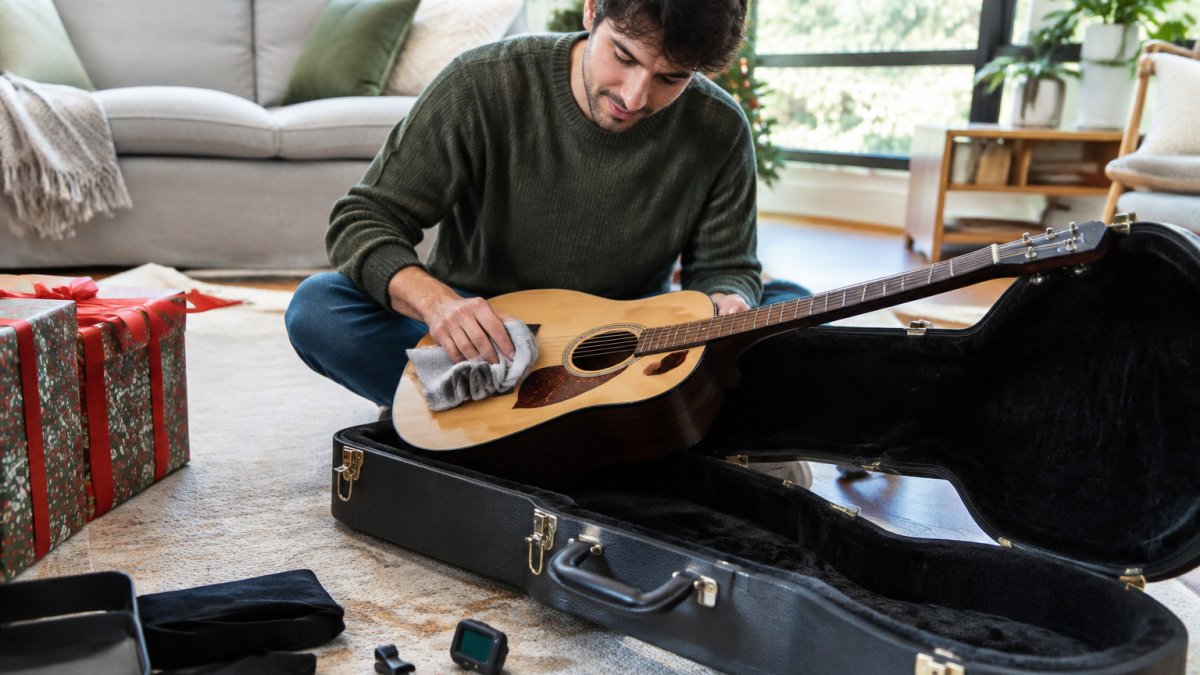
Check the instrument with this simple routine:
- Look for cracks or warping on the body and neck.
- Check that the strings or keys are secure and working.
- Tune it with a tuner to confirm it holds pitch.
- Test the moving parts, such as the tuning pegs or keys.
Humidity can cause problems in wooden instruments, including cracking and warping. Our guide on maintaining acoustic guitar humidity levels explains how to protect your instrument once it arrives.
Lock In Your Holiday Order and Next Steps
Once you have chosen the instrument, checked the budget and confirmed the delivery date, place your order early. Popular models sell out fast during the holiday season, so waiting can leave you with fewer choices.
Next steps:
- Set your delivery date and work backwards.
- Compare instruments for the player's level.
- Build a full budget that includes accessories.
- Order with enough time to spare.
If you need help choosing the right instrument for a holiday gift, contact the Muzic Man team. We can help you pick a model that fits the player, the budget and the delivery deadline.
Frequently Asked Questions
How do I choose the right musical instrument as a holiday gift?
Start with the recipient's current skill level and what they already play or have shown interest in. Ask a teacher or their school music department which instrument they are learning, since many schools specify a required instrument. Choose a size and category that suits the player's age and physical build, and check whether an instrument needs accessories such as a stand, tuner or case. If you are unsure, buy a gift voucher or ask Muzic Man for guidance; pricing depends on the model, accessories and delivery, so check the current price on the website before you buy.
How far in advance should I order a musical instrument for the holidays?
Order as early as you can, ideally several weeks before your delivery deadline, because stock and delivery times can change during busy periods. Work backwards from the date you need the gift to arrive, allow time for shipping across Australia, and build in a buffer for any item that is back-ordered. Confirm current stock and estimated delivery on the product page before paying, and keep your order confirmation in case you need to follow up.
What should I check before buying a musical instrument online?
Confirm the exact model, size and included accessories, and check that the listing states it is in stock rather than available to order. Read the seller's delivery and return information, and make sure you understand how faults are handled. Under Australian consumer law, goods must be of acceptable quality and fit for their purpose, and you should keep receipts and order records. Compare the listed specifications against what the player needs rather than relying on the price alone.
How should I check an instrument when it arrives?
Open the package as soon as it arrives and check it against the order, including any accessories. Inspect the instrument for cracks, loose fittings, damaged finishes and missing parts, and test that it tunes and plays as expected. Take photos of the packaging and the instrument before you use it. If something is wrong, contact the seller promptly and keep the packaging until the issue is resolved.